
Silicon Line®, una marca EverProX®, lanza el nuevo chipset SerDes de ultrabajo consumo MSDL™
Source: PR Newswire
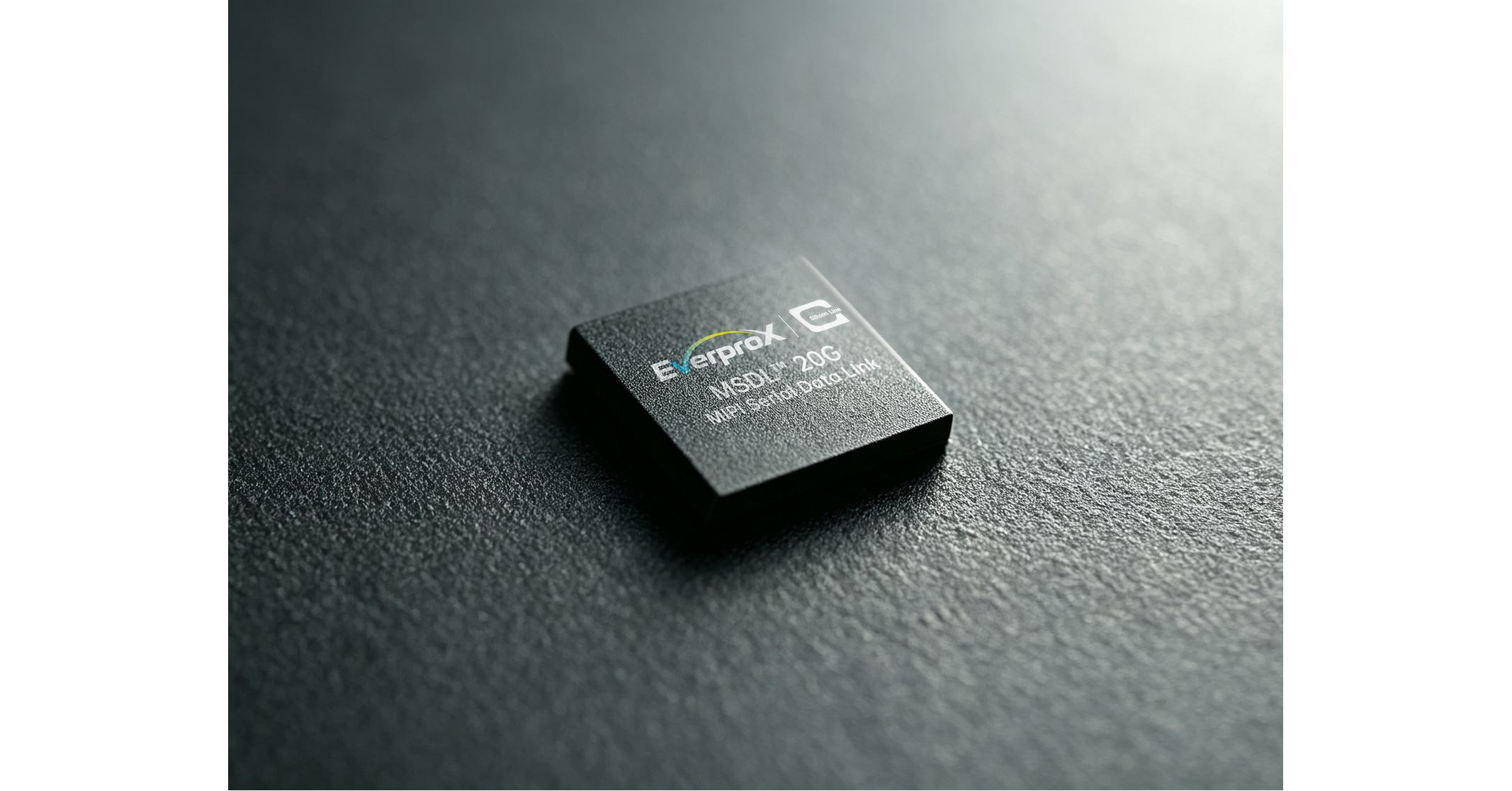
Silicon Line, an EverProX brand, launched the MSDL 20G dual-port MIPI D-PHY SerDes chipset, supporting two simultaneous 10 Gbps links and extending connectivity to tens of meters over optical fiber or differential copper. The chipset consumes 71 mW per optical link or 87 mW per electrical link, addressing bandwidth, EMI and cable-bulk constraints in AR/VR, medical imaging, industrial robotics, defense and drone applications. Samples and evaluation kits are available for early-access customers, but the announcement provides no revenue, pricing or customer-adoption metrics.
Analysis
This is not yet a public-equity catalyst: early-access sampling for a private supplier has no independently verifiable design-win, pricing, yield, or production-volume evidence. The relevant mechanism is a gradual bill-of-materials shift in high-reliability vision systems from shielded copper harnesses toward optical/electrical interconnects, with the strongest value capture likely accruing to component suppliers that are specified into production platforms rather than to end-market OEMs.
Over the next 1-3 months, monitor whether the architecture appears in customer reference designs, medical-device submissions, robotics platforms, or defense procurement specifications. A credible production win would be incrementally supportive for optical-component and connectivity ecosystems—particularly COHR, LITE and AMPH—while creating a modest long-term substitution risk for conventional high-speed copper/cable content at TE Connectivity (TEL) and Belden (BDC); the latter risk is likely immaterial absent multi-year volume adoption.
The non-obvious constraint is qualification, not headline bandwidth: medical, industrial and defense customers prioritize connector reliability, thermal cycling, EMC validation, supply assurance and lifecycle support. That makes a low-power link technically attractive but does not establish commercial displacement; qualification cycles can extend 12-36 months, and optical-module cost, field repairability and integration complexity may preserve copper in lower-distance applications. Treat claims on power and reach as vendor specifications until third-party validation and named customer adoption emerge.
Consensus may over-index to AI/robotics demand as an immediate semiconductor revenue driver. In practice, camera-data interconnect is a low-dollar component with high design-in friction; the investable implication is to watch for optical-content expansion at scaled suppliers, not to extrapolate this launch into near-term earnings for broad AI infrastructure names.
AllMind Terminal
AI-powered research, real-time alerts, and portfolio analytics for institutional investors.
Request TrialMarket Sentiment
Overall Sentiment
moderately positive
Sentiment Score
0.42
Key Decisions for Investors
- No immediate directional trade: the issuer is private and the disclosed information lacks production commitments, unit economics and named design wins; set an event alert for customer certifications or volume-production announcements over the next 6-18 months.
- Add COHR and LITE to a robotics/industrial-vision optical-content watchlist; consider a tactical long only after management identifies incremental industrial, medical or defense optical-interconnect revenue or raises forward guidance. Falsifier: continued weakness in non-datacenter optical revenue despite announced design activity.
- Do not short TEL or BDC on this development. Reassess only if multiple OEM platforms adopt optical camera links at production scale, because their diversified connector/cable exposure and qualification advantages limit near-term displacement risk.
- For defense/robotics exposure, favor established platform beneficiaries such as KTOS or AVAV over speculative interconnect read-throughs; revisit component-supplier exposure when procurement awards demonstrate that reduced harness weight translates into system-level payload or endurance advantages.
More News
- Here’s the ‘core economic flaw’ in the AI bull case as stock and bond trades unravel, according to a top economist
- Biotech stocks are surging. How investors can play the new drug innovation boom
- AI funding fears rattle Wall Street. Here's how we're adjusting our portfolio
- Israelis hold final rally against Netanyahu ahead of what may be the most consequential election in the country’s history
- Nvidia's role as AI financier faces first big test as neoclouds take market hit
- Ukraine says Starlink and Starshield high speed restrictions have been lifted
From AllMind Research
- Anthropic IPO Preview: Valuation, Timing, and What to Watch
- Shein After the IPO: Venue, Valuation, and What Must Be Proved
- What AI Research Tools Should a Small Hedge Fund Buy First?
- Weekly Update: Live Event Center, In-App Documents, and Faster Transcripts
- How to Automate Equity Research Workflows: A Control-First Guide