
SunBooster Named a Winner of the 2026 Future of Work Product of the Year Award
Source: PRWeb
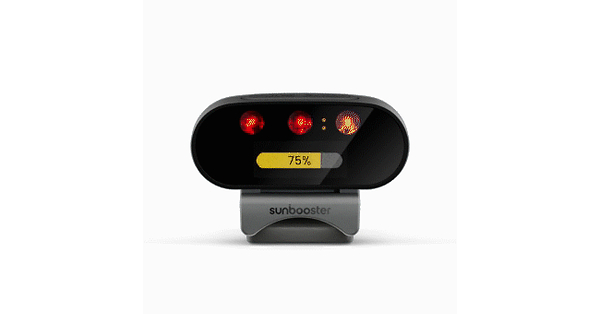
SunLED Life Science said its SunBooster near-infrared device won one of nine TMC 2026 Future of Work Product of the Year Awards. The screen-mounted device is designed to deliver near-infrared light indoors; the company cites validation in a double-blind University of Groningen study but provides no sales or financial results.
Analysis
The award is a modest distribution/credibility signal, not evidence of a material commercial inflection: SunLED is privately held, so there is no direct listed-equity exposure. The investable question is whether independent evidence and repeat purchasing convert a niche wellness accessory into an OEM feature. If adoption occurs, the strategic value may accrue to display and workplace-equipment vendors through differentiation or licensing, but that is conditional; the release provides no shipment, pricing, channel, or licensing data. Established substitutes—daylight access, breaks, and circadian lighting—cap pricing power unless SunBooster demonstrates incremental benefit.
Near term (days), expect little fundamental read-through beyond brand visibility. Over 1–3 months, verify retail sell-through, returns, price point, and any employer or OEM deployments. Over 6–18 months, the thesis depends on replicated, independently reviewed efficacy at specified wavelengths and doses, plus scalable distribution. The claimed university validation is not enough to assess clinical significance from this release; award recognition is not scientific or regulatory endorsement. A weak study, poor repeat purchase, or no channel conversion would falsify the commercial thesis. No compelling public-market trade follows from this announcement alone.
AllMind Terminal
AI-powered research, real-time alerts, and portfolio analytics for institutional investors.
Request TrialMarket Sentiment
Overall Sentiment
mildly positive
Sentiment Score
0.25
Key Decisions for Investors
- No trade on the award. Treat SunLED as a private-company watch item; do not infer revenue or valuation impact for public display, lighting, or workplace-equipment companies.
- Request/monitor the Groningen study’s sample size, protocol, endpoints, effect size, and replication, alongside product wavelength/dose and any applicable safety or regulatory review before underwriting health-related demand.
- Reassess only on verifiable commercial milestones: paid employer pilots converting to deployments, repeat sales and return rates, or named OEM/licensing agreements. Absence of such evidence over the next few quarters weakens the adoption case.
More News
- Magnificent 7 loses $1 trillion. The most eye-popping stats from Thursday's tech stock plunge
- Tech stocks are suffering their biggest selloff since Covid, as investors see premature end to AI datacenter boom
- Wall Street’s best post-midterm rally in 44 years lasted just one day—then $3 trillion vanished as chip stocks plunged over AI fears
- AI stocks plunge after election, driving down US markets
- Qualcomm slides 9% after earnings, leading post-election chip stock sell-off
- Shield AI To Hit $28.8 Billion Value With $5.3 Billion Radar Acquisition