
Australia’s Bathla Collapse Raises Fears of a China-Style Spiral
Source: Bloomberg
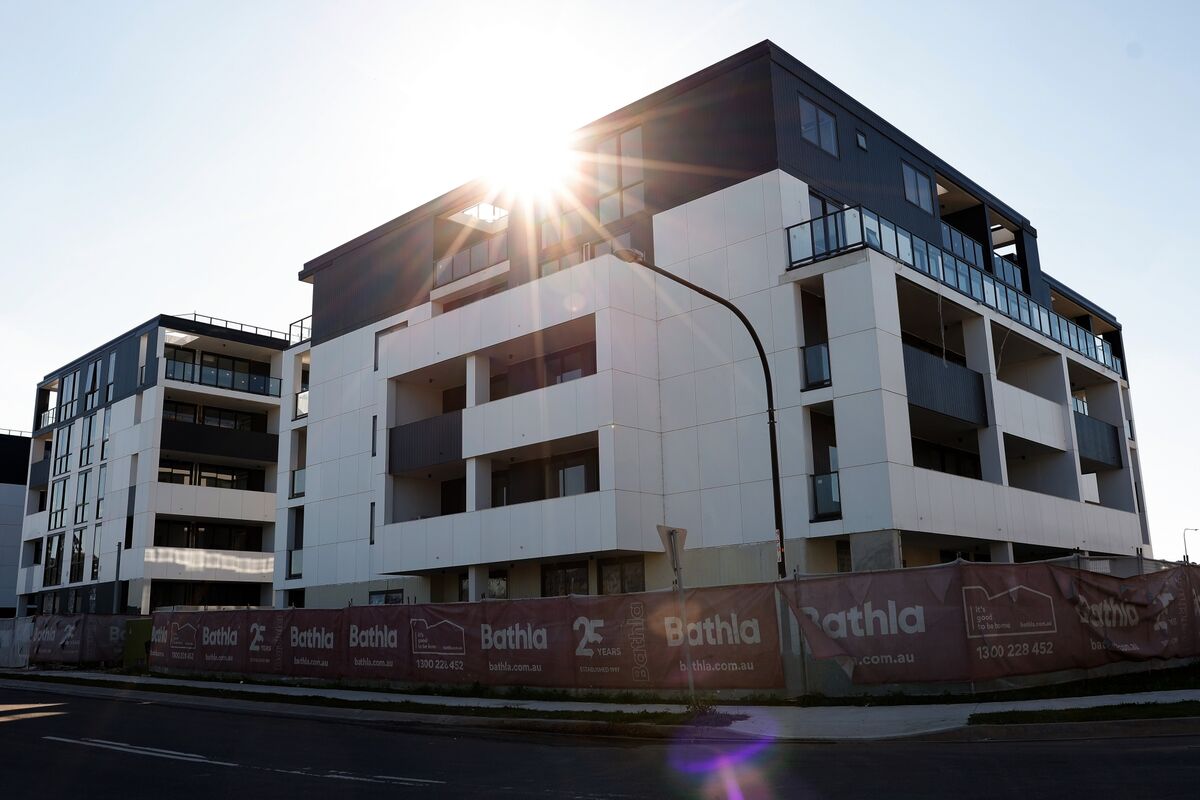
Australian property developer Bathla Group has collapsed, sending shock waves through the country's real estate and private-debt markets. Investors are assessing whether the failure could signal a broader property-sector shakeout resembling China’s prolonged developer crisis, increasing concerns over developer financing and asset values.
Analysis
The relevant transmission channel is unlikely to be listed residential developers alone; it is Australian private credit, where construction lending can carry thin disclosure, concentrated borrower exposure and collateral values that are only tested when projects stall. A disorderly workout would widen required returns for non-bank lenders before it materially affects housing prices, raising refinancing costs for smaller builders and potentially forcing asset sales into an already weak construction-margin environment.
For listed equities, CBA, WBC, NAB and ANZ are more exposed to a sentiment-driven reassessment of mortgage and commercial-real-estate credit than to a single developer failure. The more direct second-order pressure falls on SGP, MGR and LLC: tighter debt availability reduces project IRRs, delays land conversion and increases the equity required to preserve development pipelines. Over the next 1-3 months, lenders' impairment commentary and any evidence of construction-finance syndication stress matter more than headline house-price indices.
The contrarian case is that this remains an idiosyncratic sponsor/liquidity event rather than a systemic property cycle. Australian bank mortgage books have materially different underwriting, recourse and regulatory characteristics from China’s developer-financing model; absent rising arrears, falling collateral valuations and broad private-credit redemption pressure, a sector-wide de-rating would likely be overdone. The thesis turns structurally negative over 6-18 months only if refinancing failures spread from developers to subcontractors and commercial-property borrowers, producing a feedback loop into employment and consumer credit.
AllMind Terminal
AI-powered research, real-time alerts, and portfolio analytics for institutional investors.
Request TrialMarket Sentiment
Overall Sentiment
moderately negative
Sentiment Score
-0.50
Key Decisions for Investors
- Do not initiate a broad Australian housing short on this signal alone; set a 30-60 day watch alert for disclosed construction/CRE impairment increases, private-credit fund gating or materially wider Australian subordinated-bank spreads. Those developments would validate a systemic rather than idiosyncratic thesis.
- If Australian bank equities sell off more than 8-10% without a corresponding rise in mortgage arrears or forward impairment guidance, consider a tactical long CBA versus short MGR or LLC for 1-3 months. The pair isolates relatively resilient regulated mortgage franchises from development-margin and refinancing sensitivity; exit if CBA raises expected credit losses or unemployment trends sharply higher.
- For existing exposure to SGP, MGR and LLC, reduce or hedge into any credit-driven rebound until management quantifies construction-lender availability, presales conversion and project funding costs. A downward revision to development completions, presales or return-on-capital targets is the key falsifier for a benign interpretation.
- Monitor Australian bank AT1/subordinated credit and AUD corporate-property spreads rather than equity volatility alone. A sustained 25-50bp widening versus comparable global financial credit would be a more actionable trigger to underweight NAB/WBC, which generally carry greater sensitivity to business and commercial-property credit perception than a pure mortgage narrative.
More News
- Next week brings major risks for the stock market, just as the AI trade keeps faltering
- AI Doubts Spread Cracks in Equities, Credit Markets: Evening Briefing Americas
- Stocks Fall as Oil Rally Keeps a Lid on Treasuries
- Kinder Morgan, Energy Transfer and Williams could benefit from cheap natural gas
- Vertex reports positive IgAN trial data, FDA decision due Nov. 30
- The real test for Moderna’s cancer vaccine isn’t about beating Keytruda. It’s keeping cancer from coming back in the long term.
From AllMind Research
- Anthropic IPO Preview: Valuation, Timing, and What to Watch
- Shein After the IPO: Venue, Valuation, and What Must Be Proved
- What AI Research Tools Should a Small Hedge Fund Buy First?
- Weekly Update: AI-Powered Report Editing, Investor Relations, and Enhanced Search
- Automating Financial Model Updates: A Source-Controlled Workflow