
Interlune Implants Helium into Simulated Moon Dirt, Advancing the Ability to Test Moon-Bound Hardware on Earth
Source: PR Newswire
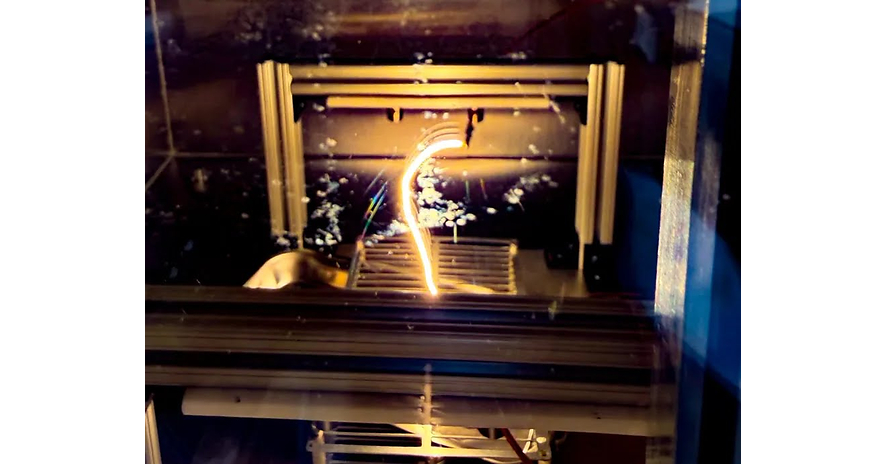
Interlune demonstrated implantation and extraction of helium-4 in simulated lunar regolith, replicating nearly 15,000 years of solar-wind exposure in about four hours (≈32 million× faster than natural exposure). The company says it can produce gas-bearing lunar simulant in gram-to-kilogram quantities and plans to offer material and testing services, supporting faster validation of extraction hardware while avoiding heating regolith near ~1,000°C. Interlune also secured up to $4.84M in Texas Space Commission funding for its Houston-based research lab and plans to extend the approach to hydrogen next.
Analysis
This is a de-risking event, not a demand event: the investable value is in shrinking the probability that lunar processing hardware fails qualification, which can raise the option value of the entire lunar infrastructure stack. The nearest beneficiaries are not just the company in the release, but any platform that sells testing, robotics, vacuum/plasma, or mission-integration services into government and commercial lunar programs. The second-order winner is whoever can claim “qualified against realistic regolith” as a sales wedge, because that becomes a procurement moat when buyers are forced to choose between competing architectures.
The main bear case is that lab fidelity is still a long way from operational economics. Matching release behavior in controlled conditions does not address throughput, dust abrasion, thermal cycling, or system reliability on the Moon; those are the failure modes that matter over 6-18 months. If the promised lower-power mechanical approach proves robust, it disadvantages thermal-heavy extraction concepts and reduces the capex burden for future lunar ISRU bidders, but that benefit is still mostly embedded in long-dated optionality rather than near-term revenue.
Consensus is likely overpricing the speed of monetization and underpricing procurement inertia. In the next 1-3 months the market will trade headlines and grant/contract follow-through; over 6-18 months the real catalyst is whether this becomes a required qualification substrate for NASA/defense and commercial lunar hardware. Falsifiers are straightforward: no repeat orders, no third-party validation, or evidence that competing simulants can be built cheaper with comparable fidelity.
AllMind Terminal
AI-powered research, real-time alerts, and portfolio analytics for institutional investors.
Request TrialMarket Sentiment
Overall Sentiment
mildly positive
Sentiment Score
0.35
Ticker Sentiment
Key Decisions for Investors
- Starter long in HLOGF only if liquidity is acceptable; size it like venture optionality, not a momentum trade. Target a 6-18 month horizon and add only after third-party validation or a first paid testing order; thesis breaks if commercialization remains purely promotional through the next two quarters.
- Pair trade: long LUNR / short ARKX for 1-3 months to isolate lunar-specific optionality from generic space beta. Risk/reward is roughly 2:1 if lunar qualification news drives relative outperformance, but cover quickly if the broad space tape turns risk-on and lifts all boats.
- No options chase here unless there is a confirmed catalyst calendar. If a NASA/defense procurement or customer qualification announcement hits, use call spreads in the most liquid lunar proxy rather than outright shares to cap downside on a story-stock move.
- Set an alert for third-party qualification of the simulant or first recurring customer revenue; that is the first point where this becomes a monetization story instead of an R&D milestone. Without that, treat pullbacks as noise and avoid increasing exposure.
More News
- Nvidia GPUs are everywhere. Here are the ways companies are accessing them
- Bank of America is bullish on these top stocks ahead of earnings
- As companies pour billions into Earth-based AI infrastructure, Google is taking the data center race off-planet
- How U.S. know-how is fracking Australia into a gas boom, from Texas oilmen to Trump’s energy secretary
- The world needs Ukraine’s grain. Its farmers are running out of reasons to plant
- Verizon stock heads for worst day since 2002 as SpaceX U.S. network plans whack telcos