
Swedish Left, Center Parties Scramble to Form Government
Source: Bloomberg
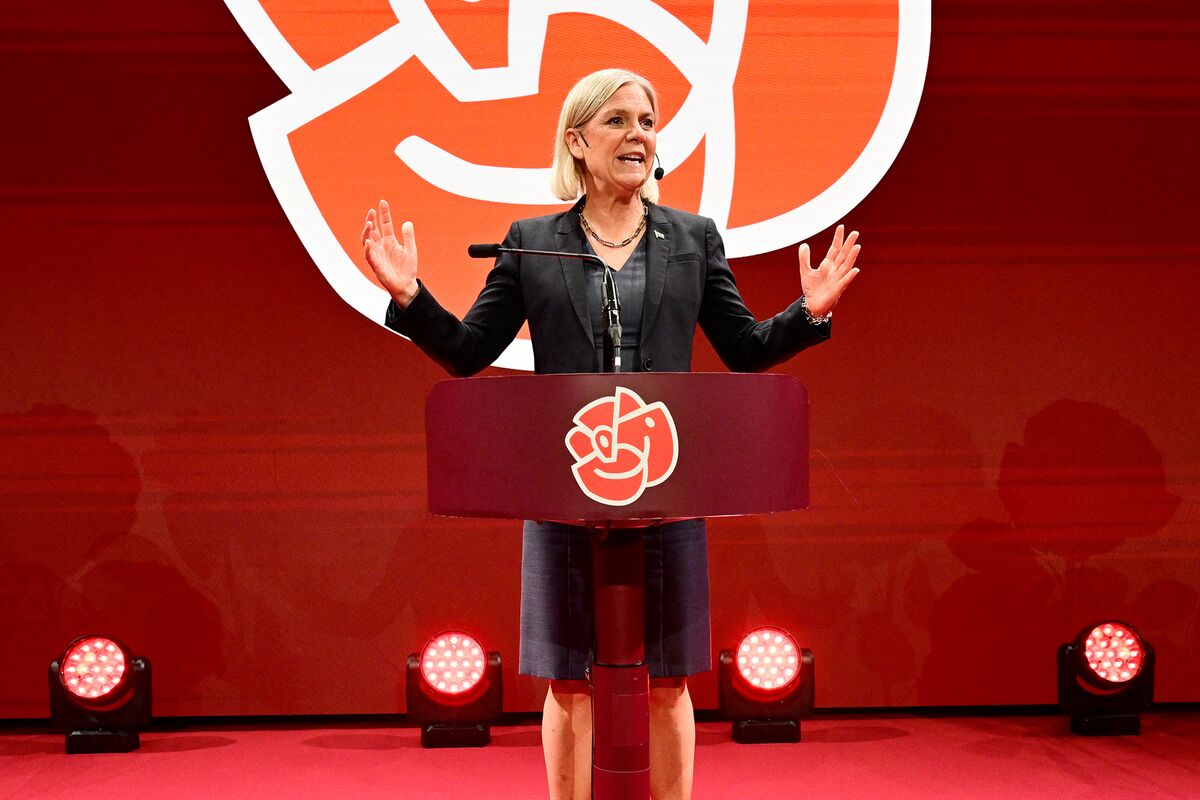
Sweden's left and center parties defeated the right in a national election that was initially too close to call. Social Democratic leader Magdalena Andersson now faces the central challenge of assembling a governing coalition from four politically diverse parties, creating uncertainty over the next government's policy agenda.
Analysis
The market implication is less the parliamentary arithmetic than the likely policy mix required to sustain a governing coalition. A left-leaning dependence structure raises the probability of incremental housing, labor-market and welfare measures, while centrist participation should constrain outright fiscal expansion and preserve Sweden’s institutional credibility. The near-term transmission channel is therefore SEK volatility and a modest risk premium on domestically regulated sectors—not a broad repricing of Swedish equities.
Banks with meaningful Swedish mortgage exposure (SWED-A.ST, SEB-A.ST, SHB-A.ST, NDA-SE.ST) are the clearest watchlist: coalition negotiations that revive rent regulation, mortgage-market intervention or bank-tax proposals could compress domestic earnings multiples before any earnings impact materializes. Conversely, construction and residential developers (JM.ST, NDA? no—use JM.ST, BONAV-B.ST) could benefit if housing supply incentives or public investment become part of the coalition bargain, though higher funding costs remain the dominant earnings constraint over the next 1-3 quarters.
Consensus may overstate the political-risk premium. Swedish fiscal rules, EU constraints and the need for centrist support make a sharp break with market-friendly policy unlikely; globally diversified exporters such as ATCO-A.ST, VOLV-B.ST and SAND.ST have limited direct exposure to domestic policy. The principal falsifier is a coalition agreement featuring explicit sector taxes, rent controls or a material loosening of the fiscal framework; absent those provisions, any SEK or bank-sector weakness on negotiation headlines is more likely a tactical entry point than a structural short.
AllMind Terminal
AI-powered research, real-time alerts, and portfolio analytics for institutional investors.
Request TrialMarket Sentiment
Overall Sentiment
mixed
Sentiment Score
0.05
Key Decisions for Investors
- Maintain neutral Sweden beta through coalition negotiations; avoid broad OMX Stockholm hedges unless SEK volatility rises materially, as exporter earnings are driven more by global industrial demand and FX than domestic policy.
- Set a 1-3 month event watch on SWED-A.ST, SEB-A.ST and SHB-A.ST: consider tactical longs only after the coalition platform excludes bank levies, mortgage intervention and binding rent controls. Falsify on explicit policy language or a downward revision to sector return-on-equity guidance.
- Prefer a relative-value expression long globally exposed industrials (VOLV-B.ST or ATCO-A.ST) versus Swedish domestic financials if negotiations turn interventionist; target a 5-10% relative move over 3-6 months, with exit if the final program remains fiscally conservative and sector-neutral.
- Monitor 10-year Swedish government bond spreads versus Germany and EUR/SEK during the government-formation process. A sustained widening of roughly 15-20bp in spreads or sharp SEK depreciation would signal that fiscal-policy risk is becoming investable rather than headline noise.
More News
- Trump signs sweeping Russia sanctions over Ukraine war
- Trump says U.S. to build a 'large Military presence' in Greenland as part of a security deal with it and Denmark
- Warren Buffett stepping down as chairman of Berkshire Hathaway: 'Father Time always wins'
- Flock Offers Employees Buyouts as Customers Flee
- Analysis-Russia sanctions bill gives Trump sweeping new tariff powers
- As Houthis grab Bab al-Mandeb, US appears willing to watch from sidelines