
US Gasoline Stress Shows No Sign of Easing Even as Demand Drops
Source: Bloomberg
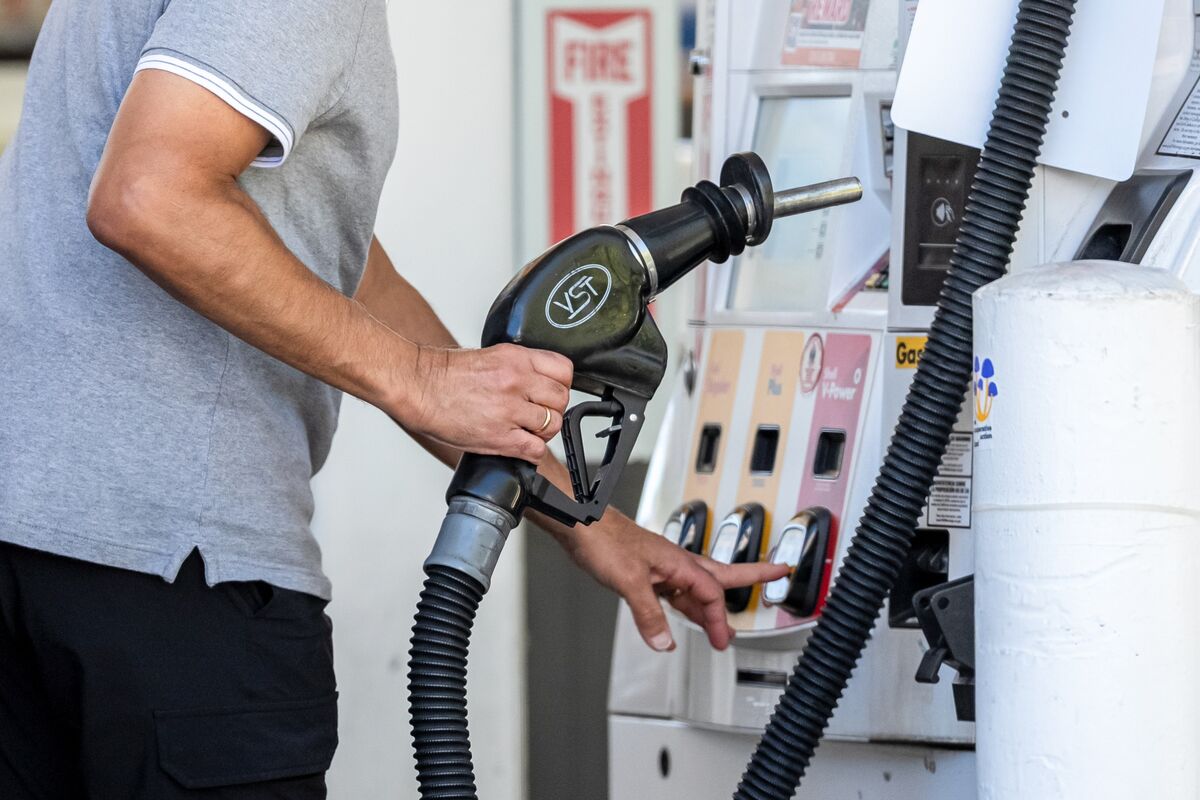
US gasoline market stress is easing only marginally despite demand dropping, with pump prices still “sky-high” and expected to stay elevated through year-end as Labor Day signals the end of peak summer driving. The article highlights a squeeze that persists even as consumers begin to cut back, implying continued cost pressure into late 2024.
Analysis
The near-term winner is not the upstream energy complex so much as gasoline-heavy refiners and wholesale marketers. When pump prices stay high while volumes soften, the market often underestimates how long crack spreads can stay elevated because demand destruction works with a lag; supply response is constrained by refinery utilization, outages, and logistics rather than crude prices alone. That argues for VLO/MPC/PSX over integrated majors, while the first-order loser is consumer discretionary, especially XLY/XRT names that rely on low-income, high-frequency spending.
The first reversal catalyst is not a price headline but evidence that the consumer is actually breaking: lower implied gasoline demand, rising inventories, or a sharp post-Labor Day step-down in miles driven. If those show up over the next 2-6 weeks, refiners can de-rate quickly as the market starts pricing a crack-spread rollover instead of a persistent supply squeeze. Over 6-18 months, sustained fuel inflation becomes a stealth tightening channel for the economy, pressuring holiday retail, discretionary travel, and accelerating efficiency/EV substitution.
The contrarian view is that consensus may be too quick to believe weaker demand will normalize prices. Gasoline is unusually inelastic in the short run, so a modest demand decline can still coexist with tight retail supply if refining capacity is the bottleneck. What would falsify the bullish-refiner / bearish-consumer setup is three to four consecutive weeks of lower wholesale gasoline cracks and retail prices after Labor Day, or a meaningful rebuild in product inventories/imports.
AllMind Terminal
AI-powered research, real-time alerts, and portfolio analytics for institutional investors.
Request TrialMarket Sentiment
Overall Sentiment
mildly negative
Sentiment Score
-0.20
Key Decisions for Investors
- Long VLO/MPC basket vs short XLY for 1-3 months: best risk/reward if elevated fuel prices persist into holiday spending; target 5-8% relative outperformance, stop if retail gasoline prices fall ~5% and cracks roll over for 3 straight weeks.
- Buy UGA on any post-holiday pullback as a tactical 4-8 week expression of continued gasoline tightness; keep size modest because carry/mean-reversion risk rises quickly if inventories rebuild.
- Pair short XLY / long XLP for 2-3 months as a consumer-budget stress hedge; gasoline acts like a tax on discretionary spend, and the trade should work if Q4 retail data weakens before year-end.
- Set a watch item on EIA implied gasoline demand and product inventories; if those improve materially in the next two weekly prints, reduce refiner exposure rather than waiting for earnings revisions.
More News
- Iran-backed Houthis strike Yemen’s Aden: What that means
- Christine Lagarde: IMFC Statement
- IMF urges support for poorer nations facing high inflation, war spillovers
- U.S. budget deficit swells to almost $2 trillion for fiscal 2026, up 12% in a single year
- Trump puts on hold new Russia sanctions he signed into law
- Wall Street Anxiety Spreads as AI Rout Meets $110 Oil Shock