
Walmart Q2 Earnings Beat Estimates but Can Higher Costs Limit Upside?
Source: zacks.com
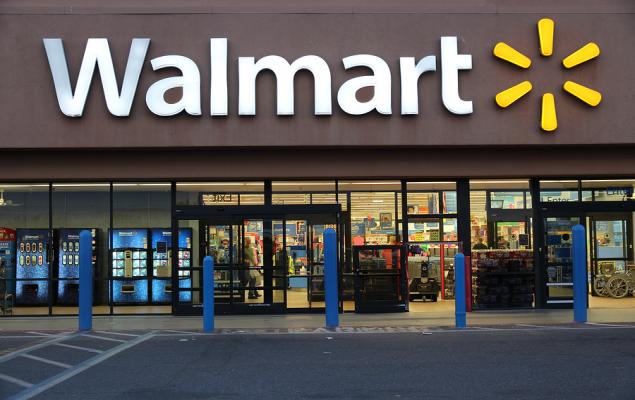
Walmart reported fiscal Q2 revenue of $187.9 billion, up 5.9% year over year and above the $186.3 billion consensus, while adjusted EPS rose 19.1% to $0.81 versus $0.73 expected. Global e-commerce grew 23%, advertising increased 38%, and management raised fiscal 2027 constant-currency sales growth guidance to 4%-5%, operating-income growth to 7%-8.5%, and adjusted EPS to $2.80-$2.87. Near-term upside is tempered by Q3 operating-income growth guidance of just 2%-4%, more than $2 billion in incremental fuel costs, and higher capex, which reduced first-half free cash flow to $5.5 billion from $6.9 billion.
Analysis
The investable issue is not top-line resilience but whether Walmart can preserve its premium multiple while converting a larger share of sales into free cash flow. Price reinvestment is strategically rational: it raises the switching cost for value-oriented customers and forces Target to choose between protecting gross margin and defending traffic. Yet it also makes the next 1-3 months highly sensitive to evidence that non-merchandise profit pools—advertising, membership, marketplace and fulfillment fees—are offsetting incremental labor, fuel and depreciation rather than merely funding lower prices.
WMT's automation and fulfillment buildout creates a second-order beneficiary set among retail logistics and warehouse-automation vendors, but the near-term earnings impact is more likely multiple-neutral than accretive because depreciation is recognized before full utilization benefits. COST is comparatively insulated from a price war through its membership-funded model and limited SKU architecture; TGT remains the more exposed competitor because it lacks Walmart's scale in grocery, retail media and third-party marketplace monetization. A broad fuel-cost increase would also disproportionately hurt lower-density delivery economics, making WMT's fulfillment-margin narrative less portable to TGT.
Contrarian view: the market may over-penalize the capex step-up if store-based fulfillment allows Walmart to avoid a parallel national warehouse network. The key falsifier is not quarterly EPS but free-cash-flow conversion: if operating cash flow does not accelerate sufficiently to support management's full-year FCF ambition after capex, the stock's quality-growth premium is vulnerable over 6-12 months. Conversely, sustained digital-margin expansion alongside stable inventory turns would justify viewing current investment as a moat-building phase rather than margin leakage.
AllMind Terminal
AI-powered research, real-time alerts, and portfolio analytics for institutional investors.
Request TrialMarket Sentiment
Overall Sentiment
mildly positive
Sentiment Score
0.32
Ticker Sentiment
Key Decisions for Investors
- Maintain a market-neutral quality pair: long WMT / short TGT over the next 1-3 months. Walmart's scale-funded price investment and higher-margin ancillary revenue should widen the operating-performance gap; reassess if TGT demonstrates material gross-margin expansion without a traffic decline, or if WMT's U.S. digital incremental margins fall below management's double-digit characterization.
- Do not chase WMT immediately after an earnings-driven move; add only on a 5-8% pullback or after the next quarterly cash-flow disclosure confirms capex-adjusted conversion. Target 10-15% upside over 6-12 months if ancillary monetization funds reinvestment; downside risk is 10-12% if operating-income growth remains materially below sales growth for two consecutive quarters.
- Use COST as the defensive long within large-format retail rather than TGT if consumer conditions deteriorate over the next 6-18 months. Its membership economics provide greater gross-margin durability, though valuation leaves limited tolerance for slowing renewal or comparable-sales trends; avoid adding at momentum highs.
- Set an alert on WMT's next guidance update for fuel expense, capex-to-sales, and operating cash flow. A further capex increase without a matching operating-cash-flow upgrade is a de-risking trigger for WMT and strengthens the case for the WMT/TGT pair only through the short leg, not an outright retail short.
More News
- FTC demands Walmart, Uber, Delta and others hand over data on personalized pricing: Reuters
- Is Costco the next healthcare disrupter?
- Why GM and Hilton are ditching the NYSE for Nasdaq
- The FTC asks companies from Uber to Walmart about how they personalize the prices you pay
- What investors need to know about Alphabet's stock-busting earnings report
- Our next steps for Alphabet stock after earnings disappoint at nearly every turn