
Tongwei's TNC 2.0 FULLX G12R-48: een nieuwe module zonnepanelen voor particuliere woningen, ontworpen om meer rendement uit elk dak te halen.
Source: PR Newswire
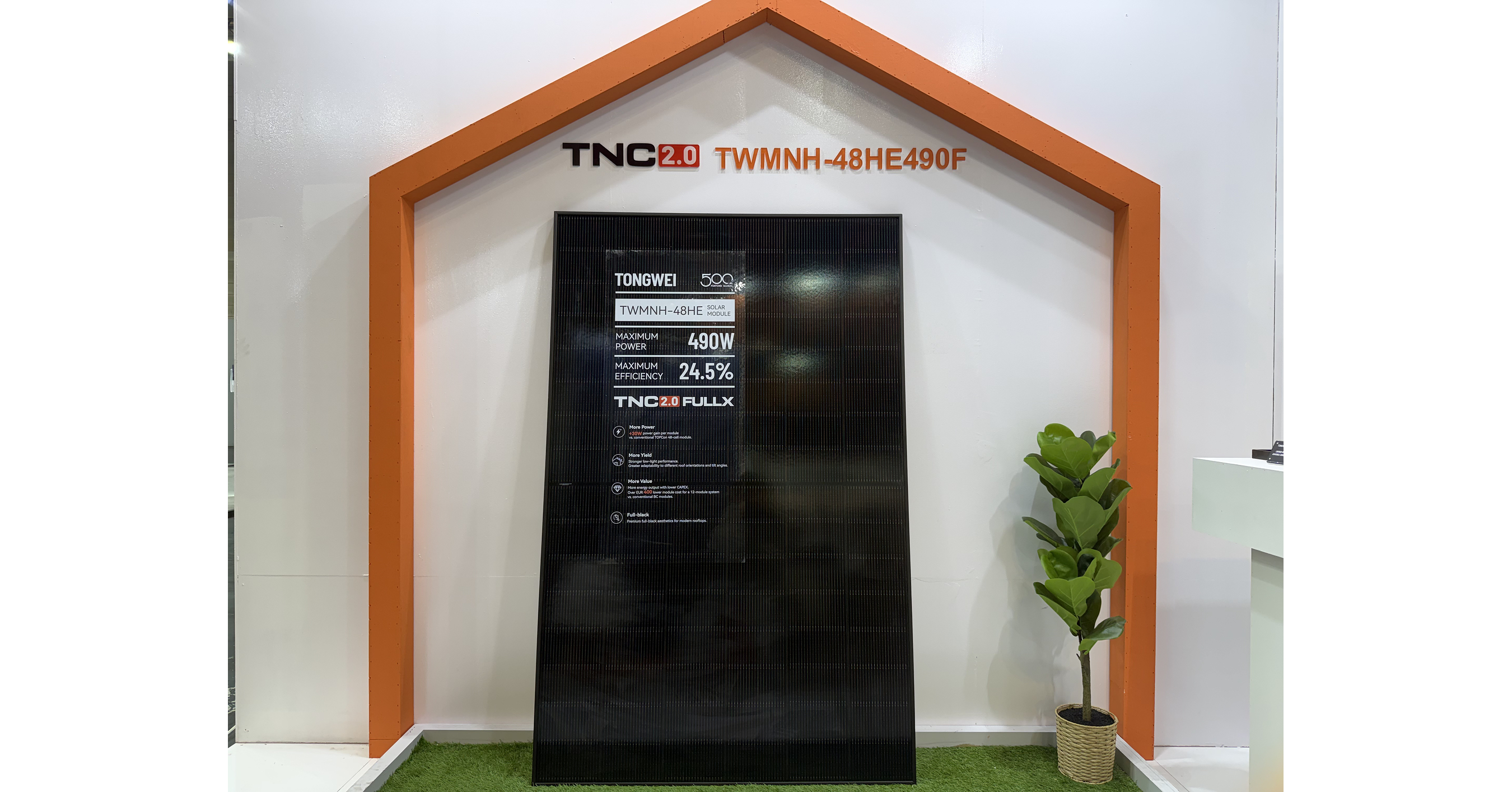
Tongwei Solar introduced its TNC 2.0 FULLX G12R-48 residential module, rated at up to 490 W and 24.5% efficiency in a 1,762 × 1,134 × 30 mm format. Tongwei reports 3.3% higher average energy generation per watt than tested copper-plated back-contact modules and, in Yancheng tests, 447.56 equivalent full-load hours versus 433.27; claimed benefits depend on test and installation conditions. Under specific price assumptions, a 12-module system using 485 W TNC modules could save more than €400 versus 500 W copper-plated BC modules.
Analysis
Investment read-through: low near-term signal, potentially meaningful only if the module wins volume at a price that preserves margins. Higher watts per roof area can improve customer economics and reduce installation/BOS costs per kW, but it also means fewer modules may be needed for a given system size—potentially offsetting shipment growth. Whether Tongwei captures value depends on any price premium, verified field yield, and installer adoption, none of which the release establishes.
Treat the yield comparisons as marketing claims, not bankable evidence: tests were company-reported and specific to tested conditions; validate independent results, degradation and warranty terms, delivered pricing, certifications, and compatibility with common residential system designs. Inverters, roof geometry and shading may limit conversion of nameplate efficiency into household savings. The aesthetic options could help in premium residential channels, but are unlikely by themselves to move consolidated earnings without material orders.
Days: likely little fundamental impact absent a disclosed customer or shipment commitment. Over 1–3 months, channel uptake, price realization and independent testing are the useful catalysts. Over 6–18 months, broader adoption of higher-output modules could intensify price competition and pressure lower-efficiency offerings, while reducing module units per installed kW. The thesis weakens if the module requires a discount, fails independent yield testing, or cannot secure distribution. No company-specific valuation or earnings sensitivity can be inferred from the supplied data.
AllMind Terminal
AI-powered research, real-time alerts, and portfolio analytics for institutional investors.
Request TrialMarket Sentiment
Overall Sentiment
moderately positive
Sentiment Score
0.35
Key Decisions for Investors
- No event-driven position on the launch alone; the supplied data identify no ticker and provide no orders, pricing, or volume guidance.
- Add Tongwei and residential solar module peers to a watchlist; seek independent field-yield data, warranty/degradation terms, certification status, customer wins, and realized ASP before underwriting earnings impact.
- Track module price per watt and installer/BOS cost per installed kW: a durable customer benefit without price premium capture could still worsen module-unit demand and intensify sector price competition.
- Reassess only on evidence of meaningful channel adoption or a price premium; falsifiers include discounted pricing, independent tests failing to reproduce the yield advantage, or guidance showing no material shipment contribution.
More News
- Anthropic's third-quarter revenue is said to hit $16.8 billion ahead of IPO
- SK Hynix plunges 8% amid Asia tech rout as Fed rate hike fears, AI funding worries mount
- Why is Samsung Electronics stock plunging today?
- Why is Advantest stock plummeting today?
- Japan, U.S. reach first chip deal under $550 bln investment plan
- Elon Musk says Trump is 'ultimately' responsible for any curbs on Ukraine's Starshield systems
From AllMind Research
- Anthropic IPO Preview: Valuation, Timing, and What to Watch
- Shein After the IPO: Venue, Valuation, and What Must Be Proved
- What AI Research Tools Should a Small Hedge Fund Buy First?
- AI Tools for Family Offices: A Stack by Decision Type
- Reading Conviction in the Tape: What Level 3 Order Book Data Really Tells Discretionary PMs