
CARKU Takes Battery Innovation From Factory Floor to Europe at Automechanika Frankfurt 2026
Source: PR Newswire
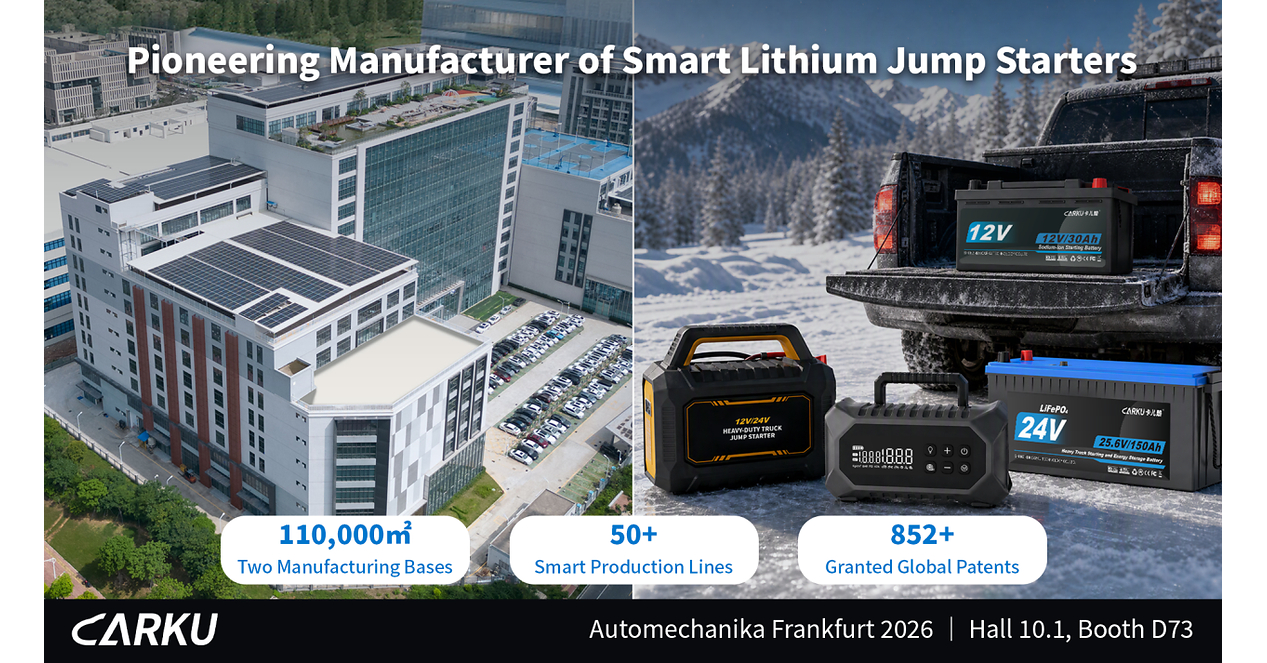
CARKU showcased its OEM/ODM battery-development platform at Automechanika Frankfurt 2026, emphasizing lithium and sodium-ion starting batteries for automotive aftermarket distributors. The company positions lithium batteries for lighter-weight, high auxiliary-power fleet applications and sodium-ion batteries as a durable cold-climate alternative to AGM for passenger vehicles, trucks and motorcycles. CARKU said its products are supported by 852 global patents and international certifications, but the release disclosed no financial results, contracts or sales targets.
Analysis
This is not yet an investable catalyst: a privately held supplier’s trade-show claims provide no disclosed customer wins, production volumes, warranty data, or unit economics. Public-market read-through should therefore be limited near term, but the relevant watchpoint is whether sodium-ion moves from stationary/storage applications into 12V automotive replacement batteries, where lower exposure to lithium price volatility and potentially better low-temperature behavior could pressure mature lead-acid/AGM economics.
Over 6-18 months, meaningful sodium-ion adoption would be more disruptive to lead-acid incumbents and their recycling ecosystem than to EV battery leaders. CLF and SBSW have indirect lead-exposure implications through mining, while Exide’s private-market competitors and aftermarket distributors could face inventory obsolescence risk if fleet specifications shift; however, lead-acid’s installed base, low cost, established service network, and proven cold-cranking standards create a high adoption barrier. The more immediate beneficiary of fleet anti-idling investment remains auxiliary-power and electrification suppliers, not a new chemistry announcement.
The contrarian view is that sodium-ion’s apparent fit for cold climates may be overstated until independently validated against cold-cranking amps, calendar life, recharge acceptance, safety certification, and total installed cost. Fleet buyers optimize downtime and replacement-network availability rather than cell chemistry; absent OEM fitment approvals or multi-year distributor contracts, this is marketing optionality rather than evidence of a replacement cycle. A lithium rebound would also weaken the relative cost argument, while further lead-price declines would reinforce AGM’s incumbent advantage.
AllMind Terminal
AI-powered research, real-time alerts, and portfolio analytics for institutional investors.
Request TrialMarket Sentiment
Overall Sentiment
mildly positive
Sentiment Score
0.28
Key Decisions for Investors
- No position on this release. Create a 1-3 month alert for disclosed European OEM, fleet, or aftermarket-distributor contracts; a named contract with volume commitments and third-party cold-cranking certification would be the threshold for a sector trade.
- Monitor lead versus lithium carbonate pricing and European 12V battery replacement data over the next 6-12 months. A sustained lithium-price decline or weak sodium-ion field-performance data falsifies any substitution thesis before it reaches public-equity relevance.
- For a liquid proxy only after verified fleet adoption, consider a relative-value short in lead-acid-exposed aftermarket battery suppliers versus long diversified automotive electrification exposure through DRIV; require evidence of specification changes, not trade-show product availability.
More News
- Here’s the ‘core economic flaw’ in the AI bull case as stock and bond trades unravel, according to a top economist
- 5 big analyst AI moves: ’Uniquely catalyst-rich’ months ahead for SpaceX
- The experience economy keeps defying expectations. Maybe we’ve been looking at it all wrong
- Iran says won’t allow US warships to get close as Trump ponders new attacks
- The U.S. military and NASA have power problems. Nuclear microreactors might solve both
- Trump set to announce plan by Audi to build a U.S. factory in Georgia, source says
From AllMind Research
- Anthropic IPO Preview: Valuation, Timing, and What to Watch
- Shein After the IPO: Venue, Valuation, and What Must Be Proved
- What AI Research Tools Should a Small Hedge Fund Buy First?
- Reading Conviction in the Tape: What Level 3 Order Book Data Really Tells Discretionary PMs
- AI Tools for CFA Charterholders: An Evidence Standard