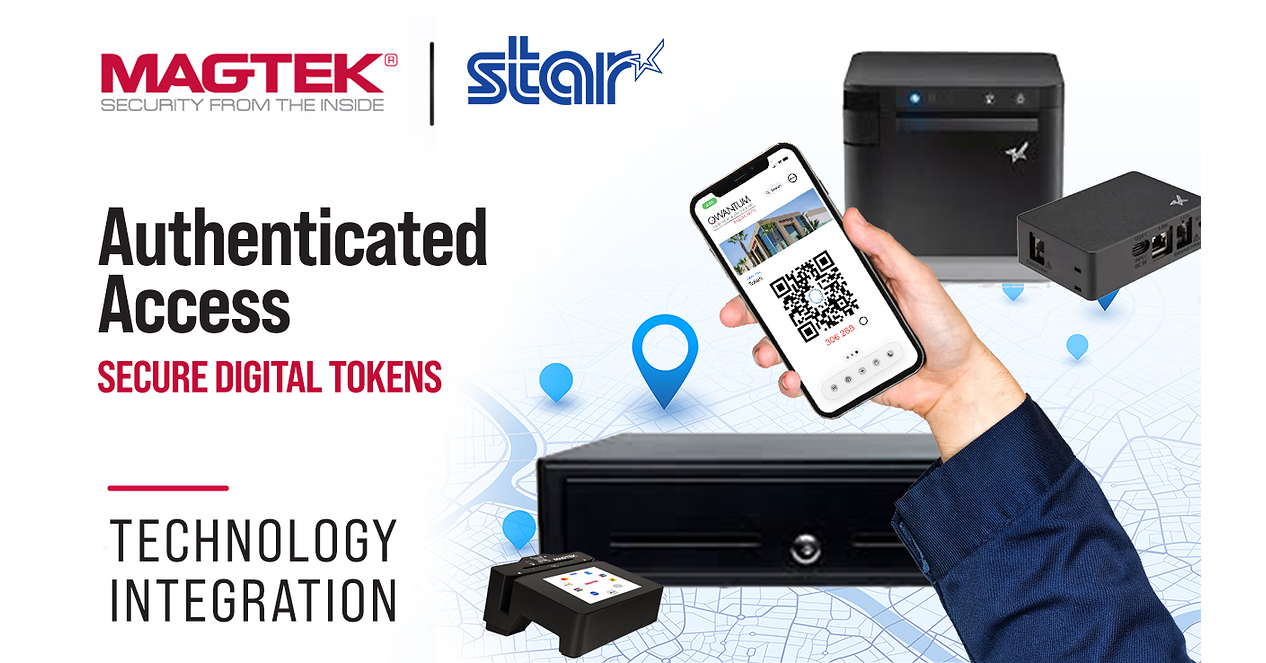
MagTek and Star Micronics announced Qwantum Multi-Factor Authentication (QMFA) Digital Tokens for POS peripherals, replacing physical keys/passwords with time-bound, context-aware tokens to authorize actions like initiating payments, printing receipts, opening cash drawers, and manager overrides. The system extends identity-based authentication beyond app login across countertop, mobile, and kiosk devices, using Qwantum Platform and native MQTT event-driven integration to connect POS and peripherals. No financial metrics were disclosed, but the launch targets reduced sensitive-data exposure and lower operational complexity for merchants and ISVs.
This reads less like an immediate earnings catalyst and more like a signal that the POS stack is continuing to move from hardware-centric workflows to software-defined control. The economic winner is not the peripheral box maker per se; it is the ISV that can standardize one application across countertop, mobile, and kiosk footprints and then monetize the resulting stickiness through higher software take-rates, lower support costs, and better merchant retention. That should be incrementally positive for cloud-native commerce platforms like TOST and SQ, while pressure falls on legacy POS integrators and on-prem middleware vendors whose value proposition is tied to installation complexity and service labor.
The near-term market reaction will likely overread the security angle and underwrite the operational friction. Tokenized access only matters if merchants actually see lower ticket volume, fewer site visits, and faster device provisioning; otherwise it is just another certification layer. Over the next 1-3 months, the key catalyst is whether this turns into named design wins or is merely demo-driven marketing around RetailNOW. If there is no evidence of attach rate or commercial rollout by the next quarter, the trade should fade.
Contrarian view: the consensus is assuming interoperability is universally accretive, but in retail the incumbent preference is often reliability over elegance. A more open device layer can also compress hardware vendors’ switching costs and accelerate commoditization, which is bad for anyone earning margin from closed ecosystems. The thesis is falsified if integration headaches rise, security incidents occur, or merchants report no measurable reduction in maintenance cost; in that case the benefit accrues to the app layer only, not the peripheral ecosystem.
AI-powered research, real-time alerts, and portfolio analytics for institutional investors.
Request TrialOverall Sentiment
mildly positive
Sentiment Score
0.25
Ticker Sentiment
