
Pimax Unveils Crystal Pro with Native Foveated Streaming, Sending the GPU's Native Image Wirelessly to the Headset
Source: PR Newswire
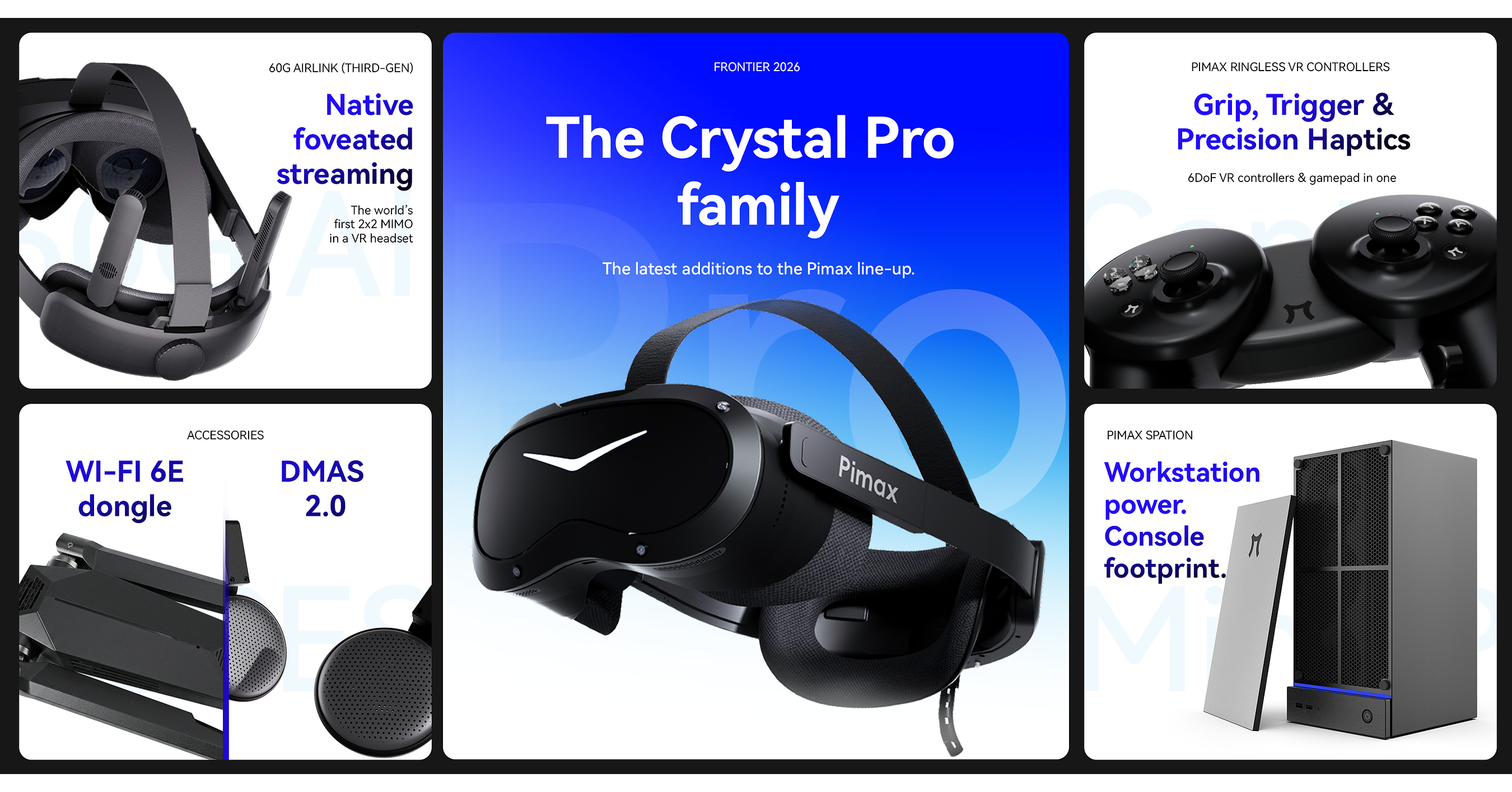
Pimax unveiled Crystal Pro, a wireless PC VR headset priced at $1,399, or $1,899 bundled with its optional 60G AirLink kit; the kit alone costs $599. Pimax says eye-tracked 60GHz streaming can deliver up to 6 Gbps combined throughput with under 2ms of added latency. The launch also included Ringless VR Controllers and the Spation mini-PC, with their pricing and shipping dates still to come.
Analysis
This is a product-validation event, not yet an earnings event for AMD or NVIDIA. Pimax’s PC-tethered approach could modestly support premium GPU demand if it converts into recurring headset and system volume, but the launch provides no shipment, order, or attach-rate evidence. Spation’s configurable GPU choices also make any component benefit contestable rather than exclusive; do not infer meaningful share gains for either supplier from a single product announcement.
The more interesting industry signal is that Pimax is trying to make wireless image quality and latency a reason to keep rendering on a PC, rather than relying on standalone headset compute. If users accept the room-antenna setup and the experience proves robust, this could extend the addressable life of high-end gaming PCs. That is a multi-year, highly conditional tailwind—not a near-term GPU demand catalyst. Conversely, 60GHz range/interference, setup friction, the premium system cost, and the external power pack could constrain adoption. A reservation offer is not evidence of sell-through.
Near term, expect little durable read-through to either stock. Over 1–3 months, independent latency/reliability tests, delivery timing, and actual reservations or cancellations matter more than launch claims. Over 6–18 months, watch whether other headset makers adopt comparable wireless PC-rendering architectures and whether PC-VR software engagement expands. The thesis weakens if reviews show unreliable room-scale links, shipments slip, or Pimax does not disclose credible volume; it strengthens only with repeatable user validation and evidence of sustained PC-VR demand.
AllMind Terminal
AI-powered research, real-time alerts, and portfolio analytics for institutional investors.
Request TrialMarket Sentiment
Overall Sentiment
mildly positive
Sentiment Score
0.25
Ticker Sentiment
Key Decisions for Investors
- No AMD or NVIDIA trade on this announcement alone; the potential component demand is unquantified and likely immaterial absent evidence of meaningful system volume.
- Treat independent Crystal Pro reviews and shipping execution as a 1–3 month alert: verify latency under real room conditions, connection stability, and reservation-to-purchase conversion before upgrading the demand thesis.
- Track AMD and NVIDIA gaming-segment commentary and GPU sell-through over the next 6–18 months for broader PC-VR demand confirmation; product availability alone is not evidence of incremental revenue.
- Avoid extrapolating the launch to the wider VR market unless competing headset vendors adopt similar designs or usage data show that high-end wireless PC VR is expanding rather than shifting sales among a small enthusiast base.
More News
- Nvidia Is on the Verge of a $6 Trillion Market Value
- What Marvell's rosy long-term guidance means for our AI chip stocks
- DeepSeek considers doubling latest funding round to up to $15 billion, sources say
- Meta Muse gives AMD a boost as AI momentum shifts to personal agents
- SpaceX seeks $40 billion to buy Nvidia chips, FT reports
- Mistral unveils new AI model it says rivals best open systems from China