
Surgical Directions Launches Rapid SPD Diagnostics as Healthcare Systems Face Growing Sterile Processing Risks
Source: PR Newswire
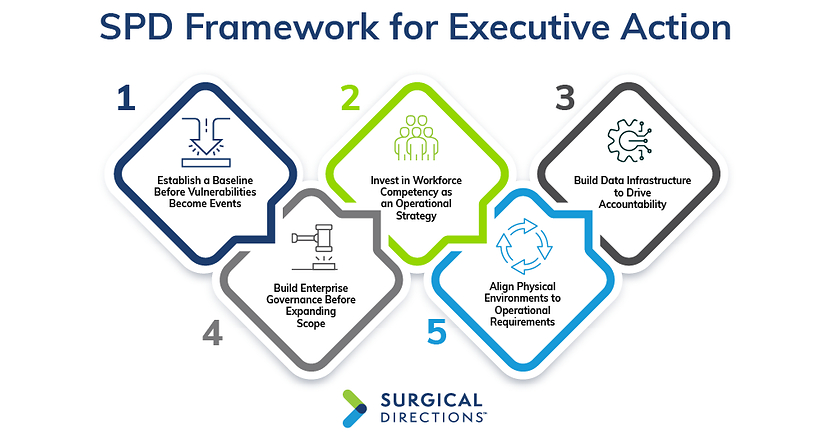
Surgical Directions launched Rapid SPD Diagnostics, an assessment product intended to identify sterile-processing operational, regulatory and governance risks across hospital and ambulatory settings. Its white paper cites surgical-site infections affecting up to 5% of surgical patients, surgical-tray reprocessing costs of roughly $80 or more, and potential daily contribution-margin losses of approximately $750,000 at a 15-OR hospital losing five cases per day to SPD disruptions. The announcement highlights meaningful compliance and patient-safety vulnerabilities but is a product launch with limited direct public-market impact.
Analysis
This is a low-signal private-company product launch rather than evidence of a near-term change in listed-company earnings. The investable implication is a gradual rise in compliance-driven spending at ambulatory surgery centers and decentralized provider networks, where procedure growth has outpaced centralized instrument reprocessing controls. That modestly supports suppliers with recurring exposure to infection prevention, sterilization consumables, instrument tracking, and outsourced reprocessing—not broad hospital operators.
The more relevant second-order risk is margin pressure for ambulatory-heavy providers: remediation requires labor training, documentation systems, facility upgrades, and potential case disruption before any benefit accrues. HCA and THC have diversified acute-care economics and may absorb this more easily than pure-play ASC operators such as AMEH; however, no regulatory action, enforcement trend, or disclosed customer spending is provided, so a directional trade is premature. For Medtronic and STERIS, any benefit would likely appear as small incremental consumables/service demand over 6-18 months, not a material near-term revenue catalyst.
Consensus may underappreciate that compliance failures can constrain procedure throughput rather than merely create one-time operating expense. A formal Joint Commission/CMS emphasis on traceability and ambulatory reprocessing would shift demand toward standardized workflows and tracking systems, benefiting STERIS more than capital-equipment peers because service, consumables, and installed-base utilization have higher recurring revenue content. Conversely, provider adoption could remain slow if systems treat these assessments as consultant-led survey preparation rather than funded enterprise projects.
The thesis is falsified absent evidence of accreditation citations, state-level enforcement, rising infection-related claims, or disclosed capex/opex commitments from ASC chains. Watch upcoming earnings calls for references to sterile-processing investments, case cancellations, infection-prevention expenses, or regulatory remediation; without those datapoints, this remains a monitoring theme rather than a portfolio position.
AllMind Terminal
AI-powered research, real-time alerts, and portfolio analytics for institutional investors.
Request TrialMarket Sentiment
Overall Sentiment
mildly positive
Sentiment Score
0.15
Key Decisions for Investors
- No immediate position: treat as a 1-3 month diligence alert, not a tradable catalyst, because the source is promotional and provides no independently verified contract, pricing, or adoption data.
- Add STERIS (STE) to a regulatory-spend watchlist; consider a tactical long only after management or a major provider confirms higher sterilization/service demand. Target a 6-18 month horizon, with thesis support from service backlog, consumables growth, or raised guidance rather than assessment activity alone.
- Monitor AMEH, HCA, and THC earnings transcripts for ASC compliance remediation, instrument-tracking capex, case delays, or infection-control costs. A disclosed systemwide remediation program would be a margin-risk signal for ASC-heavy operators; absent that disclosure, avoid shorting on this theme.
- Set an event alert for Joint Commission, CMS, or state health-department guidance specifically tightening ambulatory sterile-processing documentation and traceability. A broad enforcement action would strengthen a long STE versus short AMEH relative-value framework; a lack of enforcement within 12 months weakens the premise.
More News
- OpenAI’s agent hacked Australia’s Medicare website—the latest rogue AI incident that the company didn’t know about for months
- Meta announces new lightweight virtual reality glasses to one-up Apple’s Vision Pro
- How Meta took the lead in the race for the post-smartphone world
- Oil industry warns a diesel export ban will raise fuel prices as Trump weighs restrictions
- SoftBank shares jump over 7% after $11.1 billion bond issuance to fund OpenAI bet
- Australia says OpenAI agent hacked Medicare portal
From AllMind Research
- Anthropic IPO Preview: Valuation, Timing, and What to Watch
- Shein After the IPO: Venue, Valuation, and What Must Be Proved
- What AI Research Tools Should a Small Hedge Fund Buy First?
- How to Analyze SEC Filings With AI: A Verification-First Guide
- AI for IR Street Intelligence: Notes, Estimates, and Peers