
Hoymiles Supports Solar Sustainability for Third Consecutive Year with Freiburg Upcycling World Record
Source: PR Newswire
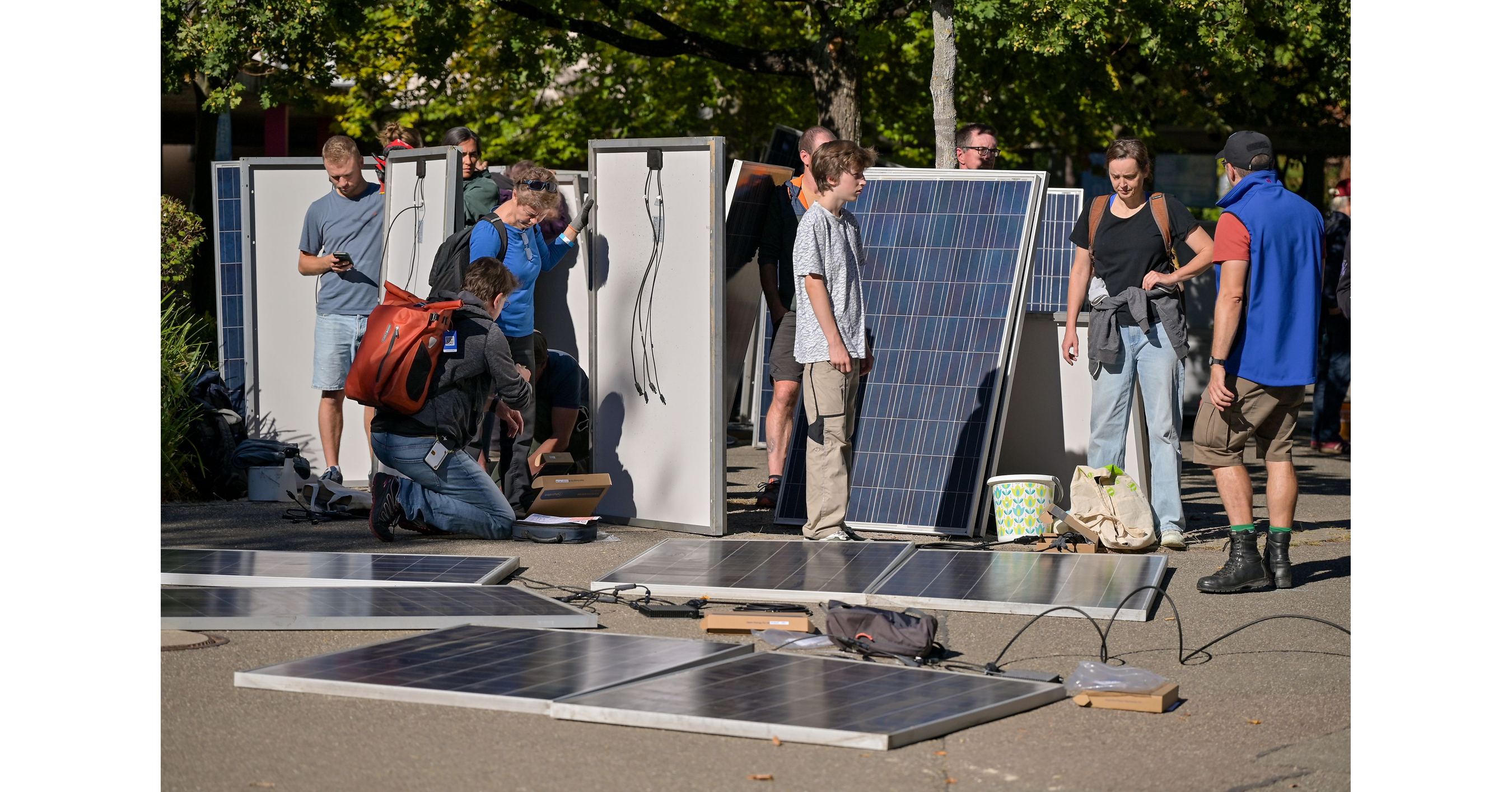
Hoymiles supplied 300 microinverters to support the reuse of 600 solar panels into 300 free plug-in residential PV systems in Freiburg, Germany. The panels had operated for 13 years, with only about 5% showing defects, highlighting the potential for functional solar equipment to be repurposed rather than discarded. The community initiative is Hoymiles' third consecutive year supporting solar upcycling in Germany, but is unlikely to have material financial impact.
Analysis
This is not investable demand evidence for Hoymiles or the listed solar complex: the unit count is immaterial and the source is promotional. The relevant signal is qualitative—Germany's plug-in PV format can expand the addressable market for low-cost microinverters and home-energy hardware by lowering the customer acquisition and installation barriers that have constrained residential rooftop solar.
The more consequential second-order effect is adverse for module replacement volumes, not for inverter demand. A functioning secondary market extends panel life and could pressure European module sell-through at the low end, worsening the oversupply problem for manufacturers such as JKS, CSIQ and FSLR; conversely, module-level power electronics suppliers including ENPH and SEDG could gain attach opportunities where mixed-age, mismatched panels require independent optimization. ENPH has stronger brand and distribution exposure in premium residential systems, while low-cost Asian microinverter vendors are better positioned in the DIY/balcony segment, limiting any direct read-through to ENPH earnings.
Over the next 6-18 months, the tradeable catalyst is German and EU implementation of plug-in PV, electrical-safety, grid-registration and reuse/waste rules—not community events. If regulators simplify registration and permit larger balcony-system capacities, distributed-generation penetration could increase retail power self-consumption, modestly pressuring German residential electricity demand growth and benefiting storage only if households subsequently add batteries. The contrary case is that reused modules have materially lower output, warranty concerns and fragmented installation standards; a tighter safety or liability regime would eliminate the apparent cost advantage quickly.
AllMind Terminal
AI-powered research, real-time alerts, and portfolio analytics for institutional investors.
Request TrialMarket Sentiment
Overall Sentiment
mildly positive
Sentiment Score
0.32
Key Decisions for Investors
- No standalone position from this release; treat it as a policy-monitoring signal rather than evidence of revenue acceleration for any public solar name.
- Watch ENPH versus JKS as a 6-18 month relative-value expression only after confirming German plug-in-PV registration volumes and inverter attach rates: long ENPH / short JKS would isolate higher-value electronics from commoditized module oversupply, but ENPH valuation and US residential-demand exposure are key risks.
- Set an alert around German/EU plug-in PV rule changes, especially permitted system-size limits and grid-registration requirements. A meaningful deregulation catalyst combined with rising balcony-PV installations would support reassessment of microinverter and residential-storage demand.
- Falsify the module-reuse pressure thesis if secondary panels fail safety/performance testing at rates materially above the cited local experience, or if new-module prices fall enough that reuse loses its installed-cost advantage; either outcome favors new-module shipment volumes over reuse-linked power electronics.
More News
- Trump launches midterms campaign blitz amid record low approval ratings
- Nvidia Faces Questions Over China AI Chip Smuggling Cases
- Broadcom to lend Anthropic up to $42 billion to lease its chips, filing says
- $8.2B acquisition validates AI-picked chip stock: +20% since June
- Markets slip on dollar pressure, but this IT stock is up 10% today
- Canada to fast track oil pipeline meant to diversify economy away from US