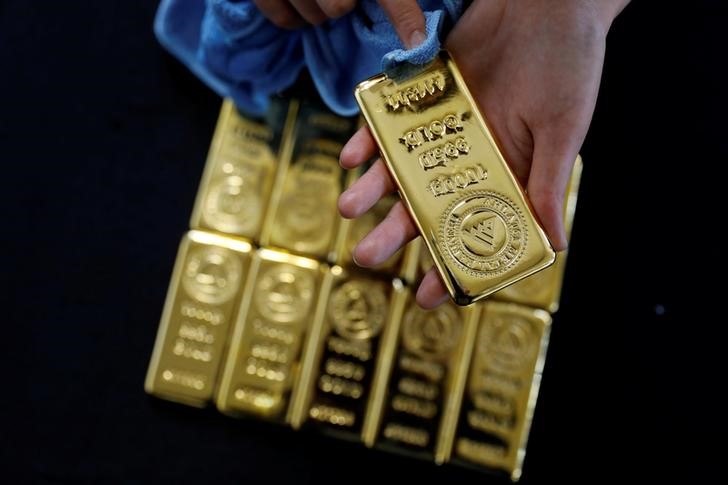
Gold fell 0.4% to $4,312.08/oz, its lowest level in 11 weeks, as stronger U.S. jobs data reinforced expectations for higher-for-longer Fed rates. May nonfarm payrolls rose 172,000 and unemployment held at 4.3%, pushing Treasury yields and the dollar higher while reducing demand for non-yielding assets. Rising oil prices on renewed Iran-Israel hostilities also lifted inflation concerns, adding to a risk-off tone across Asian markets.
The immediate loser here is not just bullion itself but the entire rate-sensitive defensive complex. A firmer dollar plus higher real-yield expectations tends to pressure gold, silver, and duration-heavy defensives simultaneously, while strengthening the relative appeal of cash-flowing energy and financials; the second-order effect is a tighter spread between “protection” assets and cyclical inflation beneficiaries. If rates stay higher into the next FOMC window, the market is likely to keep penalizing non-yielding assets for another 4-8 weeks, even if geopolitics adds intermittent safe-haven bids.
The more interesting setup is that the geopolitical shock is inflationary rather than growth-crushing in the first instance. That favors upstream energy, shipping, defense, and select USD earners, but it is negative for airlines, transport, chemicals, and Asia exporters with imported fuel exposure; these groups usually underperform with a 2-6 week lag as input costs reprice before end-demand weakens. In Korea specifically, the AI-led drawdown can bleed into broader semiconductor sentiment if investors start de-rating capex-heavy growth on the combination of tighter financial conditions and higher energy costs.
The consensus may be overestimating how durable the gold drawdown is. If the escalation broadens or oil remains elevated for more than a few sessions, gold can reassert as a geopolitical hedge, but only after the market stops treating it primarily as a rates trade; that inflection often comes when nominal yields stall rather than when headlines worsen. The bigger risk is that traders buy the dip in gold too early and get squeezed by one more leg higher in U.S. rates and the dollar.
From a portfolio construction perspective, this is a classic relative-value moment: own inflation beneficiaries and hedge rate-sensitive defensives rather than chasing outright beta. The key catalyst to watch is whether Fed cut pricing gets pushed out another meeting cycle; if yes, the macro regime shifts from “temporary shock” to “higher-for-longer,” which usually keeps pressure on precious metals and high-multiple equities for at least one quarter.
AI-powered research, real-time alerts, and portfolio analytics for institutional investors.
Request TrialOverall Sentiment
moderately negative
Sentiment Score
-0.45
Ticker Sentiment
