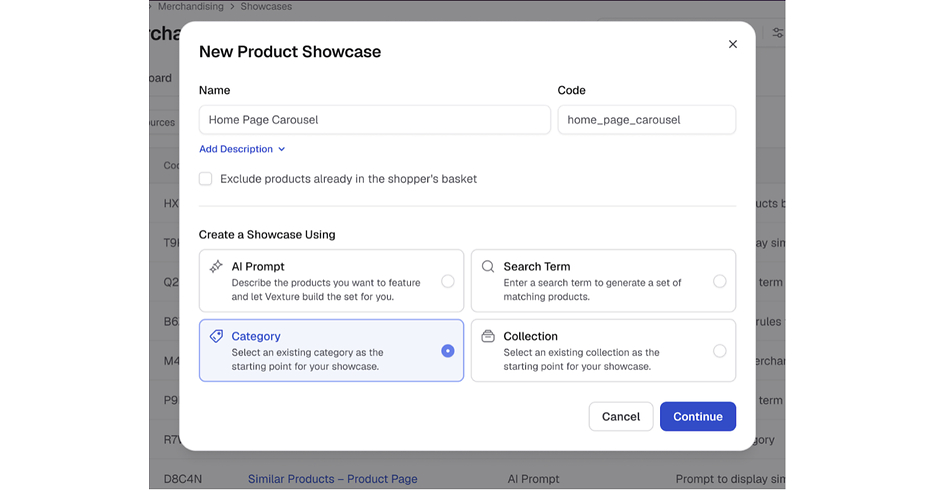
Miva launched Miva 26R2 on July 21, expanding Vexture merchandising with AI-driven merchandising showpieces (via prompts, collections/categories, or search queries) plus boosting/sorting rules. The update also improves storefront speed by refreshing only changed cached content and extends modern search with Category Facets for all Miva merchants. Overall, the release is positioned to enhance product discovery and merchandising controls, but it is a product/platform update with limited direct indication of financial results.
This reads as incremental competitive maintenance, not a step-change in category economics. The real signal is that mid-market commerce vendors are still racing to reduce merchant friction around search, merchandising, and page-speed — the areas that most directly affect conversion and gross margin. That supports the thesis that commerce software is drifting away from feature-only selling toward measurable profit tooling, which should favor platforms with deeper data and automation layers rather than point-solution add-ons.
Second-order, the main risk is not to Miva itself but to smaller or less flexible storefront vendors that rely on “good enough” merchandising and basic search. If merchants can get stronger conversion without rebuilding their stack, the willingness to migrate away from incumbent platforms drops, which extends customer lifetimes and raises switching costs for the leaders. Over 6-18 months, that should reinforce the share gains of the highest-retention ecosystems, while compressing the value proposition of lower-tier commerce names that lack breadth or scale.
The market usually over-weights product-launch headlines and under-weights adoption friction. Unless this release translates into faster seat expansion, lower churn, or a higher attach rate in the next 1-2 quarters, the equity impact is probably negligible. The contrarian read is that a feature-rich release can be defensive: it may be a response to competitive pressure rather than evidence of demand acceleration.
For public comps, the most relevant read-through is to monitor whether larger platforms can keep monetizing AI-assisted merchandising and search as premium modules. If merchant conversion metrics improve, it supports pricing power; if not, these features become table stakes and may force heavier incentive spend. The key falsifier is not the launch itself but whether next earnings show any lift in net revenue retention, GMV growth, or gross margin expansion at public ecommerce/software vendors.
AI-powered research, real-time alerts, and portfolio analytics for institutional investors.
Request TrialOverall Sentiment
mildly positive
Sentiment Score
0.18
