
Aliko Dangote Shuns Wall Street Playbook for Refinery IPO
Source: Bloomberg
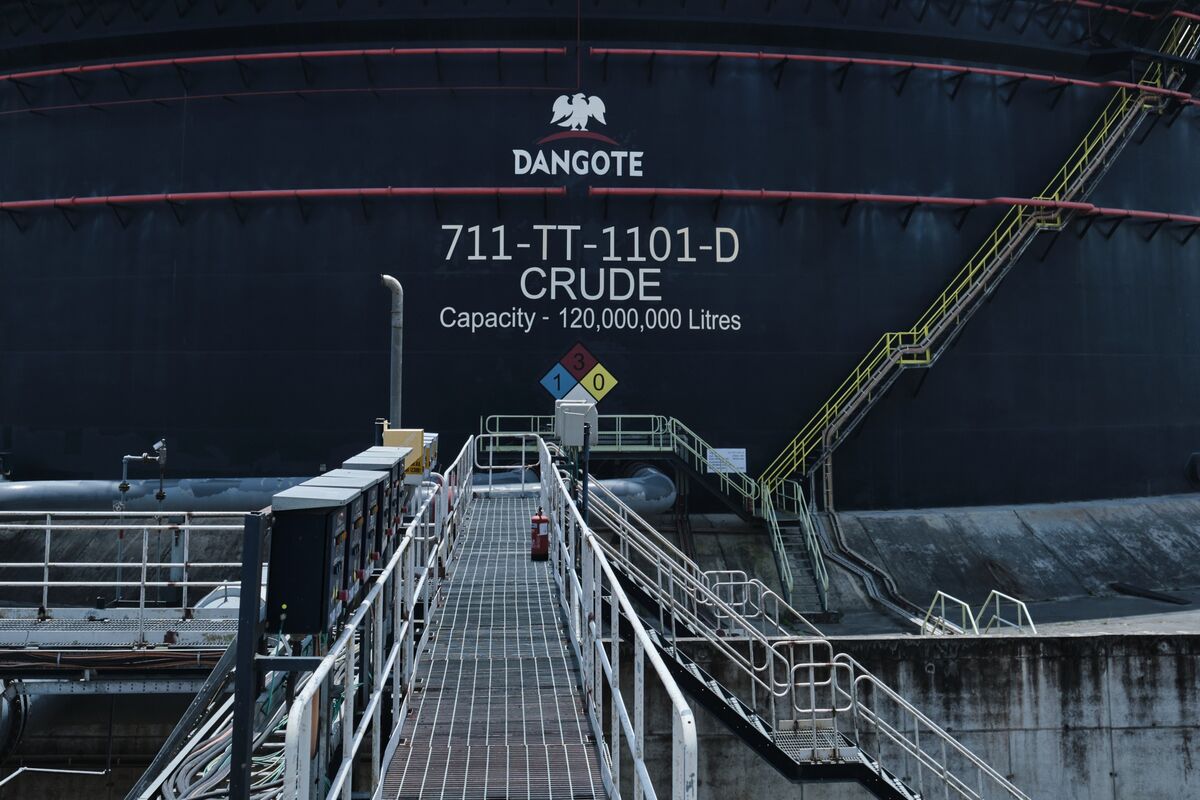
Local buyers are filling the order book for Dangote’s record-setting IPO, while foreign funds face an allocation squeeze. The report frames the offer as finding demand in Lagos rather than relying on Wall Street or London; it provides no specific deal size or pricing figures.
Analysis
The useful signal is about who sets the marginal price, not simply whether demand is strong. If local investors dominate allocation, the offer may deepen domestic market participation and reduce reliance on offshore issuance windows—but it also concentrates price discovery in a narrower investor base. That can support initial demand while making the aftermarket more vulnerable to local liquidity, currency, and risk-appetite shocks. An allocation squeeze does not establish that foreign investors lack interest; it may instead reflect limited supply or allocation policy.
Near term, the key test is post-listing turnover and price behavior once allocation recipients can sell. Over the next 1–3 months, watch whether the issuer’s disclosures and trading liquidity validate demand beyond the book-building headline. Over 6–18 months, repeated successful domestic placements could strengthen local capital formation, but only if secondary-market depth and currency convertibility allow investors to exit. The contrarian risk is treating a full book as evidence of durable valuation support: strong subscriptions can coexist with a thin float and fragile price discovery. The article excerpt provides no issue terms, valuation, allocation breakdown, or named security, so there is no defensible issuer-specific trade yet.
AllMind Terminal
AI-powered research, real-time alerts, and portfolio analytics for institutional investors.
Request TrialMarket Sentiment
Overall Sentiment
mildly positive
Sentiment Score
0.20
Key Decisions for Investors
- Do not trade the headline alone. Obtain the offer prospectus, pricing versus comparable assets, free float, allocation by investor type, and any lock-up or selling restrictions before taking issuer exposure.
- Set a post-listing watch: sustained turnover and price stability after initial allocations become tradable would support the domestic-demand thesis; weak turnover or rapid price retracement would falsify it.
- For broader Nigerian exposure, treat the event as a sentiment indicator rather than a standalone catalyst. Reassess only alongside currency liquidity, foreign-investor participation, and local market breadth.
- If the security lists at a valuation dependent on continued local inflows, avoid chasing the opening move; the risk/reward improves only after price discovery and secondary-market liquidity are observable.
More News
- GE Vernova shares slip despite a beat-and-raise. What the sellers are getting wrong
- China’s tech darlings are losing their shine. Here’s what’s behind the sell-off
- Fortinet’s stock is taking a dive after earnings. Here’s why.
- Wall Street looks past Fed pause to tech earnings and AI rebound
- Lula's Brazil Election Win Deepens Latin America Stock Fund Collapse
- SK Hynix says the memory-chip shortage will last until 2030—and more than half its production is booked for the next two years