
Huawei, İnternet Servis Sağlayıcıları için Akıllı WAN Hedef Mimarisini Tanıttı
Source: PR Newswire
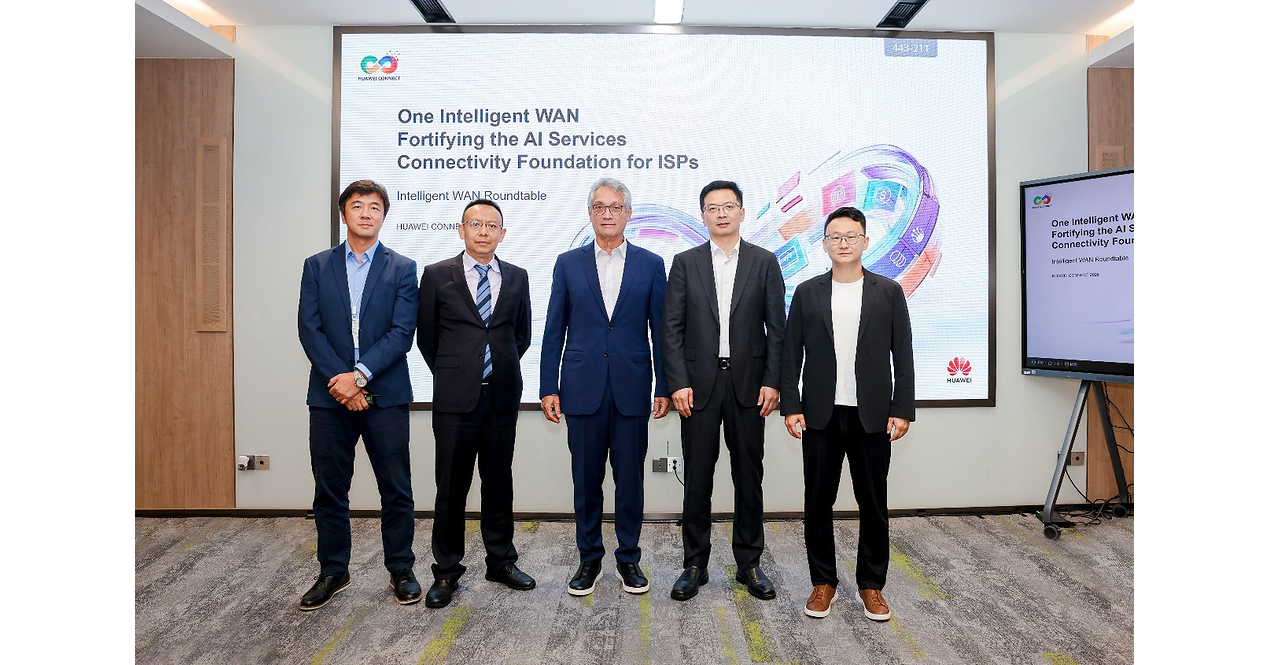
Huawei unveiled its Intelligent WAN Target Architecture for internet service providers at Huawei Connect 2026, positioning integrated IP+Optical networks, edge computing and APIs as infrastructure for AI-service monetization. The company said agent-based AI will shift network traffic toward substantially greater upstream volumes and require end-to-end workflow-level service assurance. Huawei also promoted AI-enabled operations tools—including Network Digital Map, fault detection and AI assistants—to reduce ISP OPEX and improve network operations efficiency, though no financial targets or customer-contract values were disclosed.
Analysis
This is strategically negative for incumbent WAN vendors where Huawei has access: a more integrated routing, optical, orchestration and managed-services stack can shift carrier procurement from best-of-breed hardware toward vendor consolidation. NOK and ERIC are most exposed in emerging-market telecom accounts, while CSCO faces a narrower but relevant risk in IP routing and automation; the immediate earnings effect is likely immaterial, but competitive bid pressure can surface through lower gross-margin guidance over the next 2-4 quarters. The more important second-order effect is that carriers may defer standalone network-management software purchases if AI-enabled operations tooling is bundled with transport equipment.
The claimed ISP monetization opportunity remains unproven. Carrier revenue has historically lagged network-capex cycles, and AI traffic growth does not automatically translate into pricing power unless operators can sell latency, reliability and security as contracted service-level products; absent that, rising upstream traffic is principally a capacity and power-cost burden. Over 6-18 months, the cleaner beneficiaries of a genuine edge/AI-WAN buildout would be optical component suppliers and data-center interconnect vendors—CIEN, COHR and LITE—provided order growth appears in carrier backlog rather than only vendor presentations.
Consensus may overread this as a broad AI-networking positive. In the next 1-3 months, this is more likely to be a procurement and architecture signal than a discrete capex catalyst: telecom operators remain constrained by leverage, weak consumer pricing and long planning cycles. The thesis turns constructive only if carrier capex guidance, optical order lead times, or AI-related transport bookings accelerate independently of Huawei's claims.
AllMind Terminal
AI-powered research, real-time alerts, and portfolio analytics for institutional investors.
Request TrialMarket Sentiment
Overall Sentiment
mildly positive
Sentiment Score
0.32
Key Decisions for Investors
- No standalone directional trade on this release; treat it as a competitive-intelligence alert rather than an earnings catalyst.
- Monitor NOK and ERIC quarterly disclosures for emerging-market network gross-margin pressure, China/Asia order commentary, and managed-services attach rates over the next 2-4 quarters. A guidance cut tied to price competition would support a tactical underweight versus the STOXX Europe telecom-equipment peer group.
- Build a watchlist for long CIEN or COHR only if carrier optical backlog and book-to-bill improve for two consecutive reporting periods; target a 6-12 month position, with the thesis invalidated by flat carrier capex guidance or deteriorating component gross margins.
- For US networking exposure, prefer ANET over CSCO only if AI back-end and data-center demand remains the primary spending driver; avoid extrapolating carrier WAN architecture changes into broad enterprise-routing revenue. Reassess if CSCO reports service-provider order growth below overall networking growth for two quarters.
More News
- All Iranian airlines to be 'shut down' from Wednesday, Bessent tells CNBC
- Taiwan benchmark Taiex rises to record intraday high as tech stocks advance
- AMD joins the $1 trillion club as chip rally surges - our AI Strategy saw it early
- Jamie Dimon says hyperscaler AI spending could hit $1 trillion next year
- Factbox-Key issues for this week’s Trump-Xi summit in Washington
- 20 countries propose global oversight body to manage AI dangers