
Sceye Supports SoftBank Corp. in World-First Demonstration of Laser Ranging by Tracking a HAPS from the Ground
Source: PR Newswire
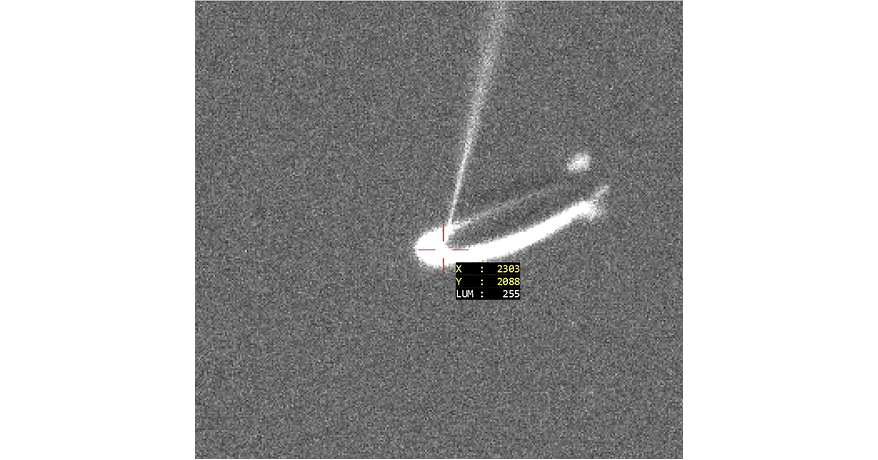
Sceye and SoftBank completed what they describe as the first real-time ground-to-HAPS laser-ranging demonstration, continuously receiving reflected optical signals from Sceye's stratospheric platform. The test supports development of high-speed free-space optical links among ground stations, HAPS and satellites. The 30-day ST1 mission traveled nearly 30,000 km, operated over Japan for more than seven days, and also demonstrated direct-to-device connectivity, drone communications and onboard edge computing.
Analysis
This is a technology-readiness datapoint rather than a monetization catalyst. The commercial bottleneck for HAPS remains not payload tracking but platform availability, spectrum/regulatory permissions, terminal cost, and demonstrated link uptime under cloud cover and atmospheric turbulence; a reflected-signal test does not establish bidirectional data throughput, availability targets, or unit economics. SoftBank Corp. (9434 JP) gains strategic optionality in rural coverage and disaster-recovery backhaul, but the financial impact is immaterial absent disclosed capex-per-covered-km2 and a path to replacing or deferring terrestrial tower investment.
The more relevant competitive read-through is modestly negative for satellite-only connectivity narratives at the margin, particularly AST SpaceMobile (ASTS) and Globalstar (GSAT), because HAPS could offer lower-latency, localized capacity where regulators permit deployment. But HAPS and LEO systems are likely complements: optical HAPS links could reduce costly terrestrial backhaul requirements and extend satellite gateway reach. Over 6-18 months, the winners would be optical-terminal and network-integration suppliers only if trials progress to measured gigabit throughput and multi-season availability; NTT (9432 JP), NEC (6701 JP), and Mitsubishi Electric (6503 JP) are more investable proxies than privately held Sceye.
Consensus should resist assigning commercial value to the "world-first" framing. The key falsifier for the HAPS thesis is a failure to disclose sustained optical-link availability through adverse weather, payload power draw, and cost per delivered GB; without these, the technology may remain a niche disaster and defense application rather than a telecom-capex substitute. Near-term equity reaction should be negligible, while a 1-3 month catalyst would require SoftBank to announce a paid pilot, procurement framework, or spectrum authorization rather than additional demonstrations.
AllMind Terminal
AI-powered research, real-time alerts, and portfolio analytics for institutional investors.
Request TrialMarket Sentiment
Overall Sentiment
strongly positive
Sentiment Score
0.58
Key Decisions for Investors
- No directional trade in 9434 JP on this release; maintain as a watch item. Upgrade only upon a disclosed commercial pilot with quantified coverage economics or evidence that HAPS can defer terrestrial network capex. Falsifier: no paid deployment or operating-metric disclosure over the next 12 months.
- Do not short ASTS or GSAT solely on this development: HAPS faces weather and persistence constraints, while satellite operators retain broader geographic scalability. Reassess relative positioning if SoftBank or another carrier commits contracted HAPS capacity at economics competitive with satellite direct-to-device service.
- For Japan technology exposure, monitor 9432 JP, 6701 JP, and 6503 JP for named optical-terminal, laser-tracking, or HAPS-network integration awards. Treat a disclosed production contract—not a research collaboration—as the entry trigger; absent contract value and margin profile, avoid extrapolating revenue.
- Set an event alert around telecom spectrum approvals and HAPS operating rules in Japan and the U.S. Regulatory authorization, rather than another flight milestone, is the catalyst most likely to change the addressable market over the next 6-18 months.
More News
- America’s Asian allies want a Trump-Xi truce — but not at their expense
- Chinese authorities reportedly in possession of F-35 components in Hong Kong
- Meta announces new lightweight virtual reality glasses to one-up Apple’s Vision Pro
- How Meta took the lead in the race for the post-smartphone world
- Mark Zuckerberg debuts $1,299 Meta VR Glasses and Muse Charm pendant amid AI agent push
- Meta's standoff with Amazon over Muse could be a sign of things to come