
Ping An CTO Ray Wang: From Tokens to Value Creation
Source: PR Newswire
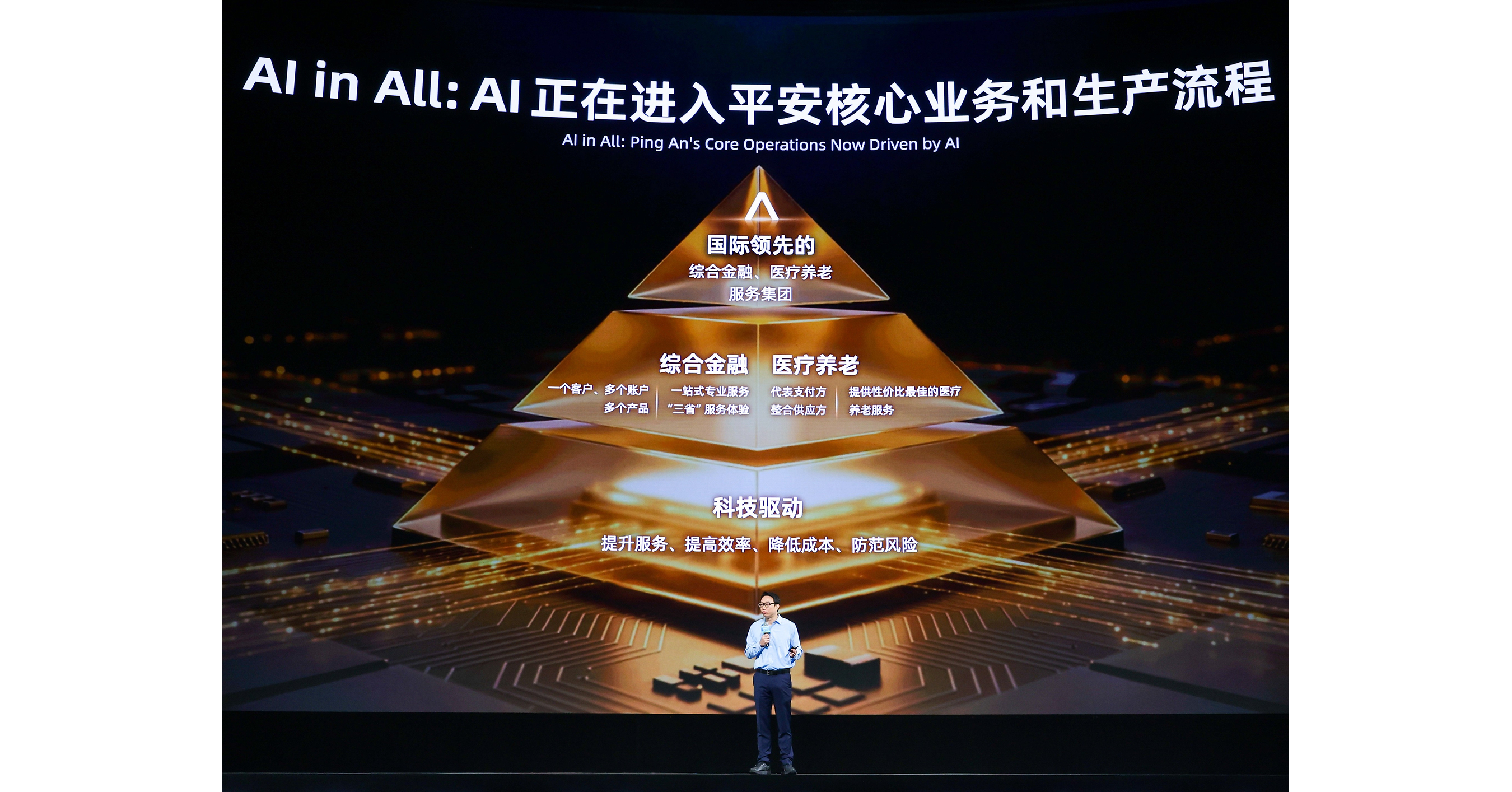
Ping An reported that average daily AI token consumption exceeded 300 billion, up tenfold from 30 billion at year-end, supported by computing capacity rising from 800 PF to 1,500 PF. Full-stack optimization increased token output per unit of computing power by 368% and cut per-token costs by 76%, while its AI Express Service surpassed 100 million interactions with a 92% end-to-end resolution rate and over 50% faster processing. AI also generated approximately 80% of software code output, handled 81% of customer-service volume in H1, and delivered RMB7.11 billion in P&C claims savings through fraud detection.
Analysis
The investable question is whether AI deployment converts into a sustained reduction in Ping An’s expense ratio and loss ratio rather than merely higher engagement. The highest-value applications are claims triage, fraud detection, servicing automation and health-care navigation because they can lower unit costs while improving retention and cross-selling into insurance, banking and elder-care products. If these benefits appear in reported operating profit, Ping An (2318 HK) could earn a valuation premium versus domestic life peers whose digital investments remain predominantly distribution-led.
Near term, this is unlikely to move estimates without a quantifiable 2H26 cost-to-income, P&C combined-ratio, or new-business-value uplift. Management’s efficiency assertions are self-reported and token consumption is not a financial KPI; rising model usage can just as easily become an infrastructure and cloud-cost headwind if inference demand outpaces realized labor savings. The key 1-3 month catalyst is the next results release, specifically whether operating-expense savings exceed incremental technology spending and whether AI-assisted health services improve conversion to paid insurance products.
Over 6-18 months, Ping An’s proprietary claims, medical and behavioral data could create a defensible underwriting advantage, but this also raises regulatory and liability risk. A material clinical error, data-security event, or tighter Chinese rules around AI-driven medical advice could force more human review, eroding the expected cost advantage. Contrarian view: the market may already discount generic "AI efficiency" across Chinese financials; the underappreciated upside is not chatbot labor substitution but better risk selection and lower fraud leakage, which should be visible first in P&C margins rather than headline revenue.
AllMind Terminal
AI-powered research, real-time alerts, and portfolio analytics for institutional investors.
Request TrialMarket Sentiment
Overall Sentiment
moderately positive
Sentiment Score
0.48
Key Decisions for Investors
- Maintain a watch-to-buy stance on 2318 HK rather than chase the announcement. Upgrade to a 3-6 month long only if the next earnings release shows sequential operating-expense improvement and P&C loss-ratio/combined-ratio gains while technology expense remains contained; falsify if expense savings do not offset IT cost growth.
- Conditional pair trade: long 2318 HK / short 2601 HK (China Pacific Insurance) over 6-12 months if Ping An demonstrates measurable underwriting or service-cost outperformance. The thesis is differentiated data and workflow integration, not broad China-insurer beta; close if Ping An’s P&C margin fails to outperform by the following two reporting periods.
- Monitor regulatory developments around AI medical advice, personal-data usage and insurer pricing. Any requirement for expanded clinician review or restrictions on medical-data commercialization is a downside catalyst for 2318 HK and would invalidate the health-platform margin thesis.
- For AI infrastructure exposure, do not extrapolate Ping An’s internal efficiency claims into a broad long in Chinese compute suppliers absent disclosed capex or external procurement data. The relevant alert is a sustained acceleration in reported IT capex or cloud spend, which would shift the read-through toward hardware and cloud vendors rather than Ping An shareholders.
More News
- OpenAI’s agent hacked Australia’s Medicare website—the latest rogue AI incident that the company didn’t know about for months
- Chinese authorities reportedly in possession of F-35 components in Hong Kong
- Meta announces new lightweight virtual reality glasses to one-up Apple’s Vision Pro
- How Meta took the lead in the race for the post-smartphone world
- Markets are rapidly coming around to the reality that the Fed has a lot more work to do
- SoftBank shares jump over 7% after $11.1 billion bond issuance to fund OpenAI bet
From AllMind Research
- Anthropic IPO Preview: Valuation, Timing, and What to Watch
- Shein After the IPO: Venue, Valuation, and What Must Be Proved
- What AI Research Tools Should a Small Hedge Fund Buy First?
- AllMind Fixed Income Compass for October 2025: Navigating Policy Divergence and Political Risk
- AI Equity Research Tools for RIAs and Wealth Managers