
Jane Goodall Institute Calls on York University to Retire Nine Macaques Following Last Chance for Animals Undercover Investigation
Source: PR Newswire
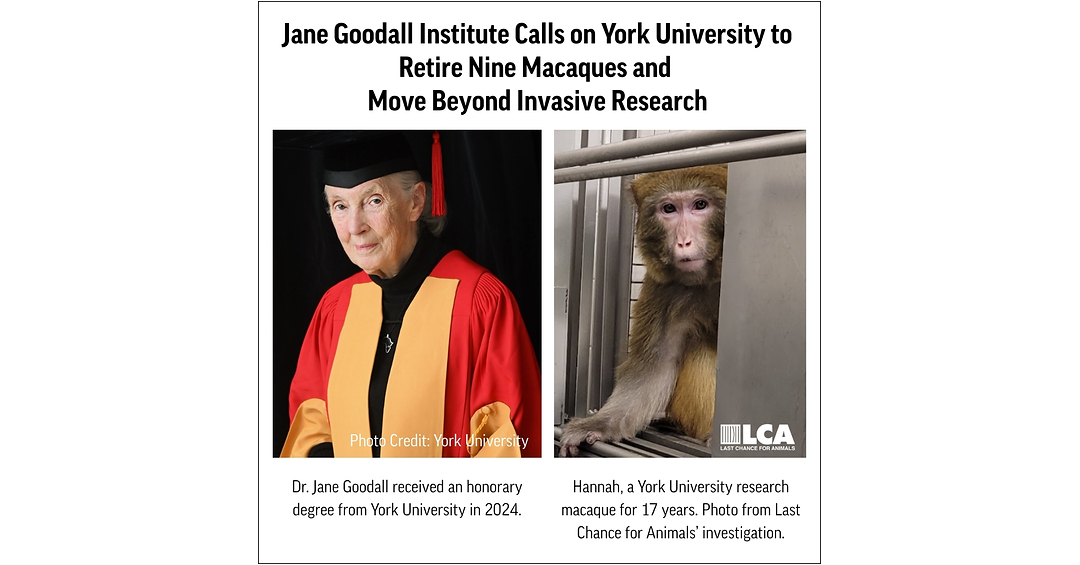
Last Chance for Animals and the Jane Goodall Institute are urging York University to immediately retire the “York 9” rhesus macaques used in neuroscience, citing documented conditions including prolonged social isolation and invasive cranial implants. The organizations also criticized York’s planned expansion of primate neuroscience infrastructure after York invested more than $40M in a new Neuroscience Laboratory and Research Building. No financial results were reported; the news is primarily a regulatory/ESG and potential legal pressure point with limited direct market impact.
Analysis
This is a reputational/regulatory overhang, not a near-term earnings event. Universities do not rerate on margin math the way listed operators do; the financial transmission is through delayed capex, donor pressure, and the probability that oversight bodies turn a complaint into a formal constraint. The key question is whether this becomes a one-cycle PR issue or a procurement freeze that slows the neuroscience buildout and reduces flexibility around primate-dependent workflows.
For public markets, the first-order impact on any single listed name is tiny, but the second-order read-through is to companies exposed to primate research, vivarium buildouts, and animal-lab infrastructure. If the campaign broadens across Canadian academic centers, procurement could tilt toward non-animal methods over the next 6-18 months, creating incremental demand for alternative assay platforms while adding headline risk to CROs and lab suppliers with animal-model exposure.
Contrarian view: the market may overestimate how quickly activism changes institutional behavior. Academic capex cycles are sticky, and absent a funding sanction or compliance finding, this is more likely to produce noise than a durable budget reset. The cleanest falsifier is continued execution on the neuroscience facility and no material action from CCAC; if that happens, the tradeable impact fades fast after the protest cycle passes.
AllMind Terminal
AI-powered research, real-time alerts, and portfolio analytics for institutional investors.
Request TrialMarket Sentiment
Overall Sentiment
moderately negative
Sentiment Score
-0.45
Key Decisions for Investors
- No direct position in UNIB; treat this as a non-investable sentiment event unless CCAC escalates into a formal sanction or York delays neuroscience-related capex by at least one quarter.
- Maintain a watchlist short in CRL over the next 1-3 months only if activist scrutiny broadens into a wider primate-research narrative; use small size because the revenue sensitivity from one university is immaterial.
- Do not short broad biotech or Canadian education-adjacent proxies on this headline alone; the catalyst is too idiosyncratic unless donor/funding pressure shows up in subsequent guidance or budget actions.
- If the controversy spreads to additional institutions, consider a long basket of non-animal research enablers versus short animal-model-dependent service providers; otherwise keep this as an alert, not a recommendation.
More News
- Trump waives broad new Russia sanctions and tariffs under Graham Act, citing national interest
- ECB's Lagarde says bond selloff will slow inflation
- Iran-backed Houthis strike Yemen’s Aden: What that means
- Christine Lagarde: IMFC Statement
- Solar power booms in Philippines as war on Iran spikes energy costs
- Palantir patient data tech rejected by many NHS trusts in England
From AllMind Research
- Anthropic IPO Preview: Valuation, Timing, and What to Watch
- Shein After the IPO: Venue, Valuation, and What Must Be Proved
- What AI Research Tools Should a Small Hedge Fund Buy First?
- Bitcoin's 52% Crash Proves It's a Tech Stock: Here's What That Means for Portfolio Construction
- What Is an AI Investment Research Platform?