
Inglewood Bids to Become America's Second Blue Zone City, Powered by InBody
Source: PR Newswire
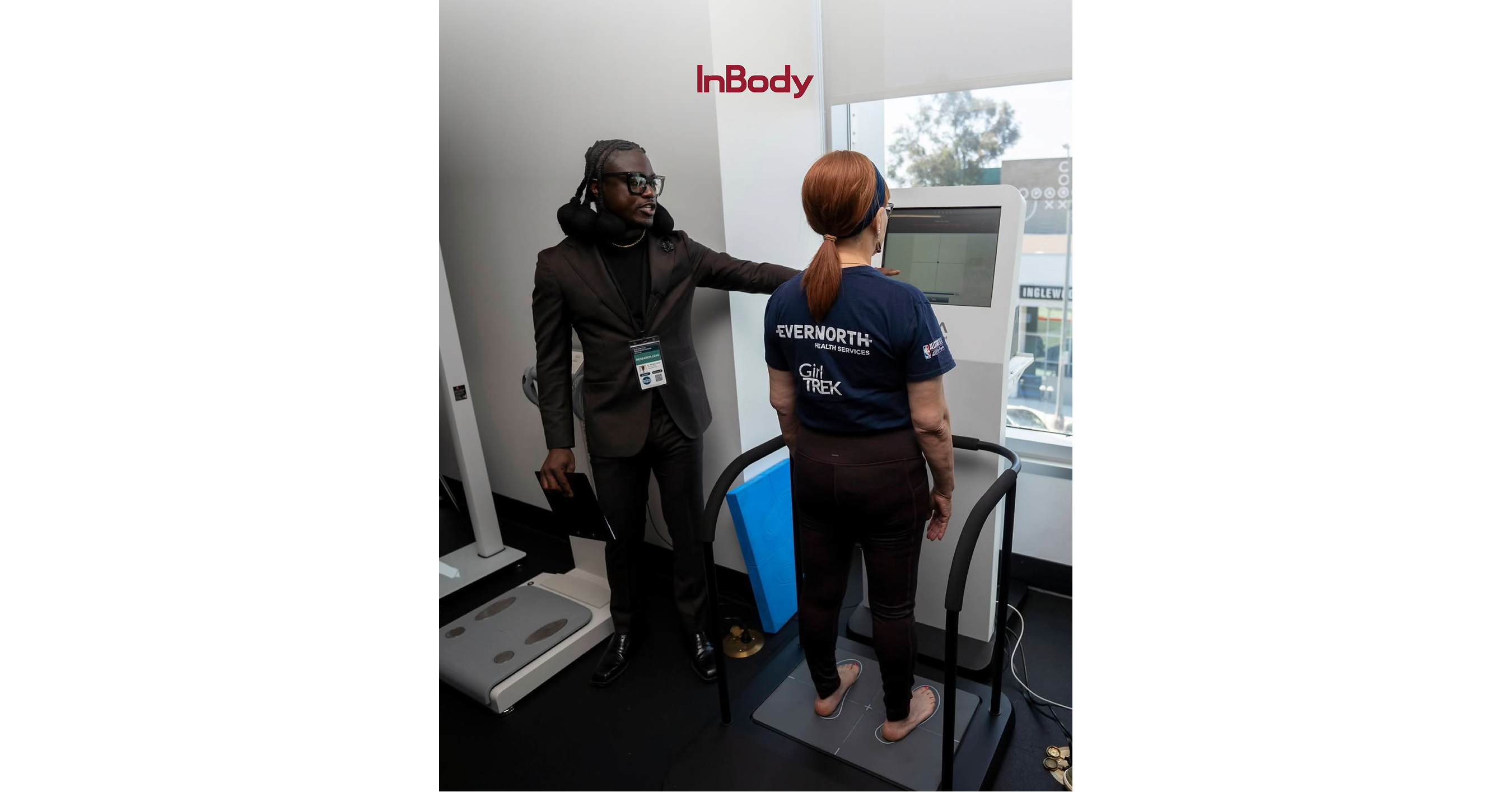
InBody launched a one-year fall-prevention pilot with Inglewood and USC, backed by approximately $400,000 in city funding, to assess fall risk among local seniors using its FRA system. The system combines balance and reaction-time testing, body-composition analysis, and leg-strength measurement to support early identification and track interventions. The program advances Inglewood’s goal of becoming the nation’s second Blue Zone city; the announcement does not report commercial sales or financial results.
Analysis
This is a commercial-validation signal, not yet an earnings catalyst. The key question is whether the pilot converts a measurement tool into a repeatable workflow: screening must trigger interventions, show durable functional improvement, and fit public-sector procurement budgets. The city’s funding demonstrates local willingness to pay, but does not establish recurring demand or that Medicare/Medicaid savings accrue to the equipment vendor. The press release provides no participant count, baseline, comparison group, pricing, or outcome targets; without these, adoption and return on investment are unverified.
Over 1–3 months, watch for additional paid deployments and disclosed evaluation criteria, rather than treating the partnership announcement as proof of product-market fit. Over 6–18 months, a credible reduction in falls or improved functional measures could support broader municipal, clinical, and rehabilitation adoption. Conversely, screening without funded follow-up care may produce data but little measurable impact. Existing balance-assessment and rehabilitation workflows could limit uptake if the system adds cost or staff burden without changing treatment decisions.
Contrarian point: the large societal cost of falls is not automatically a large addressable market for InBody. Benefits are diffuse across patients, providers, and payers, while procurement and implementation costs are immediate. No listed-equity exposure is identifiable from the supplied data, and this single pilot does not justify a directional trade.
AllMind Terminal
AI-powered research, real-time alerts, and portfolio analytics for institutional investors.
Request TrialMarket Sentiment
Overall Sentiment
mildly positive
Sentiment Score
0.25
Key Decisions for Investors
- No trade on the announcement alone. Treat it as a low-cost-to-validate commercial proof point, not evidence of material near-term revenue.
- Set an alert for the pilot’s participant count, baseline/comparator, intervention adherence, outcome measures, and any disclosed system pricing or recurring contract terms; these are necessary to assess scalability.
- If results support expansion, reassess the broader fall-prevention assessment and rehabilitation technology theme for beneficiaries; do not assume payer savings translate into vendor pricing power.
- Falsification watch: no follow-on paid deployments after the one-year pilot, weak functional outcomes, or evidence that screening does not change care plans would undermine the adoption thesis.
More News
- AI's Supercharging a Scam Economy Bigger Than the Cocaine Trade
- Verizon stock heads for worst day since 2002 as SpaceX U.S. network plans whack telcos
- Guitar Center is dropping its ban on playing ‘Stairway to Heaven.’ It’s part of the CEO’s big turnaround plan
- Cirrus Logic made rival bid for Synaptics, Bloomberg reports
- Israel’s economy prospers despite years of war, but prices worry voters
- Delta Air Lines cuts 2026 forecast on fuel surge, but CEO says demand is still strong
From AllMind Research
- Anthropic IPO Preview: Valuation, Timing, and What to Watch
- Shein After the IPO: Venue, Valuation, and What Must Be Proved
- What AI Research Tools Should a Small Hedge Fund Buy First?
- Augmented Intelligence: AllMind, Elevate Human Judgement With an Accessible, Powerful, Data-Driven Financial AI Toolkit
- AI Research Systems for Hedge Funds: A Pilot Design