
Every AI giant had a bear market. The S&P hid it.
Source: youtube.com
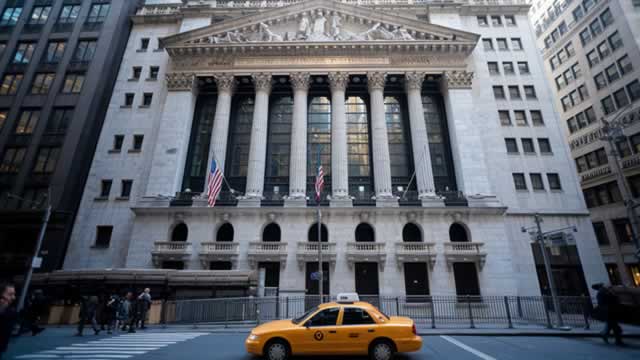
HB Wealth chief market strategist Gina Martin Adams says every hyperscaler has experienced a bear market over the past year despite the broader index continuing to rise. She argues the stock-market danger threshold has shifted higher, with the 10-year Treasury yield rising from roughly 5.0% toward 5.5%, implying increased valuation and rate risk for equities.
Analysis
The relevant regime shift is from index-level resilience to increasingly narrow duration risk: large AI spenders can absorb higher funding rates operationally, but their terminal-value multiples remain highly convex to the long end. If the 10-year yield rises another 50bp, the most vulnerable cohort is unprofitable AI infrastructure and software trading on revenue multiples, not cash-generative platforms; ARKK, IGV and SMH should underperform SPY even if headline indices remain stable. A broad selloff would also expose passive concentration risk, because cap-weighted index demand has masked deteriorating breadth.
Over the next 1-3 months, Treasury-auction demand, inflation surprises and any upward revision to Fed terminal-rate expectations are the catalysts that matter more than AI product announcements. Higher yields simultaneously pressure equity multiples and raise the opportunity cost of capex-heavy AI projects, creating a second-order risk that enterprise buyers lengthen deployment cycles. This would be most negative for GPU/networking vendors with elevated expectations and least negative for MSFT, GOOGL and META, which can fund AI investment internally and monetize distribution rather than hardware volumes.
The contrarian setup is that a yield-driven correction may create a selective entry point in hyperscalers rather than invalidate AI economics. The key distinction is whether earnings revisions hold: if cloud growth, ad pricing and operating margins remain intact while multiples reset, cash-rich platforms should recover faster than semiconductor and application-software beta. This thesis is falsified by a sustained rise in credit spreads, material reductions to hyperscaler capex guidance, or a 10-year yield move that remains above 5.5% after the next two inflation and payroll reports.
AllMind Terminal
AI-powered research, real-time alerts, and portfolio analytics for institutional investors.
Request TrialMarket Sentiment
Overall Sentiment
mildly negative
Sentiment Score
-0.25
Key Decisions for Investors
- Initiate a 1-3 month relative-value hedge: long equal-weighted MSFT/GOOGL/META versus short IGV or ARKK. The objective is to own internally funded AI monetization while hedging long-duration software exposure; reassess if the 10-year yield falls below 4.75% or if IGV earnings revisions improve materially.
- Buy 3-month QQQ put spreads rather than outright index puts if the 10-year yield closes above 5.25% for five trading days. Use an approximately 5%-10% downside structure to target a breadth-led de-rating while containing premium loss should yields reverse; exit if the yield retraces below 5.0%.
- Avoid adding to SMH/NVDA beta until capex guidance and order visibility are independently confirmed in upcoming hyperscaler earnings. A delayed deployment cycle would first appear in networking and accelerator lead-time commentary; treat this as a watch item rather than a directional short absent that evidence.
- On a 10%-15% drawdown in MSFT, GOOGL or META with consensus EPS estimates broadly unchanged, scale into 6-18 month longs. The risk/reward improves if the decline is multiple-led; do not average down if cloud growth, advertising demand or operating-margin guidance is cut.
More News
- Here’s the ‘core economic flaw’ in the AI bull case as stock and bond trades unravel, according to a top economist
- 5 big analyst AI moves: ’Uniquely catalyst-rich’ months ahead for SpaceX
- The experience economy keeps defying expectations. Maybe we’ve been looking at it all wrong
- Brookfield to open Qatar office as it expands Middle East operations
- France’s latest debt warning describes a country where governance is breaking down — and even doing too little, too late is barely possible
- ‘Total Meltdown’ in Riskiest Debt Unnerves Market: Credit Weekly