
Blood Cancer United Launches 2026 Light The Night Season During Blood Cancer Awareness Month
Source: PR Newswire
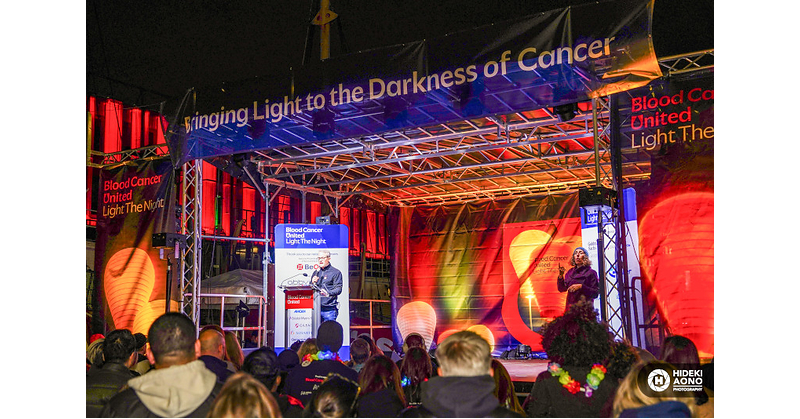
Light The Night (Blood Cancer United) announced its 2026 sponsorship lineup—including BeOne Medicines, AbbVie, and major pharma such as Amgen, AstraZeneca, Genentech, Gilead, and Pfizer—supporting fundraising for blood cancer research, patient support, and advocacy. The article highlights a National Honored Hero, Lennox (diagnosed at 8 months, treated via a clinical trial completed in December), emphasizing survivorship and hope rather than any financial metrics or company-specific performance. Overall, the news is informational and nonprofit-focused with no clear near-term implications for public markets.
Analysis
This reads as brand maintenance, not a fundamental catalyst. For the named healthcare sponsors, the economic transmission is at best indirect: incremental goodwill with patient advocacy groups, clinicians, and employees, but no measurable near-term impact on prescription growth, trial success, or reimbursement. The market should treat this as SG&A with a soft-option value on reputation; paying a multiple premium for it would be a mistake.
Second-order, the only plausible winner is the oncology-heavy franchises with the most to gain from sustained community presence and physician relationship capital, but even there the effect is slow and hard to isolate. The bigger risk is investors misreading CSR sponsorships as a proxy for pipeline quality; that can briefly support sentiment, but it fades quickly unless followed by actual data. For BLDR, this is even less investable: a one-off corporate sponsorship has no read-through to housing demand or margins.
Time horizon matters: in the next few days, this should not move valuations unless a sell-side note over-interprets it. Over 1-3 months, any benefit would be limited to softer brand perception and employee engagement; over 6-18 months, the only lasting effect would be if these companies systematically use patient advocacy to improve access or trial enrollment, which still needs hard evidence. Contrarian view: the consensus may overestimate ESG halo effects in pharma; fundamentals dominate, and this is likely noise unless paired with a concrete commercial or regulatory initiative.
AllMind Terminal
AI-powered research, real-time alerts, and portfolio analytics for institutional investors.
Request TrialMarket Sentiment
Overall Sentiment
neutral
Sentiment Score
0.10
Key Decisions for Investors
- No trade on the release itself; do not assign earnings or multiple impact to ABBV, AMGN, AZN, NVS, PFE, or ONC without hard evidence of commercial conversion.
- If any sponsor rallies on CSR headlines, use strength to trim or fade into the move: the expected value of charity-driven sentiment is low and typically decays within days.
- Maintain focus on real catalysts only: upcoming FDA/PDUFA events, trial readouts, pricing policy, and guidance revisions for ABBV/AMGN/PFE; set alerts for those rather than the event calendar.
- For healthcare sentiment baskets, prefer pairs tied to measurable pipeline events over sponsor lists; e.g., avoid using this as a reason to add long-biotech exposure versus XBI/IHI benchmarks.
More News
- Sweden’s startups will raise $5 billion in 2026. Our secret sauce is 150 years old
- Prifemilast Demonstrates Superior Efficacy vs. Apremilast in Newsoara's Head-to-Head Phase 3 Psoriasis Trial; cAMPfield Advancing the Potential Best-in-Class Oral PDE4 Inhibitor in IBD
- Schott Pharma drops after Deutsche Bank downgrades on demanding valuation
- William Blair downgrades Alignment Healthcare stock rating on cost pressures
- Baird upgrades Humana stock rating on margin recovery outlook
- Why is argenx stock rallying today?