
Neugestaltung des Netzwerkwerts für neues Wachstum im Zeitalter der KI
Source: PR Newswire
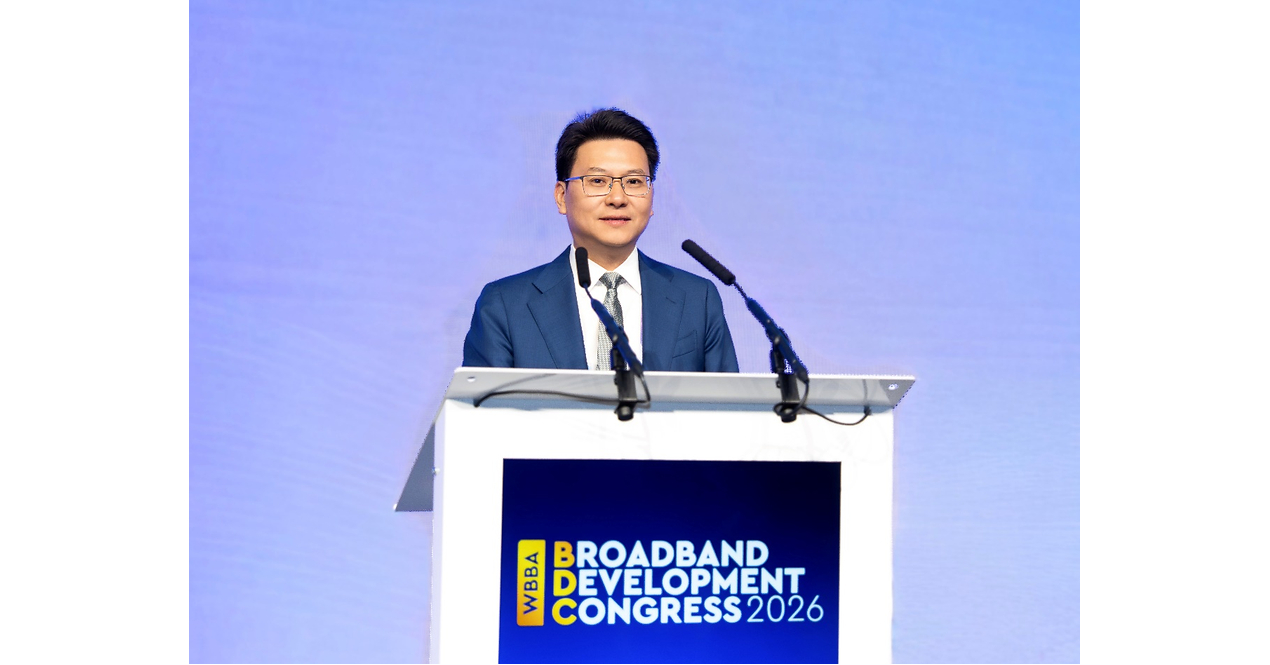
At Huawei’s Broadband Development Congress keynote, Optical Business President Bob Chen outlined three priorities for telecom networks in the AI era: redesign architecture around AI data-center clusters, expand offerings beyond bandwidth to include latency, reliability and computing services, and use AI to improve operations. He cited nearly 50-fold growth in token consumption over the past year and said AI-enabled Wi-Fi optimization can raise speeds by about 20% in interference-heavy environments, while intelligent power management can cut equipment energy use by over 20%. These are strategic recommendations and examples, not reported financial results or company guidance.
Analysis
The investable implication is not “AI traffic means telecom pricing power”; it is that network capex may shift toward optical transport, data-center interconnect and low-latency routing while legacy access spending gets reprioritized. That mix shift could benefit suppliers such as Ciena, Nokia and Cisco if operators convert AI demand into funded orders. Huawei’s proposed service tiers—latency, reliability and compute bundled with bandwidth—are a commercial hypothesis, not evidence of realized ARPU or margins. Operators may struggle to charge for deterministic performance when hyperscalers can self-provision private links or negotiate aggressively.
Near term (days), this is a low-information vendor speech, not an earnings catalyst. Over 1–3 months, watch operator capex guidance, optical-network orders, data-center interconnect lead times and paid enterprise service uptake. Over 6–18 months, an AIDC-centric topology could redirect investment toward routes linking compute clusters and away from population-led capacity planning; benefits accrue only if utilization and pricing support returns on capital. Energy savings and automated operations could help operator margins, but Huawei’s stated performance gains are vendor claims and require independent validation.
Contrarian risk: markets may overcapitalize AI network demand before operators demonstrate monetization. Hyperscaler-owned networks, delayed data-center builds, export controls and fragmented standards could constrain addressable spend. The thesis weakens if carrier capex plans remain flat, optical orders fail to convert to revenue, or enterprise customers do not pay a premium for latency and reliability.
AllMind Terminal
AI-powered research, real-time alerts, and portfolio analytics for institutional investors.
Request TrialMarket Sentiment
Overall Sentiment
mildly positive
Sentiment Score
0.20
Key Decisions for Investors
- No trade on this announcement alone. Put Ciena, Nokia and Cisco on a watchlist for optical transport and data-center interconnect order growth; require corroboration in company results or carrier guidance before adding exposure.
- Over the next 1–3 months, monitor telecom operators’ capex plans and disclosed enterprise-network revenue. Treat rising AI traffic without higher paid-service revenue or better returns on invested capital as a warning, not confirmation.
- Consider a relative-value tilt toward optical/networking suppliers over broad telecom operators only if order growth and backlog conversion strengthen while operator capex remains funded; size down if lead times, cancellations or inventory point to an overshoot.
- Falsify the constructive thesis if major operators cut network investment, networking suppliers report weakening data-center-related orders, or customers decline premium latency/reliability offers. Verify adoption and economics independently; the article provides no customer-wide evidence.
More News
- Why did CoreWeave stock get crushed this week? Look to this corner of the debt market for clues
- AI stock sell-off ramps up over debt-fueled data center spending fears: ‘Full-blown crisis of confidence'
- Dow falls 189 points as AI stocks slide and oil prices surge
- Wall Street Anxiety Spreads as AI Rout Meets $110 Oil Shock
- Wall Street's fear gauge is ripping. Traders see it going even higher
- All the news about the iPhone Duo