
US Election Angst Looms for Stocks and the AI Boom
Source: Bloomberg
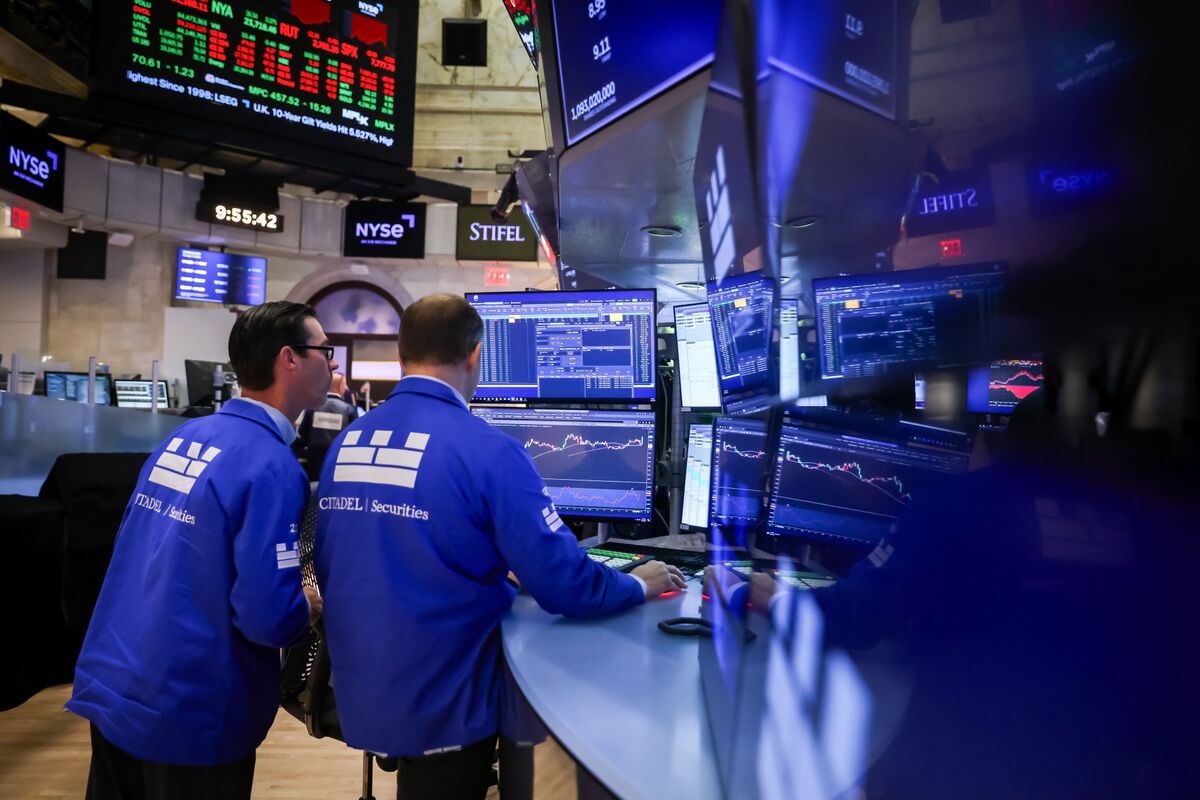
The US midterm election is less than two weeks away, and investors are weighing a possible Democratic sweep against the risk of tougher regulation that could slow the AI boom. The article argues the market concern may be overstated: Donald Trump retains veto power, and Democrats are unlikely to have enough seats to override it, limiting the prospect of tax increases or market-disfavored regulations.
Analysis
The market mechanism is a change in the probability of policy outcomes, not an immediate change in AI demand or earnings. A divided government could limit new legislation, but it would not eliminate regulatory risk: agency action, procurement rules, export controls, and state-level measures can still affect AI deployment and compute economics. That distinction matters because investors may initially trade a simple “blue sweep = anti-AI” narrative, while the actual impact would depend on which levers are used and how quickly they reach company cash flows.
Near term, election uncertainty can raise the risk premium on long-duration growth and crowded AI exposure; any selloff could therefore exceed the change in fundamental estimates. Over 1–3 months, watch for actual policy proposals and agency priorities rather than campaign rhetoric. Over 6–18 months, the key structural risks are constraints on data-center power, chip access, and monetization—not the election result alone.
The contrarian opportunity is to buy a policy-headline-driven dip only if earnings expectations and capex plans remain intact. This is not, on the information provided, a strong standalone directional market signal. A broad AI or semiconductor position (e.g., SMH) carries concentration and export-control risks, so size it accordingly.
AllMind Terminal
AI-powered research, real-time alerts, and portfolio analytics for institutional investors.
Request TrialMarket Sentiment
Overall Sentiment
mixed
Sentiment Score
-0.05
Key Decisions for Investors
- Avoid making a broad equity bet solely on the election outcome; the immediate price move may reflect political positioning more than a durable change in earnings.
- Watch for weakness in SMH or QQQ on election headlines as a potential staged-entry opportunity only if subsequent company guidance and AI infrastructure spending remain resilient.
- Track concrete agency actions, proposed legislation, export-control changes, and data-center power/permitting constraints. These would be stronger thesis signals than campaign statements.
- Falsify the dip-buying thesis if AI-related guidance or capex plans are cut, or if policy measures materially restrict chip access or data-center deployment; absent such evidence, do not treat political rhetoric as a confirmed earnings downgrade.
More News
- With earnings in rearview mirror, SpaceX-Tesla merger chatter takes center stage
- SpaceX bear flips to big bull because of AI business. Analyst now sees 70% gain
- France is flashing euro crisis signals. This time, the fault lines are different
- It’s another horrible day in the markets, and the usual suspects are to blame: AI, oil, and the French
- On the ground at Nvidia GTC Berlin: Jensen Huang, robot ducks and neocloud distress
- OpenAI Trims Target Value & Volvo Cars Cuts 2,500 Jobs
From AllMind Research
- Anthropic IPO Preview: Valuation, Timing, and What to Watch
- Shein After the IPO: Venue, Valuation, and What Must Be Proved
- What AI Research Tools Should a Small Hedge Fund Buy First?
- AI Research Tools for Pension Funds and Allocators
- AllMind's Data Standardization Methodology: Our Approach to Fundamentals