
From Factory to Farm: How Wolize Empowers Global Aquaculture with Certified, Customizable Breeding Solutions
Source: PR Newswire
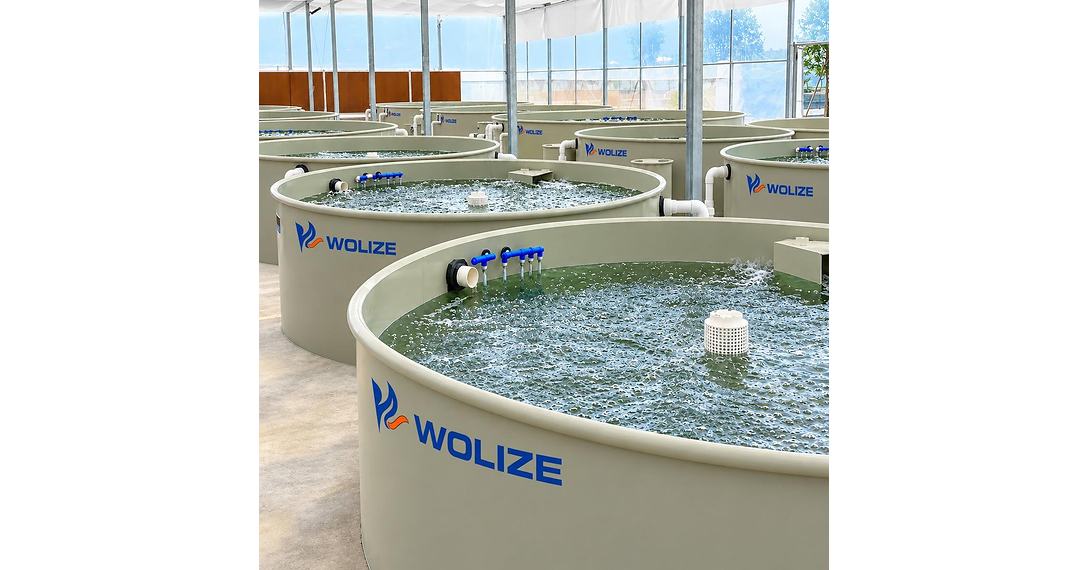
Wolize is promoting customizable aquaculture equipment, including recirculating aquaculture systems (RAS), as global aquaculture production grows at more than 5% annually, according to the FAO’s 2026 report. The company says its RAS uses less than 10% of the water required by conventional earthen ponds and can support stocking densities 8–10 times higher; its collapsible PVC tanks reduce folded volume by about 70%. Wolize reports certifications including ISO 9001, CE, RoHS and SGS, and says standard-product samples can be delivered in seven days.
Analysis
The investment signal is weak: this is a supplier press release, not evidence of orders, revenue conversion, or farm-level returns. Wolize is not mapped to a public ticker, so the announcement alone does not create a clean listed-equity exposure. The key economic question is whether lower water use and denser production offset RAS capital, power, maintenance, and operating-skill requirements. Higher theoretical stocking density can worsen losses if filtration, disease control, or power reliability fails; claimed equipment capability is not proof of realized yield or mortality improvement.
Second-order winners, if adoption is demonstrated, would be operators able to run controlled-environment farms profitably and providers of filtration, sensors, pumps, and backup power. Conversely, conventional pond operators may face pressure only where water scarcity, biosecurity, or land constraints make the upfront conversion attractive; low-cost pond production remains a formidable substitute. Collapsible tanks may ease freight economics, but installation, spare-parts availability, and local service can still constrain emerging-market penetration. Certifications reduce some procurement friction but do not establish product-specific performance or regulatory acceptance in each destination.
Near term, expect little investable price impact. Over 1–3 months, verify export orders, project backlog, repeat purchases, and customer economics; over 6–18 months, the structural case depends on commercial RAS farms sustaining output and margins through energy and disease cycles. The contrarian risk is treating aquaculture growth as automatic equipment demand: adoption may be delayed by capex and execution, while press-release claims about capacity and savings are not independently validated.
AllMind Terminal
AI-powered research, real-time alerts, and portfolio analytics for institutional investors.
Request TrialMarket Sentiment
Overall Sentiment
mildly positive
Sentiment Score
0.30
Key Decisions for Investors
- No direct trade on this announcement: Wolize has no supplied public ticker, and the release provides no independently verifiable order, revenue, or profitability data.
- Watch listed aquaculture operators and water-treatment/equipment suppliers rather than buying a broad aquaculture-growth story. Reassess only if named customers disclose deployments and operating results; verify RAS capex, energy per unit of output, survival rates, and payback against pond production.
- Treat any future supplier exposure as an alert, not a recommendation, until export backlog, realized gross margins, repeat-order rates, and working-capital needs are available. A rising order book without cash conversion would weaken the thesis.
- Falsifiers: evidence that commercial RAS deployments cannot earn acceptable returns after power and maintenance costs; customer delays or cancellations; poor survival/yield outcomes; or no measurable conversion of claimed international reach into recurring sales over the next 1–3 quarters.
More News
- Explosions hit Iran’s Qeshm Island as US media report US strikes in Hormuz
- Marvell to buy Lumentum in $115 billion deal in AI data-center bet
- Oil price falls amid hope of a breakthrough to end Iran war
- Marvell, Lumentum tout historic $115B deal to create ‘category leader' in AI connectivity
- Palantir reports booming U.S. commercial revenue growth, topping government for first time
- Anthropic releases amended IPO prospectus with third-quarter financials
From AllMind Research
- AllMind Platform Feature Updates - Fall 2026
- AI Credit Covenant Monitoring: From Clause to Review
- AI-Led Expert Interviews vs. Transcript Libraries
- How to Automate Equity Research Workflows: A Control-First Guide
- Weekly Update: Advanced Search Filters, Redesigned Ticker Dashboard, and Improved Search Experience