
Data Center World POWER News: SENS Changes Critical DC Power Architecture for Gigawatt-Scale Data Centers
Source: PR Newswire
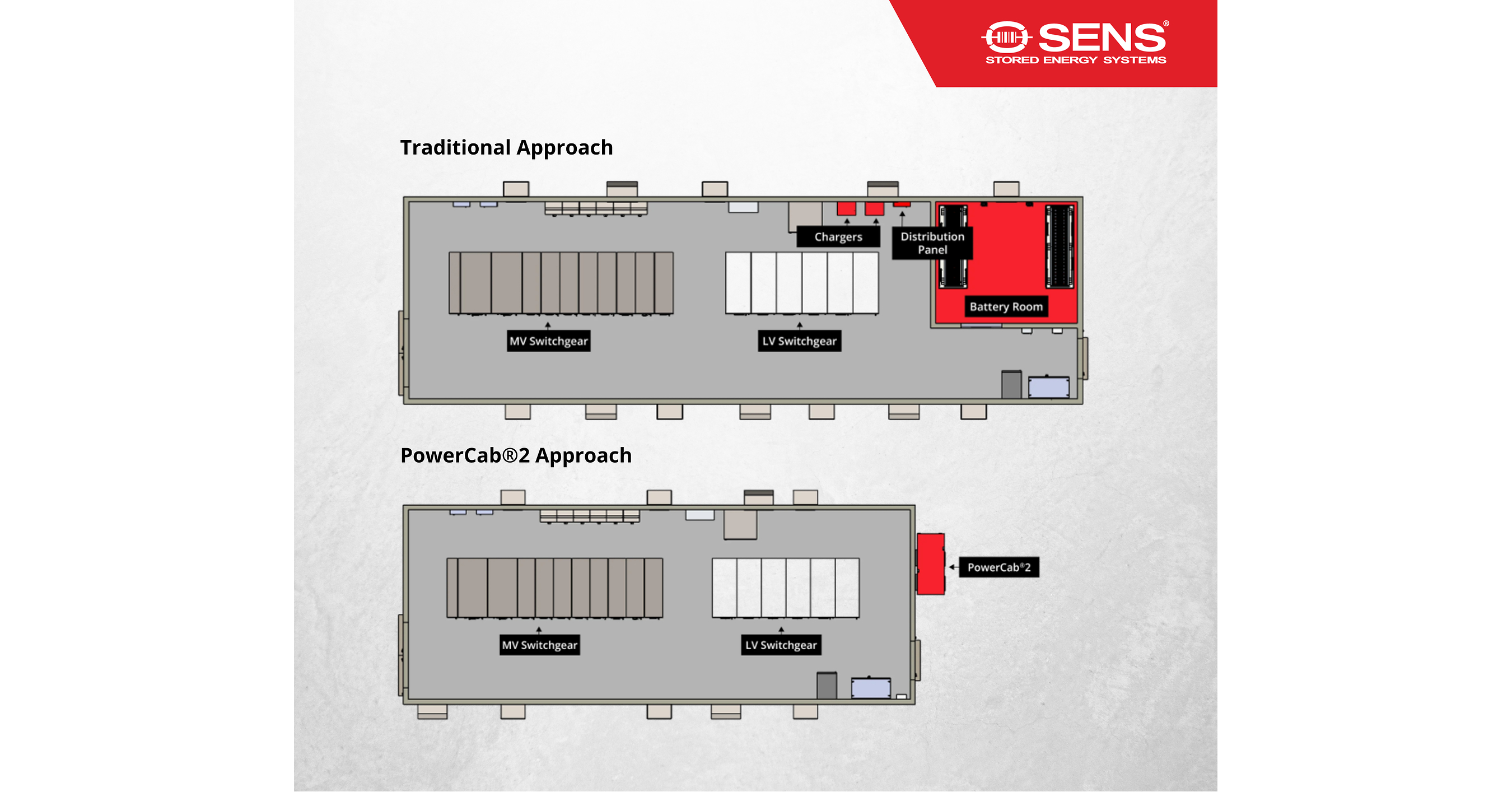
SENS introduced PowerCab2, an integrated DC power platform intended to replace dedicated battery rooms and hundreds of discrete components in gigawatt-scale data centers. The company estimates the system can reduce PDC and E-house footprints by 20% or more and save roughly $20M-$80M on a typical 1 GW campus, based on $255,000 of potential savings per structure across approximately 80-300 facilities. The claims are company estimates announced at an industry event, with limited immediate market-wide implications.
Analysis
This is not independently actionable for public equities: SENS is private and the savings figures are vendor estimates rather than contracted backlog or customer-validated economics. The relevant mechanism is not the quoted footprint benefit but a shift of electrical integration from scarce, schedule-sensitive field labor into factory-built assemblies. If adopted, that reduces project-delay and commissioning-risk costs for hyperscalers, which can matter more than direct equipment cost on campuses where power availability and construction sequencing constrain revenue start dates.
The public read-through is mixed for Vertiv (VRT), Eaton (ETN), Schneider Electric (SU FP), and ABB (ABBN SW). Integrated architectures can expand value per delivered power module for suppliers with factory capacity and broad switchgear/control portfolios, but commoditize standalone battery-room components and expose vendors reliant on bespoke onsite engineering. Near term, the announcement alone is unlikely to move these large-cap names; the investable confirmation would be design wins, lead-time improvement, or evidence that customers are standardizing power blocks across campuses.
Over 6-18 months, standardized DC-power skids could modestly improve data-center project economics and reinforce the preference for modular electrical infrastructure. The contrarian point is that space savings are unlikely to be the primary purchase driver: at gigawatt scale, utility interconnection, transformers, generators, medium-voltage gear, and cooling remain the binding constraints. The thesis fails if integrated systems introduce single-vendor qualification risk, fail to improve commissioning duration, or face battery-chemistry/redundancy requirements that force customers back to customized layouts.
AllMind Terminal
AI-powered research, real-time alerts, and portfolio analytics for institutional investors.
Request TrialMarket Sentiment
Overall Sentiment
mildly positive
Sentiment Score
0.38
Key Decisions for Investors
- No immediate directional trade on the release; treat as a technology watch item rather than a VRT/ETN/SU FP catalyst because neither pricing, orders, customer adoption, nor disclosed supplier exposure is available.
- Maintain a 1-3 month diligence alert on VRT and ETN earnings calls: a disclosed increase in factory-integrated power-system attach rates, data-center backlog conversion, or reduced field-installation content would support a long VRT/short diversified electrical-equipment basket pair. Do not initiate absent evidence; valuation sensitivity is high after AI-infrastructure rerating.
- For 6-18 months, favor suppliers with modular power distribution, controls, and service revenue over pure component vendors if standardized campus designs proliferate. A practical proxy is selective long ETN or SU FP versus short a broad industrial ETF (XLI), but only after orders/backlog demonstrate that modularization is additive rather than cannibalistic to engineering revenue.
- Falsification trigger: abandon the modular-power read-through if hyperscaler capex commentary weakens, electrical-equipment lead times normalize without margin expansion, or supplier disclosures show lower custom-system revenue and no offsetting volume/aftermarket growth.
More News
- Grab aims for 'next level' in financial services with purchase of buy-now pay-later platform Atome
- Saudi coalition says Houthi drone destroyed near Mecca
- Iran war increasing inflation, straining US munitions: congressional report
- Attacks on Saudi oil expose Iraqi PM’s struggle to control armed factions
- China's AI leaders keep quiet despite U.S. 'publicity' on tech risks
- Exclusive-Malaysia talks to rival airlines as it monitors AirAsia’s financial health, sources say
From AllMind Research
- Anthropic IPO Preview: Valuation, Timing, and What to Watch
- Shein After the IPO: Venue, Valuation, and What Must Be Proved
- What AI Research Tools Should a Small Hedge Fund Buy First?
- AI Tools for CFA Charterholders: An Evidence Standard
- Weekly Update: Unstructured Data Search, Ask AI, and Advanced Futures Data