
Why Did SpaceX Stock Just Pop?
Source: fool.com
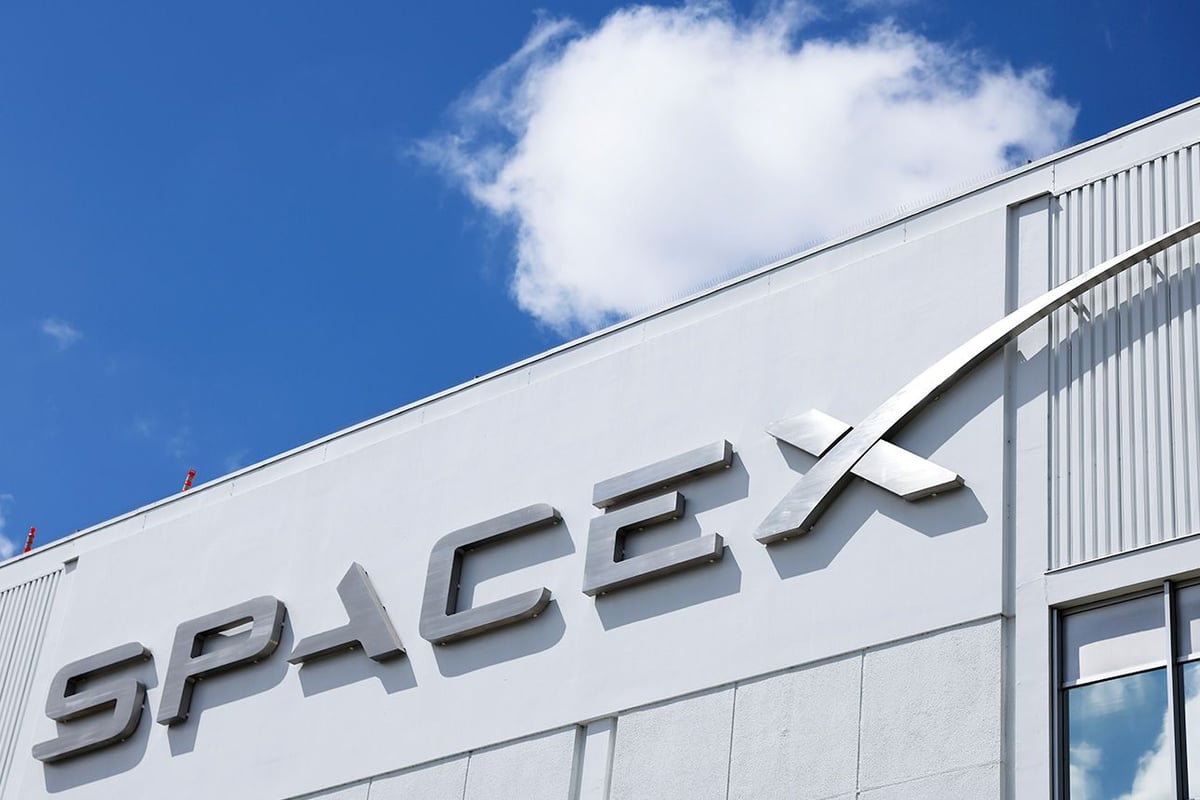
Space Exploration Technologies shares rose 4.4% after The Washington Post reported the company was in talks to buy Boost Mobile or partner with it to enter the U.S. wireless market, valued in the article at $235 billion. The report follows SpaceX securing FCC permission for 15,000 direct-to-cell satellites and paying $8 billion for U.S. spectrum licenses; no Boost deal was confirmed.
Analysis
The strategic upside for SPCX is distribution and customer acquisition, not an immediate replacement for terrestrial networks: satellite-to-cell is most differentiated where coverage is poor, while dense-market service still depends on ground capacity and wholesale access. A Boost tie-up could therefore expand Starlink’s reach but leave SPCX exposed to the very incumbents it aims to challenge. If AT&T and T-Mobile supply network access, they may collect wholesale revenue in the near term while retaining leverage over pricing, capacity and service terms; if SPCX diverts customers over time, that relationship could become a source of conflict. ECHO gains potential monetization or partnership value, but the economics depend on consideration, liabilities retained and whether Boost’s network access agreements are transferable or renegotiable. Those details are not reported, so the equity reaction risks capitalizing strategic optionality before there is evidence of value capture.
Over days, rumor-driven moves can reverse on denial or unfavorable terms. Over 1–3 months, watch for a binding agreement, financing and regulatory disclosures, and concrete wholesale or subscriber terms. Over 6–18 months, the test is whether satellite service adds paying customers and improves retention without requiring uneconomic terrestrial access or continued heavy investment. Contrarian view: a fourth national carrier narrative may overstate the near-term threat to incumbents; hybrid coverage could complement rather than displace their networks. No valuation, deal terms or verified unit economics support a directional trade today.
AllMind Terminal
AI-powered research, real-time alerts, and portfolio analytics for institutional investors.
Request TrialMarket Sentiment
Overall Sentiment
moderately positive
Sentiment Score
0.40
Ticker Sentiment
Key Decisions for Investors
- Avoid chasing SPCX on the report alone. Revisit only after a definitive transaction or partnership filing clarifies price, network-access terms, financing and regulatory conditions.
- Treat ECHO as event-driven optionality, not a confirmed value unlock. A long position is more defensible only if disclosed proceeds or contract economics demonstrate value beyond the initial market reaction; reassess if talks are denied or terms leave material obligations with ECHO.
- Monitor AT&T and T-Mobile wholesale agreements and any evidence of customer migration. Incremental wholesale revenue could cushion competition initially; worsening access terms or measurable subscriber losses would weaken that offset.
- For the 6–18 month thesis, track paid direct-to-cell adoption, service quality and unit economics. Failure to convert coverage capability into recurring customers—or regulatory limits on spectrum and satellite deployment—would falsify the fourth-carrier narrative.
More News
- The AI boom is facing another supply crunch. This time it’s the amount of capital available to feed Silicon Valley’s endless need for cash
- Elon Musk throttles Grok Bot limits due to ‘unsustainably high’ costs
- SpaceX in talks to buy Boost Mobile or use its network, Washington Post reports
- Premarket movers: Estee Lauder, Rivian rise premarket; Check Point falls
- SpaceX is reportedly looking at buying Boost Mobile or using its cell network
- Elon Musk's SpaceX Reportedly Talking With EchoStar About A Boost Mobile Deal