
Fortress Group Unveils the NextGen SMART ILA: Modular In-Line Amplifier Infrastructure
Source: PR Newswire
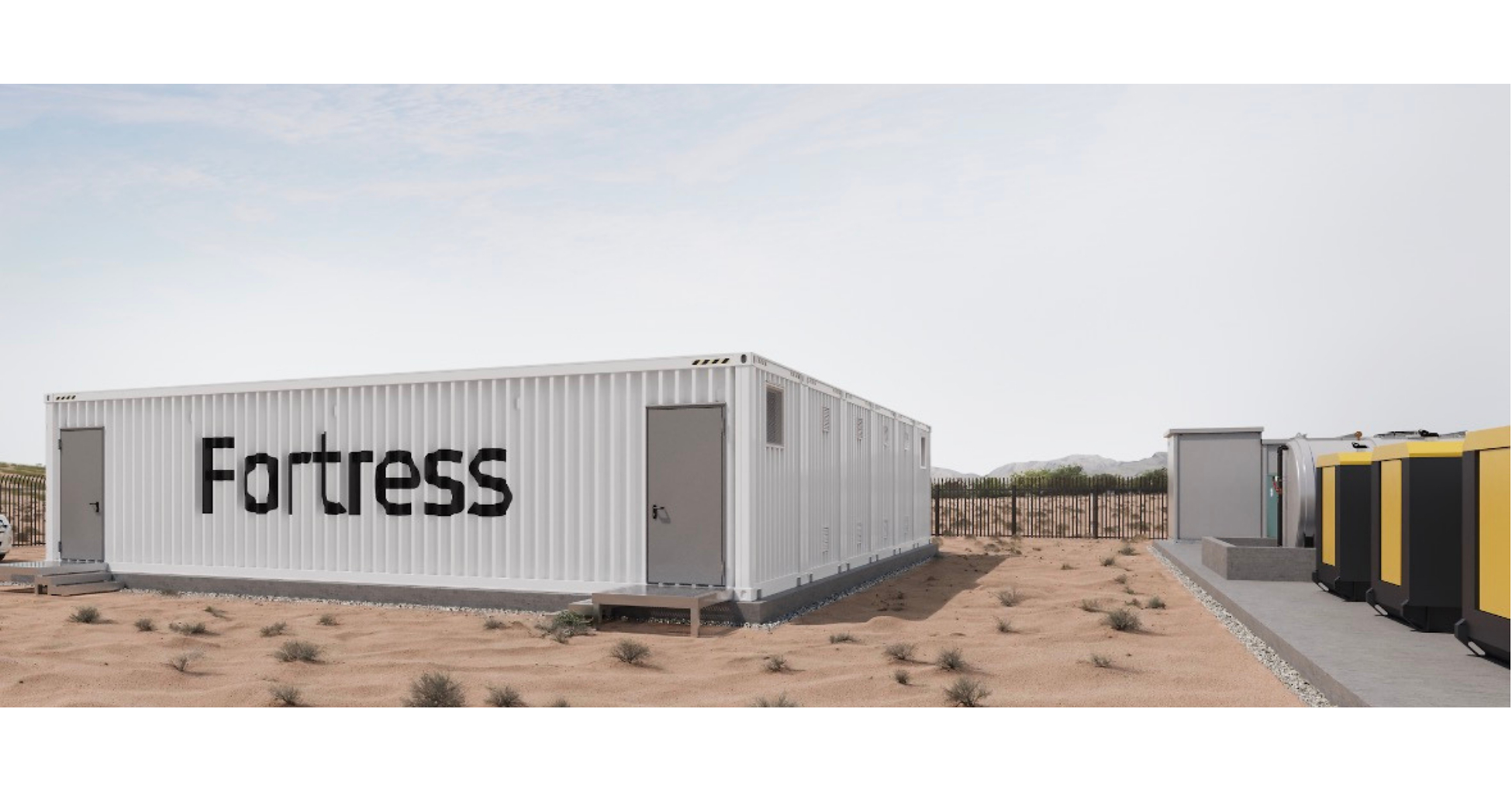
Fortress Group launched its NextGen SMART ILA modular telecom shelter platform, targeting up to 5x PUE savings, 3x equipment capacity, 10x fiber capacity and up to 45% lower cost per watt versus traditional double-wide ILA sites. The initial low-density module supports 144-288 fibers and approximately 83.5 kW of facility load in an 8 ft x 40 ft container, while planned high-density configurations are designed to scale to 864 fibers and 406 kW. Fortress will showcase the platform at an operator-focused Experience Week in October and is soliciting early production-capacity commitments.
Analysis
This is not yet a CIEN demand catalyst; it is a supplier-led specification claim with no disclosed customer commitments, pricing, deployment volume, or production capacity. The relevant read-through is that long-haul network builds are becoming constrained by powered-site availability rather than optical hardware alone. If operators standardize denser relay sites, CIEN could benefit from faster route activation and a larger addressable installed base for transport shelves, but the revenue conversion lag is likely 6-18 months and depends on carrier capex budgets rather than the shelter vendor's stated capabilities.
The more immediate economic opportunity sits with unlisted Fortress and public power/thermal infrastructure suppliers such as VRT, ETN and NVT, provided the modular architecture drives incremental electrical distribution, cooling and remote-monitoring content per site. Conversely, claims of materially better power efficiency could reduce recurring utility costs for carriers without necessarily expanding their capital budgets; the likely first-order outcome is capex substitution from bespoke field construction into standardized modules, not a wholesale increase in optical spend. CIEN's near-term valuation remains much more sensitive to cloud-provider DCI orders, service-provider guidance and inventory normalization than to this product launch.
Contrarian view: dense intermediate-line infrastructure may expose a bottleneck in utility interconnection, permitting and field-service availability, limiting realized deployment speed even if the container is technically deployable. The product's highest-density economics also remain unverified until operators disclose thermal performance at sustained loads, redundancy design, and total installed cost including grid upgrades. A failure to secure named carrier reference customers by year-end would indicate the announcement is primarily pipeline marketing rather than an industry inflection point.
AllMind Terminal
AI-powered research, real-time alerts, and portfolio analytics for institutional investors.
Request TrialMarket Sentiment
Overall Sentiment
moderately positive
Sentiment Score
0.42
Ticker Sentiment
Key Decisions for Investors
- No directional CIEN trade on this release. Maintain CIEN as a watch item; upgrade the thesis only if management identifies carrier transport wins tied to route expansion or raises service-provider demand commentary over the next 1-2 earnings cycles.
- For infrastructure exposure, monitor VRT, ETN and NVT for modular telecom-site orders rather than initiate on the announcement. A disclosed multi-site carrier rollout or backlog contribution would support a 6-12 month long bias; absence of named deployments by year-end is a falsifier.
- Use CIEN versus LITE as a relative-value monitor, not an immediate position: a sustained acceleration in terrestrial transport deployments would favor CIEN's system content over component suppliers, while weak carrier capex would favor avoiding both. Trigger only after carrier capex guidance and CIEN order trends corroborate the premise.
- Track utility interconnection lead times and carrier permitting disclosures. If these extend beyond 12 months, standardized shelters shift from growth enabler to working-capital and schedule risk, reducing the expected optical-equipment pull-through.
More News
- Stocks making the biggest moves midday: Advanced Micro Devices, Intel, Paramount, Critical Metals & more
- Bitmine Immersion Technologies anuncia que sus tenencias de ETH alcanzan los 5,98 millones de tokens
- All Iranian airlines to be 'shut down' from Wednesday, Bessent tells CNBC
- Taiwan benchmark Taiex rises to record intraday high as tech stocks advance
- AMD joins the $1 trillion club as chip rally surges - our AI Strategy saw it early
- Jamie Dimon says hyperscaler AI spending could hit $1 trillion next year