
CATL Launches TECTRANS II at IAA Transportation 2026 to Accelerate Global Commercial Vehicle Electrification
Source: PR Newswire
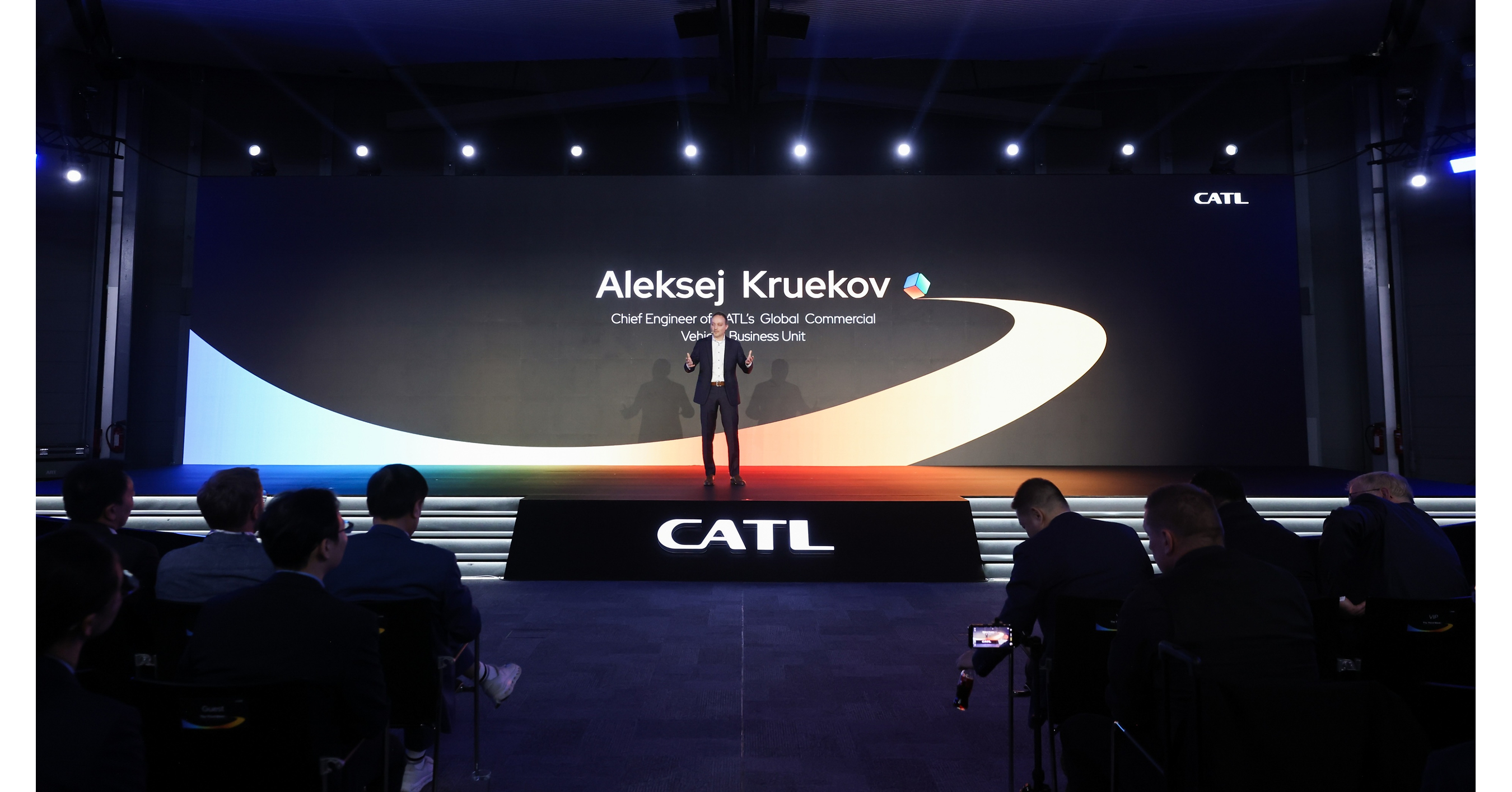
CATL unveiled TECTRANS II, its next-generation commercial-vehicle battery solution, at IAA Transportation 2026 in Hanover. The launch targets accelerating global commercial-vehicle electrification, which CATL characterized as the third wave of the energy transition. The announcement reinforces CATL's commercial EV battery positioning, though it disclosed no pricing, customer contracts, production volumes, or financial impact.
Analysis
This is not yet a revenue catalyst for CVGI. CVGI's opportunity is indirect: higher commercial-EV build rates can increase content demand for cab interiors, wiring-adjacent assemblies and fleet-specific vehicle architecture, but battery-pack announcements do not establish platform awards, volume commitments, or incremental content per vehicle. The more immediate competitive implication is pressure on legacy truck OEMs and suppliers to shorten electrified-platform development cycles, which can raise engineering expense and compress margins before unit volumes scale.
Over the next 1-3 months, the relevant read-through is whether OEM partners disclose vehicle programs, validated range/payload economics, charging partnerships, or fleet orders. A credible total-cost-of-ownership improvement would favor European truck OEMs Daimler Truck (DTG.DE) and Volvo (VOLV-B.ST), while also expanding the addressable market for charging and power-management suppliers; absent those datapoints, the market should treat this as product-marketing rather than an earnings event. Over 6-18 months, lower battery cost and improved durability could pressure diesel residual values and accelerate fleet replacement, but high-power depot charging availability and grid interconnection timelines remain the binding constraints, not cell technology alone.
The contrarian view is that commercial electrification adoption may remain concentrated in return-to-base urban and regional fleets even if battery specifications improve. Long-haul economics require payload parity, predictable megawatt-scale charging access and financing structures that monetize lower operating costs; without these, OEM order books can lag technical launches materially. The thesis is falsified positively by disclosed multi-year fleet contracts and OEM production guidance, or negatively by continued order deferrals and weak charging-infrastructure utilization.
AllMind Terminal
AI-powered research, real-time alerts, and portfolio analytics for institutional investors.
Request TrialMarket Sentiment
Overall Sentiment
mildly positive
Sentiment Score
0.35
Key Decisions for Investors
- No directional CVGI trade on this announcement alone. Set an alert for disclosed CVGI commercial-EV platform awards or management guidance showing EV-related revenue contribution; initiate only if the award includes volumes, content scope and a margin-accretive ramp profile.
- Monitor a 1-3 month relative-value setup: long Daimler Truck (DTG.DE) or Volvo (VOLV-B.ST) versus short a broad European autos basket only after fleet-order or production-volume confirmation. Target a 8-12% relative move over 6-12 months; exit if OEM electrified-truck order intake fails to improve across two reporting periods.
- For US exposure, watch Cummins (CMI) for evidence that electrified powertrain demand is replacing, rather than merely supplementing, diesel demand. Avoid chasing a battery-led EV narrative if CMI's engine backlog, pricing, or guidance begins to deteriorate before its zero-emission segment reaches scale.
- Use charging infrastructure deployment as the gating variable for any broader commercial-EV long: require announced depot charging commitments and grid-connection milestones before adding exposure to truck electrification beneficiaries. Delays in permitting or utility interconnection would favor incumbent diesel economics and invalidate the near-term adoption thesis.
More News
- What investors need to know about Alphabet's stock-busting earnings report
- Microsoft's Big Bets on AI Start to Pay Off
- China’s tech darlings are losing their shine. Here’s what’s behind the sell-off
- Google's Gemini 4 Carbon looks like a diamond in the rough
- Microsoft’s strong quarter backs up its stock rebound. Here's our new price target
- Can Southeast Asia pitch itself as an ‘all-in-one’ chip hub?
From AllMind Research
- AllMind Platform Feature Updates - Fall 2026
- AI Credit Covenant Monitoring: From Clause to Review
- AI-Led Expert Interviews vs. Transcript Libraries
- How to Automate Equity Research Workflows: A Control-First Guide
- Weekly Update: Advanced Search Filters, Redesigned Ticker Dashboard, and Improved Search Experience