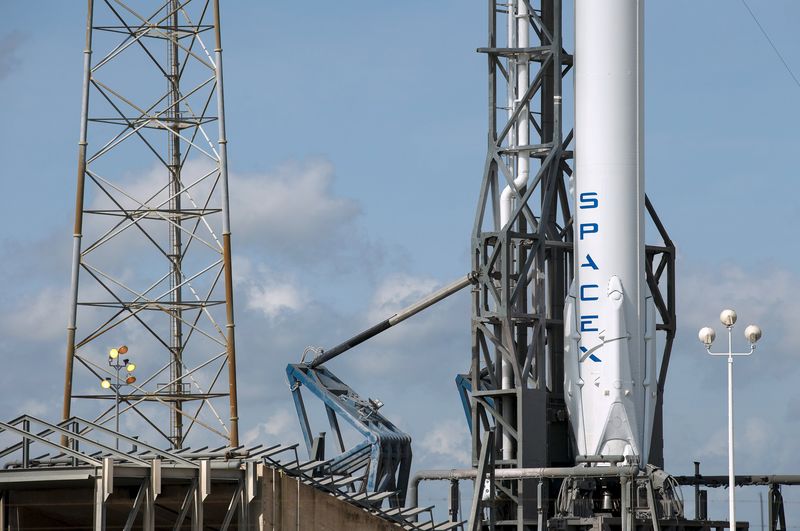
SpaceX is set to go public on June 12, targeting up to $80 billion in proceeds at a $1.8 trillion valuation, with Anthropic and OpenAI also expected to debut in what Yardeni calls the "AI-3" IPO wave. Yardeni warns the trio could absorb market attention and trigger forced index buying because of their tiny public floats, but says the actual $200 billion raised is manageable versus the $130 trillion combined Wilshire 5000 and S&P 500 market cap. The report is cautious on fundamentals, citing more than $25 billion in combined 2025 losses and a speculative $22.7 trillion enterprise AI market assumption.
The important second-order effect is not “more IPOs,” but a temporary reordering of who gets paid for access to scarce supply. When a mega-cap comes public with a tiny float, the marginal buyer is not a fundamental investor but an index-adjacent or momentum-driven account, which creates a post-listing squeeze dynamic that can persist for weeks if borrow is tight and free float remains constrained. That tends to favor the exchange/market-structure complex in the short run because every new listing and rebalancing event increases trading intensity, derivatives demand, and listing-fee value capture.
For NDAQ, the setup is mixed but likely net favorable on flow. A blockbuster pipeline boosts the strategic case for exchanges as the tollbooth on primary issuance and secondary discovery, yet the same concentration of attention in a few headline deals can distort the usual listing-calendar seasonality and amplify compliance/execution risk if index inclusion rules keep shifting. The near-term winner is the venue that captures the first print and the most option volume; the hidden loser is any venue or passive wrapper forced to warehouse demand against a very thin float.
The bigger risk is that these deals become a sentiment tax on the rest of the market rather than a true liquidity drain. If retail chases the offerings, that capital is likely to come from speculative growth, unprofitable AI, and high-beta internet names over the next 2-8 weeks, even if the aggregate market is large enough to absorb the dollar amounts. That implies short-term relative weakness in the crowded AI basket and a better opportunity to own infrastructure that monetizes activity rather than thesis risk.
The contrarian view is that the market may be underpricing the mechanical squeeze: small public floats plus forced benchmark ownership can create air pockets higher after listing, even if fundamentals are poor. In other words, the right trade is not necessarily to fade the story immediately, but to separate the financing event from the tradable float scarcity that can dominate price for 1-3 months.
AI-powered research, real-time alerts, and portfolio analytics for institutional investors.
Request TrialOverall Sentiment
mildly negative
Sentiment Score
-0.15
Ticker Sentiment
