
ECB Hikes Rates as Euro Area Grapples With Inflation
Source: Bloomberg
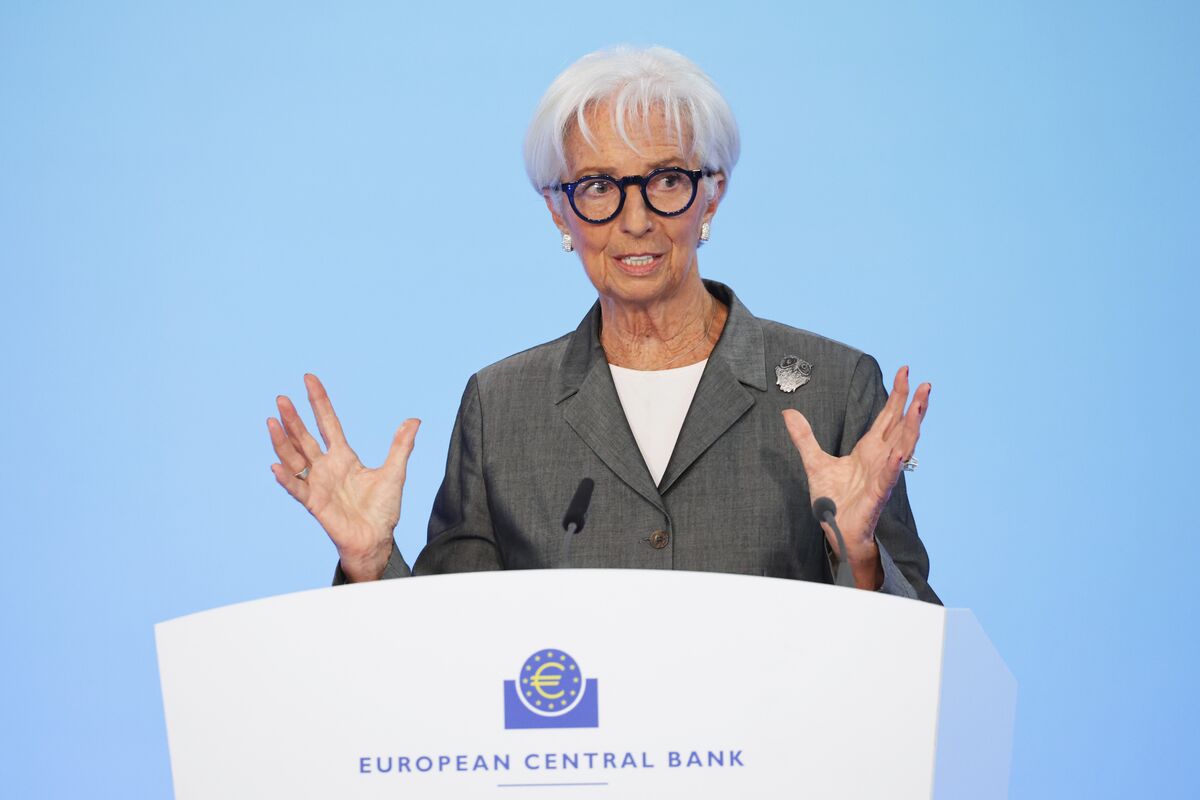
The European Central Bank raised interest rates 25bps to 2.5%, its second hike since the war in Iran began, in response to an inflation surge linked to the conflict. Markets had already priced in the move, limiting the immediate surprise, but the decision underscores persistent inflation pressure and a continued hawkish ECB stance.
Analysis
A fully anticipated ECB move is unlikely to be the primary market driver; the tradeable issue is whether energy-linked inflation forces a longer restrictive plateau than euro rates currently discount. The immediate transmission is most adverse for leveraged domestic-demand exposures—European real estate, small-cap cyclicals and highly indebted utilities—where refinancing costs reset faster than earnings can absorb weaker consumption. Banks initially benefit from asset repricing, but that advantage reverses if higher energy bills turn into delinquencies and corporate credit losses.
Over the next 1-3 months, monitor EUR 2-year swaps versus inflation breakevens and peripheral sovereign spreads. A widening Italy-Germany 10-year spread above roughly 200bp would turn monetary tightening into a fiscal-fragmentation trade, pressuring Italian banks and creating a negative feedback loop through sovereign holdings. Conversely, a rapid energy-price retracement would expose the market's inflation-premium positioning and favor duration-sensitive growth and real estate before the ECB changes its formal guidance.
The underappreciated 6-18 month effect is industrial competitiveness: persistently elevated European power and financing costs incentivize production migration and capex diversion toward the US and Asia. European exporters with pricing power may partly offset this through FX, but energy-intensive chemicals, metals and building materials face both demand destruction and structurally impaired returns on capital. Do not assume policy tightening alone resolves a supply-driven shock; the key falsifier is a sustained decline in energy inputs and core services inflation, not a single softer headline CPI print.
AllMind Terminal
AI-powered research, real-time alerts, and portfolio analytics for institutional investors.
Request TrialMarket Sentiment
Overall Sentiment
mildly negative
Sentiment Score
-0.25
Key Decisions for Investors
- Maintain a 1-3 month defensive European equity tilt: long iShares MSCI Europe Quality Dividend ETF (FQDE) versus short iShares MSCI EMU Small Cap ETF (IMSA), targeting 5-8% relative outperformance. Exit if euro-area PMIs reaccelerate while 2-year swap rates fall by more than 50bp.
- Express fragmentation risk through a modest long German Bund / short Italian BTP duration spread, preferably via liquid futures, with a 1-3 month horizon. The thesis is invalidated by a durable BTP-Bund spread below 140bp or credible EU fiscal backstop measures.
- Avoid adding to European commercial real estate and leveraged residential exposures until refinancing assumptions are reset in earnings. Use the iShares Developed Markets Property Yield ETF (WPS) as a broad liquidity-risk proxy; a material reduction in forward funding costs is required before turning constructive.
- Watch, rather than initiate, a long EUR/USD duration-sensitive reversal: consider EUR/USD calls only if 3-month euro-area core inflation momentum falls below 2.5% annualized and ECB terminal-rate pricing declines by at least 50bp. Without those data, geopolitical energy risk keeps the asymmetry unfavorable.
More News
- Christine Lagarde, Boris Vujčić: Monetary policy statement
- ECB's Lagarde Says Inflation to Stay Above Target Into 2027
- Wall St set for lower open after hotter-than-expected producer inflation data
- Lagarde Says ECB Hike Is 'Robust' Against All Three Scenarios
- Oil Hits $105 as Iran Shows No Signs of Backing Down
- Lagarde Says AI Investments Key Driver for Bond Markets