
ClimatBloc Introduces Its Insulated, Recycled-Composite Wall System to Green Building Leaders at Greenbuild 2026
Source: PR Newswire
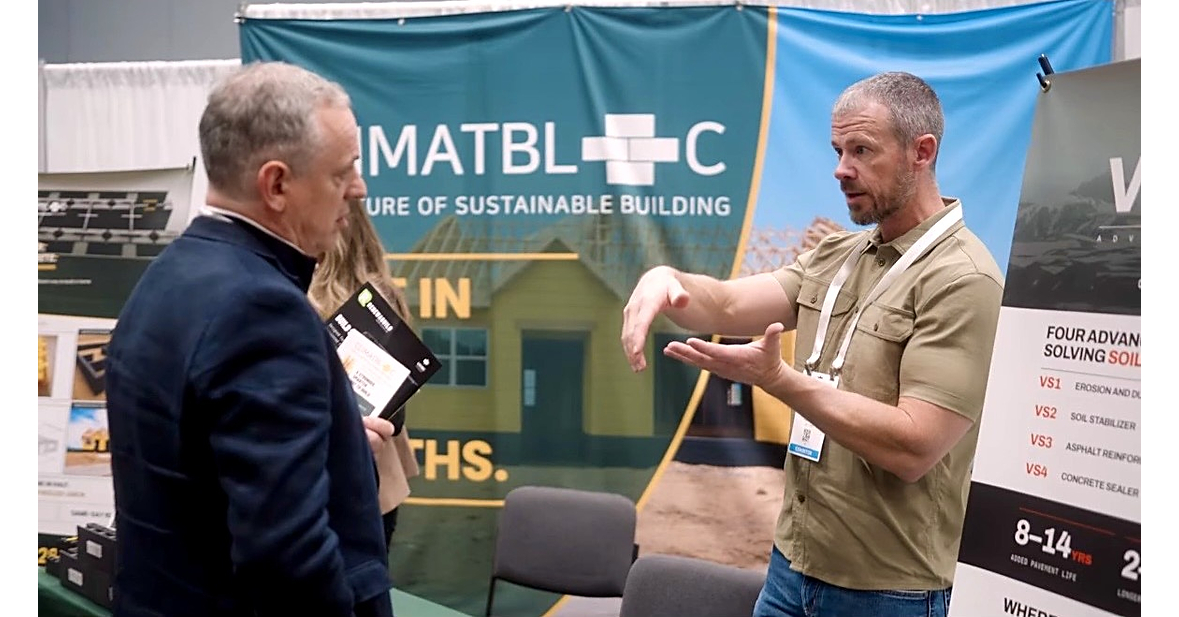
ClimatBloc showcased its U.S.-made insulated recycled-composite wall system at Greenbuild 2026, where the company said it engaged with architects, developers, contractors and sustainability professionals. The company says its interlocking blocks weigh less than 9 pounds when fully insulated, provide R-19 to R-84 insulation, and are rated for winds up to 280 mph; it plans to follow up with Greenbuild contacts as it expands in U.S. residential and commercial markets. The article reports no contracts, revenue figures or market reaction.
Analysis
This is lead generation, not evidence of commercial adoption: conference interest does not establish signed projects, code approvals, repeat orders, or unit economics. The investable question is whether ClimatBloc can convert lighter, faster installation into a lower installed cost after freight, crew training, engineering, inspection, and insurance—not simply whether blocks are easier to handle. If validated at scale, the system could take share from CMUs and some insulated concrete form or panel applications, while reducing demand for concrete placement and skilled labor per project. That substitution is unlikely to matter to cement or building-products earnings absent disclosed volume and capacity data.
The adoption bottleneck is likely qualification, not product awareness. Developers and lenders need independently verifiable assembly-level fire, wind, seismic, thermal, durability, and code documentation; component ratings alone may not establish acceptance across jurisdictions or lower insurance costs. Novelty can also create warranty and resale friction that offsets schedule savings. International meetings are not proof of contracted demand and introduce local code, logistics, and execution hurdles.
Near term (days to weeks), the release has no clear public-equity catalyst. Over 1–3 months, watch for named projects, permits, third-party test reports, production capacity, and repeat orders. Over 6–18 months, the thesis strengthens only if installations demonstrate cost and schedule advantages across multiple climates and jurisdictions. Contrarian angle: sustainability branding may overstate the commercial edge; conversely, if labor scarcity and retrofit economics make installation speed valuable, a small product supplier could gain relevance before incumbent materials respond. The company is not mapped to a listed ticker, so this is a diligence signal rather than a trade.
AllMind Terminal
AI-powered research, real-time alerts, and portfolio analytics for institutional investors.
Request TrialMarket Sentiment
Overall Sentiment
mildly positive
Sentiment Score
0.20
Key Decisions for Investors
- No direct position on this announcement: no listed ticker is supplied, and the release provides no independently verifiable sales, project pipeline, capacity, or financial impact.
- Put ClimatBloc on a commercial-validation watchlist. Upgrade only after verifying code approvals and third-party assembly testing, signed projects or repeat orders, installed-cost comparisons versus CMUs and insulated concrete forms, and production/freight capacity.
- Avoid a short in cement or building-products names based on this signal alone. Reassess only if disclosed deployments become material enough to show measurable substitution in regional demand or competitor guidance.
- Falsifiers for the adoption thesis include project delays or failed inspections, no repeat business after initial pilots, installed costs that erase labor or schedule savings, or insurance and warranty terms that remain unfavorable.
More News
- Stocks slump, bonds leap as AI giants’ spending spooks investors
- DoorDash offers $17 billion for Instacart: ‘the largest companies are only eating more and more of the pie’
- Alphabet Erases $500 Billion as ChatGPT, Google AI Cut into Search
- Alphabet’s stock has worst day in over 20 years, dragging the S&P 500 to first loss in four days
- PC chip plunge wipes out a quarter of Intel’s value
- Alphabet just had its worst day as a public company. BofA now values Google search at a lower multiple than fossil fuel stocks