
CATL Launches TECTRANS II at IAA Transportation 2026 to Accelerate Global Commercial Vehicle Electrification
Source: PR Newswire
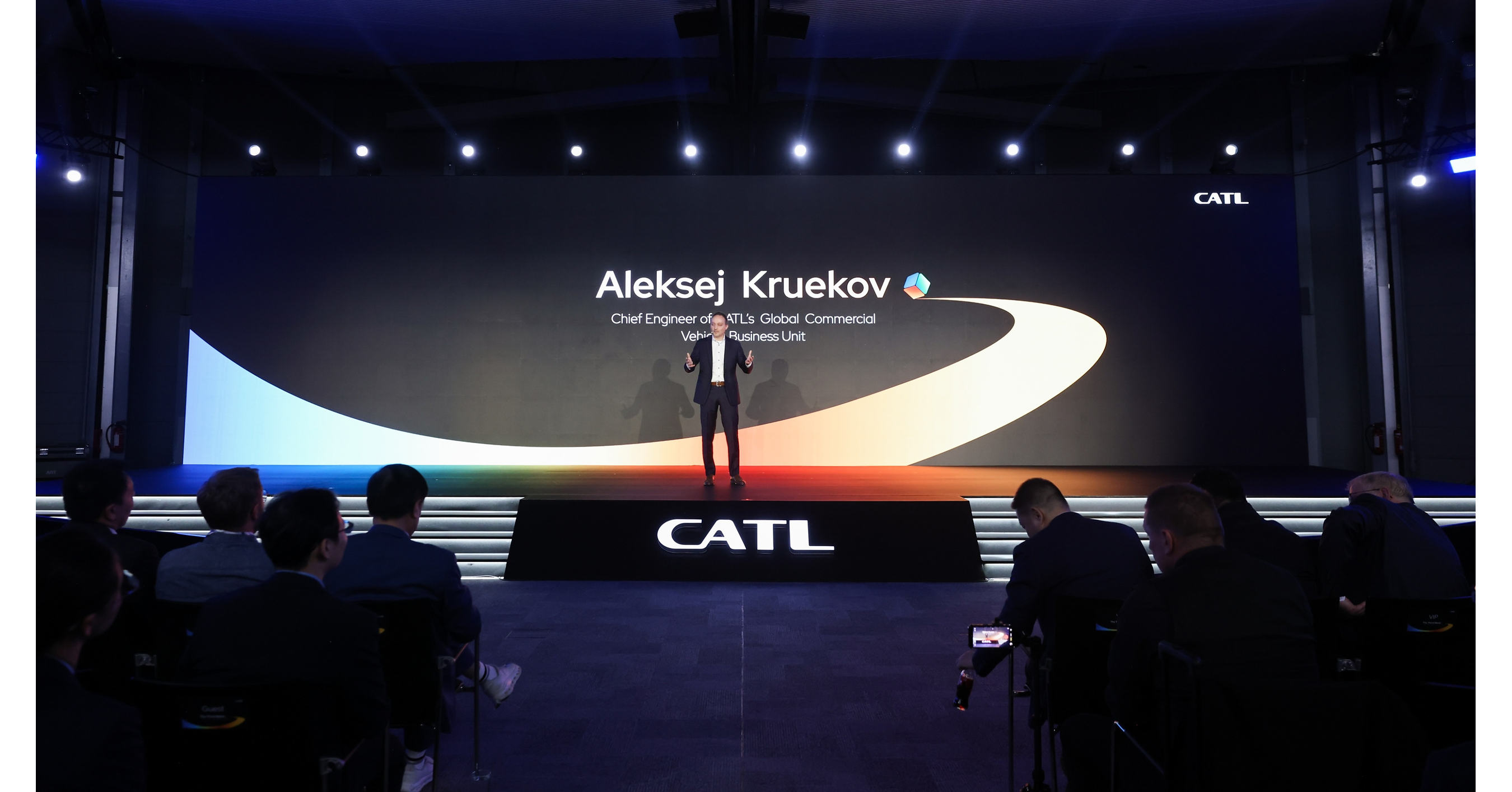
CATL unveiled its TECTRANS II commercial-vehicle battery platform, offering up to 1,000 km range, 80% megawatt charging in 25 minutes, 170 Wh/kg energy density and 96% round-trip efficiency. The modular system is designed to cut OEM vehicle-development cycles by 50% and R&D costs by 60%-70%, while targeting a 12-year/1.5 million-km life with 70% capacity retention. CATL also signed an MoU with DHL Group to develop European Green Freight Corridors, co-develop purpose-built electric vehicles and deploy pilots.
Analysis
The strategic implication is less about near-term battery revenue than a potential shift in bargaining power toward standardized battery platforms. If CATL can make pack upgrades interoperable across vehicle generations, European truck OEMs face greater component commoditization and less ability to differentiate on proprietary electric drivetrains; Daimler Truck (DTG), Volvo (VOLV-B) and Traton (8TRA) would benefit from lower engineering spend but could surrender lifecycle-service economics to the battery supplier. The stronger second-order beneficiary is fleet leasing: better residual-value confidence lowers financing risk, which can accelerate adoption before charging infrastructure is fully built out.
DHL is a credible demand-validation partner, but an MoU and pilot framework should not be capitalized as earnings. The investable catalyst over the next 1-3 months is disclosure of vehicle volumes, route economics, charging counterparties and lease/maintenance liability; without these, the agreement is principally a strategic signal. Over 6-18 months, successful corridor deployments could pressure diesel-truck resale values and favor European charging and grid suppliers, but only if depot power upgrades and megawatt-charging utilization produce lower total cost of ownership versus diesel.
The contrarian view is that the claimed operating advantage may be insufficient for long-haul adoption at scale because payload, charging time and battery durability are only part of the equation; grid connection queues, demand charges and driver-hour constraints can dominate route-level economics. A weaker European freight cycle would further delay fleet replacement, leaving OEM production volumes vulnerable even as battery technology improves. Watch DTG/VOLV-B order intake, DHL electric-fleet capex, European power-connection lead times and diesel-to-electric TCO studies as thesis falsifiers.
AllMind Terminal
AI-powered research, real-time alerts, and portfolio analytics for institutional investors.
Request TrialMarket Sentiment
Overall Sentiment
moderately positive
Sentiment Score
0.62
Ticker Sentiment
Key Decisions for Investors
- Maintain DHL as a watch-to-long rather than chase: initiate only after pilot fleet size, committed capex and route-level utilization are disclosed; target a 6-12 month holding period, with the thesis invalidated by flat logistics margins or no conversion from pilots to vehicle orders.
- Consider a 6-12 month pair trade long VOLV-B / short DTG in equal beta-adjusted notional: Volvo's broader construction and services mix offers more downside insulation if electric truck adoption remains infrastructure-constrained, while DTG has greater sensitivity to a delayed European replacement cycle. Exit if DTG materially outgrows Volvo in orders for two consecutive quarters.
- Avoid treating CVGI as a direct beneficiary absent evidence of content on the relevant vehicle platforms. Set an alert for OEM sourcing announcements or disclosed battery-enclosure/cab-system awards; without this linkage, the product launch has no actionable read-through to CVGI earnings.
- Monitor ABB and Siemens Energy for depot-grid and megawatt-charging order disclosures rather than buying on launch headlines. A confirmed multi-country corridor buildout with named power-equipment vendors would create a more tangible 12-24 month capex catalyst than the battery announcement itself.
More News
- What investors need to know about Alphabet's stock-busting earnings report
- Microsoft's Big Bets on AI Start to Pay Off
- Google's Gemini 4 Carbon looks like a diamond in the rough
- China’s tech darlings are losing their shine. Here’s what’s behind the sell-off
- Microsoft’s strong quarter backs up its stock rebound. Here's our new price target
- Can Southeast Asia pitch itself as an ‘all-in-one’ chip hub?