
AMERICAN LIBRARY ASSOCIATION MARKS 150TH ANNIVERSARY DURING BANNED BOOKS WEEK WITH LIST OF 150 MOST CHALLENGED BOOKS
Source: PR Newswire
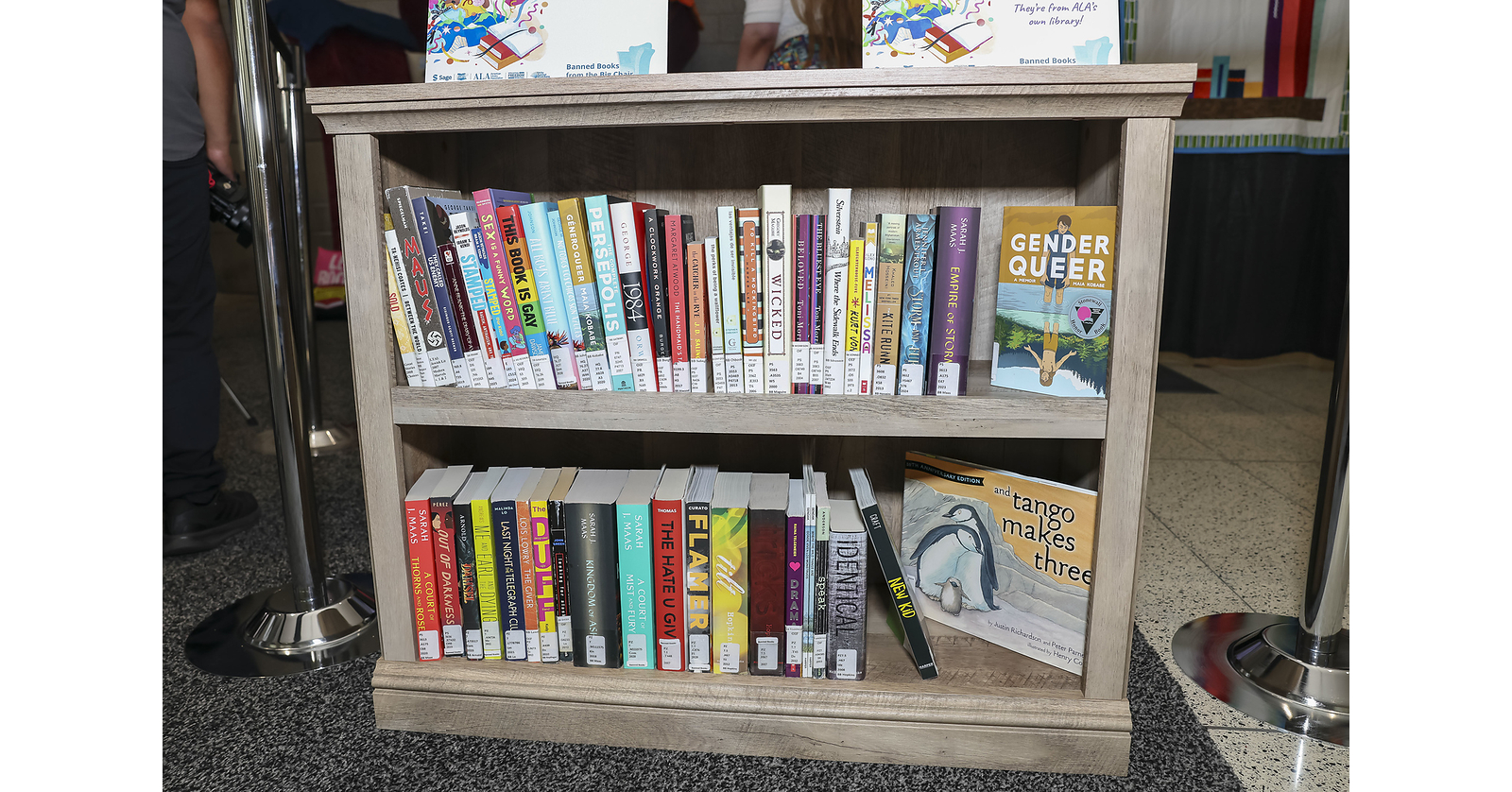
The American Library Association says its Office for Intellectual Freedom tracked 4,235 unique titles challenged in 2025, the second-highest total on record. For Banned Books Week and its 150th anniversary, ALA released a list of the 150 most-challenged books documented from 1990 through 2025; the observance runs Oct. 4–10, ending with Let Freedom Read Day.
Analysis
This is an awareness event, not an earnings catalyst: a rise in challenges does not establish that books are removed, sales are lost, or library budgets change. The investable mechanism is local policy, not the national observance. If districts or library systems restrict titles, affected publishers and authors could lose institutional purchases, while controversy may lift consumer demand or prompt replacement purchases elsewhere. Those effects are title-specific and could offset; there is no basis here to estimate net revenue impact for Scholastic or the broader publishing sector.
The key second-order exposure is procurement uncertainty for school-library suppliers and vendors serving public institutions: contentious content can raise review, compliance, and legal costs, while shifting acquisitions toward less controversial material. Any impact is likely fragmented across jurisdictions rather than a uniform sector shock.
Near term (days to weeks), expect limited fundamental repricing; attention may briefly boost demand for featured titles. Over 1–3 months, monitor school-board decisions, state rules, litigation, and library acquisition data. Over 6–18 months, sustained restrictions could affect catalog composition and institutional demand, but only if policies translate into widespread removal or reduced purchasing. The contrarian point: challenge counts are not equivalent to bans, and publicity can increase sales. Without evidence of adoption and purchasing changes, a broad publishing trade is premature.
AllMind Terminal
AI-powered research, real-time alerts, and portfolio analytics for institutional investors.
Request TrialMarket Sentiment
Overall Sentiment
neutral
Sentiment Score
0.00
Key Decisions for Investors
- No trade on the observance alone. Treat the news as a low-signal event, not a reason to change broad publisher or retailer exposure.
- Set an alert for district/library removal decisions, state-level policy changes, and litigation over procurement; require evidence of multi-jurisdiction adoption before underwriting a sector-level revenue or valuation effect.
- For Scholastic and other publishers, verify institutional-sales exposure and title-level sell-through before taking a view. A measurable decline in school/library orders would support a negative thesis; rising retail sales or replacement purchases could offset it.
- Falsification watch: if challenges do not translate into removals or lower acquisition budgets over the next few quarters, the structural-demand thesis is not established. Conversely, documented broad procurement cuts would warrant reassessing education-facing publishers and library suppliers.
More News
- It’s ‘more likely than not’ humanity loses control: Former AI insiders testify safety fixes may be ‘duct tape that will fall off later’
- China shuts hundreds of banks as Beijing moves to shore up its financial system
- Anthropic says its IPO could herald the end of the world as we know it
- NYSE owner and crypto exchange OKX seek SEC clearance for tokenized U.S. stock trading
- BT buys TalkTalk out of administration to keep 2.5M customers connected
- Sen. Warner Says Senate Not Briefed On B-1 Bomber Move
From AllMind Research
- Anthropic IPO Preview: Valuation, Timing, and What to Watch
- Shein After the IPO: Venue, Valuation, and What Must Be Proved
- What AI Research Tools Should a Small Hedge Fund Buy First?
- Palantir (PLTR) Q4 2025 Earnings: 70% Revenue Growth, Then an 11% Single-Day Crash
- AlphaSense Pricing: What Public Contract Data Shows in 2026