
CARKU lleva la innovación en baterías de la fábrica a Europa en Automechanika Frankfurt 2026
Source: PR Newswire
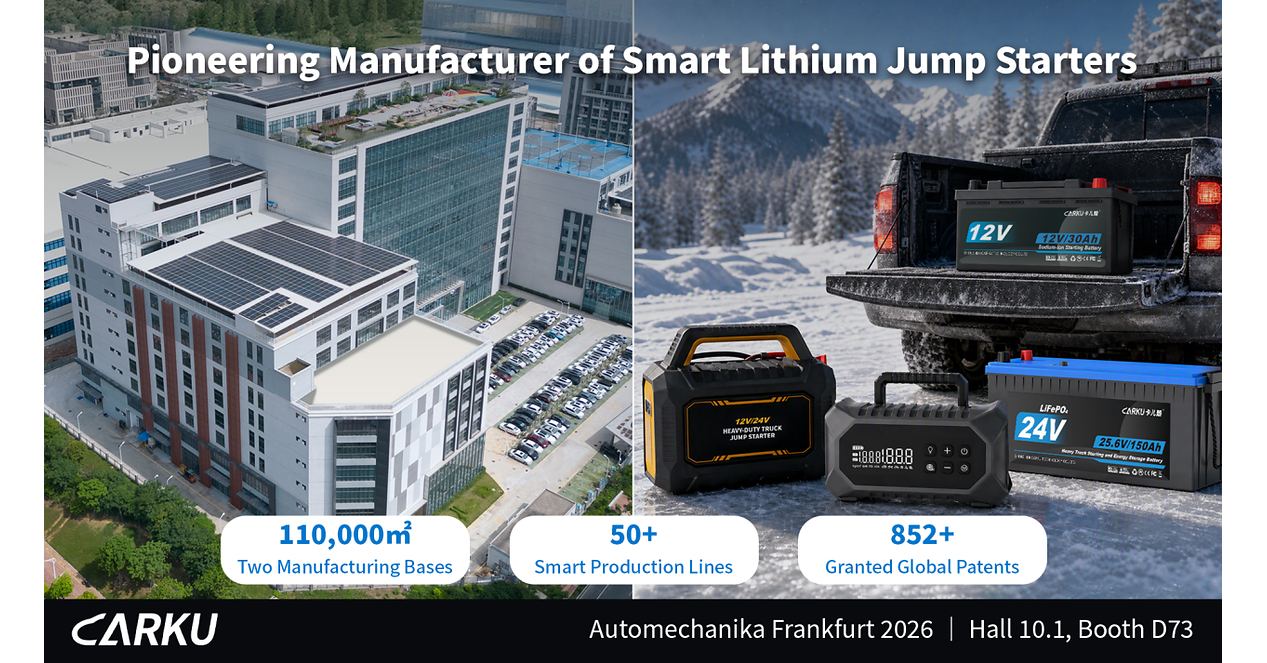
CARKU showcased its OEM/ODM battery-development platform at Automechanika Frankfurt 2026, highlighting lithium starter batteries for high auxiliary-power truck applications and sodium-ion starter batteries designed for cold climates. The company positions sodium-ion batteries as a next-generation alternative to AGM for cars, trucks and motorcycles, while citing 852 global patents and international product certifications. The announcement is a product and technology positioning update rather than a financial-results or volume-sales disclosure.
Analysis
This is not yet investable public-equity information: CARKU is privately held, the claims are promotional, and there is no disclosed production capacity, cell sourcing, customer wins, warranty data, or unit economics. The relevant signal is a potential qualification cycle in European aftermarket batteries, where distributor adoption depends less on claimed cell chemistry and more on cold-crank performance, safety certification, field-failure rates, and replacement economics. That makes any revenue effect for listed battery makers a 6-18 month question rather than a near-term catalyst.
If sodium-ion starter batteries achieve reliable cold-weather performance at scale, they could pressure premium AGM replacement pricing in Northern Europe and reduce lithium demand at the low-energy-density end of automotive auxiliary applications. The more exposed incumbents are specialty lead-acid suppliers such as Clarios' eventual public comparables and EnerSys (ENS), although ENS has greater industrial and motive-power diversification; lithium-cell suppliers should see negligible near-term impact because starter-battery volumes are small relative to EV traction demand. A secondary beneficiary could be European aftermarket distributors if lower maintenance and lighter batteries support higher-value replacement bundles, but no listed distributor-specific read-through is currently supported.
Consensus risk is overstating sodium-ion as a broad lithium displacement event. In this use case, sodium-ion competes principally with AGM, while lithium remains advantaged where weight and auxiliary-power density matter. The thesis is falsified if disclosed fleet trials show poor sub-zero cycle life, warranty reserves rise, or European certification and distributor acceptance fail to convert into named orders over the next two trade-show and fleet-procurement cycles.
AllMind Terminal
AI-powered research, real-time alerts, and portfolio analytics for institutional investors.
Request TrialMarket Sentiment
Overall Sentiment
mildly positive
Sentiment Score
0.32
Key Decisions for Investors
- No immediate position: treat this as a technology-adoption watch item, not a catalyst. Require independently verified European fleet contracts, annualized unit volumes, cell supplier disclosure, and warranty performance before underwriting an equity impact.
- Monitor ENS over the next 6-12 months for European automotive-aftermarket commentary, lead-acid replacement pricing, and any management discussion of sodium-ion competition; avoid a directional short absent evidence of volume or margin loss.
- Create an alert for named European distributor/OEM qualification wins and third-party cold-weather testing. If sodium-ion starter batteries show commercial-scale adoption with lower total cost of ownership, reassess a relative short in exposed lead-acid aftermarket suppliers versus a diversified electrification basket.
- Do not extrapolate this development to lithium miners or broad EV ETFs: the addressed battery category is too small to alter lithium demand forecasts unless evidence emerges that the chemistry is moving beyond starter and auxiliary applications.
More News
- Here’s the ‘core economic flaw’ in the AI bull case as stock and bond trades unravel, according to a top economist
- How Pepsi fell behind in the cola wars—and then lost KFC
- 5 big analyst AI moves: ’Uniquely catalyst-rich’ months ahead for SpaceX
- Braskem creditors, shareholders near deal on $11bn debt restructuring
- Xencor reports phase 1 data for cancer drug XmAb819
- The experience economy keeps defying expectations. Maybe we’ve been looking at it all wrong
From AllMind Research
- Anthropic IPO Preview: Valuation, Timing, and What to Watch
- Shein After the IPO: Venue, Valuation, and What Must Be Proved
- What AI Research Tools Should a Small Hedge Fund Buy First?
- Automating Financial Model Updates: A Source-Controlled Workflow
- Weekly Update: Live Event Center, In-App Documents, and Faster Transcripts