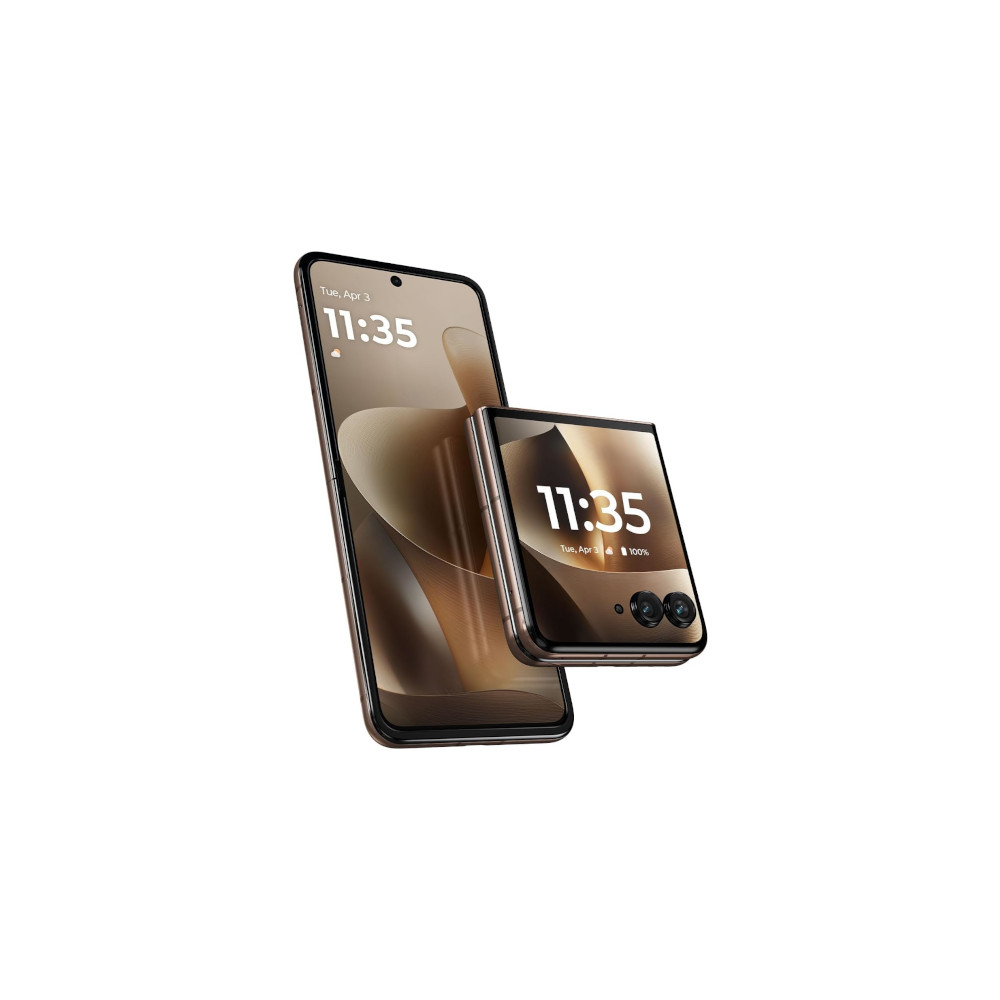
The article compares Motorola’s Razr Ultra (2026) and Samsung’s Galaxy Z Flip 7, highlighting stronger battery life, faster 68W charging, and more appealing design on the Razr Ultra versus Samsung’s superior 7-year software support and lower price. Motorola’s model features a 5,000mAh silicon-carbon battery, Snapdragon 8 Elite, and dual 50MP cameras, while the Z Flip 7 uses an Exynos 2500 with 12GB RAM and all-day battery life. Overall, the piece is a consumer product review with limited direct market impact, mildly favoring Motorola despite its higher price.
This read-through is less about one handset beating another and more about where incremental profit pools in premium mobile are migrating: from pure silicon differentiation toward design, battery architecture, and software lock-in. In clamshell foldables, the buyer is paying for emotional utility and habit formation, which means the vendor that makes the device feel “worth carrying” can defend price better than the vendor with a marginally better spec sheet. That favors brands with stronger lifestyle positioning and tighter first-party UX, but it also means the category remains vulnerable to a fast-follow discount cycle as soon as novelty wears off.
The second-order issue is that battery chemistry and fast-charge performance are becoming the real feature arms race in foldables. Silicon-carbon and higher-watt charging materially improve day-to-day satisfaction, which is more durable than a one-generation CPU edge; if that message lands, it can reset willingness to pay across the segment. The risk for the higher-priced brand is that consumers may anchor on software support and perceived polish, then defer purchase until promotions narrow the gap, compressing gross margin while unit growth stays intact.
For competitors, the broader threat is not the direct handset share shift but the spillover into ecosystem attach rates. If one OEM consistently wins the “fun to use” premium pocket device, it can lift watch, earbuds, and accessory conversion, while the other wins enterprise and long-horizon support-conscious buyers. The contrarian point is that the lower-priced, longer-support option may actually be the better volume story over the next 12-24 months because foldable adopters are still price sensitive and the category is early enough that reliability and update promises can outweigh emotional appeal for mainstream buyers.
AI-powered research, real-time alerts, and portfolio analytics for institutional investors.
Request TrialOverall Sentiment
mildly positive
Sentiment Score
0.15
