
Midea SMART MASTER à l'IFA 2026 : des agents IA à l'intelligence incarnée
Source: PR Newswire
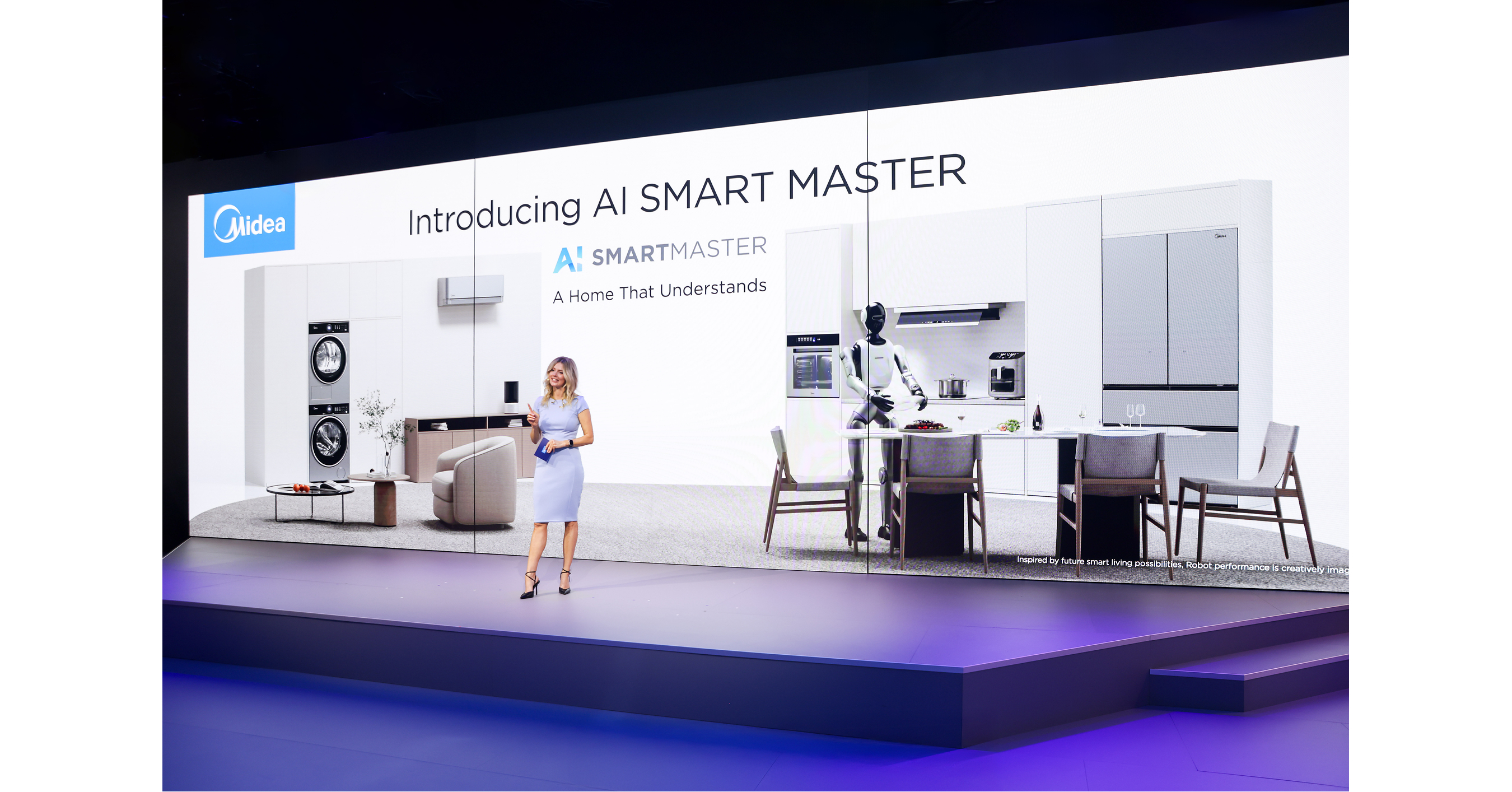
Midea unveiled its SMART MASTER AI-home ecosystem at IFA 2026, featuring a multilingual AI Agent supporting 140 languages, eight-meter voice recognition and a 0.4-second response time. The platform includes specialized comfort, health, energy-efficiency and service agents that coordinate connected household devices. Midea also demonstrated its embodied-AI robot, built on its EAGLES architecture and four multimodal foundation models, for potential laundry, cooking, cleaning and home-assistance applications.
Analysis
This is primarily a positioning event, not yet an earnings catalyst. For Midea Group (000333.SZ), monetization depends on whether software-led features lift appliance ASPs, reduce warranty/service costs, or improve retention within its installed base; without disclosed attach rates, cloud revenue, or gross-margin targets, the market should treat the claims as R&D signaling rather than a change to FY26-FY27 estimates. The near-term competitive effect is greater on white-goods peers with weaker proprietary ecosystems—Haier Smart Home (600690.SS) and Gree Electric (000651.SZ)—because embedded control software can shift purchase decisions from unit specifications toward ecosystem lock-in.
The more investable second-order angle is service economics. Remote diagnosis and energy-management functions could lower truck-rolls and warranty provisions over 6-18 months, while creating utility-demand-response partnerships that make connected HVAC more valuable than standalone hardware. That would favor Midea's Building Technologies and Industrial Technologies exposure more than consumer robots, whose commercialization path remains uncertain and likely dilutive if deployed before a clear labor-cost ROI is established.
Consensus may overvalue the humanoid/embodied-AI demonstration and undervalue interoperability risk. Consumers rarely replace functioning appliances solely to join an ecosystem, and multi-brand compatibility can dilute proprietary data advantages; privacy, cybersecurity, and fragmented voice-platform standards could constrain adoption. The thesis becomes credible only if subsequent results show connected-product mix expansion, lower service expense as a percentage of sales, or measurable premiumization versus category pricing.
AllMind Terminal
AI-powered research, real-time alerts, and portfolio analytics for institutional investors.
Request TrialMarket Sentiment
Overall Sentiment
mildly positive
Sentiment Score
0.35
Key Decisions for Investors
- No immediate directional trade on the launch alone; maintain an alert on Midea Group (000333.SZ) for its next two earnings releases. Upgrade only if management quantifies connected-appliance mix, recurring-service revenue, or a sustained 50-100bp reduction in warranty/service costs; absent these metrics, incremental multiple expansion is difficult to justify.
- Monitor a 6-12 month relative-value setup: long 000333.SZ / short Gree Electric (000651.SZ) only if Midea's appliance gross margin or premium-product mix outperforms Gree by at least 100bp over two reporting periods. The catalyst is ecosystem-driven ASP and service-cost separation; falsification is price-led competition causing Midea margin dilution.
- Avoid using iRobot (IRBT) as a direct read-through. Midea's robotics messaging does not validate consumer-robot demand or improve IRBT's balance-sheet and channel risks; a broad robotics rally would be an opportunity to reassess IRBT short exposure rather than evidence of a sector-wide earnings inflection.
- For Asian appliance exposure, prefer waiting for post-IFA retailer/order commentary before adding Samsung Electronics (005930.KS) or LG Electronics (003550.KS) as competitive hedges. A faster-than-expected connected-home adoption cycle could force higher software and marketing spend across the category, compressing margins before any recurring-revenue benefit emerges.
More News
- Are global oil reserves sufficient to withstand renewed US-Iran war?
- OpenAI Trims Target Value & Volvo Cars Cuts 2,500 Jobs
- PG&E’s CEO says AI is ‘the best thing that could’ve ever happened to the grid’
- The mobile ambitions of SpaceX see telecom stocks get hit again. What the latest developments mean.
- Wake up! The long bond’s up two points!
- US tech stocks tumble as investors fret over AI spending
From AllMind Research
- Anthropic IPO Preview: Valuation, Timing, and What to Watch
- Shein After the IPO: Venue, Valuation, and What Must Be Proved
- What AI Research Tools Should a Small Hedge Fund Buy First?
- AlphaSense Pricing: What Public Contract Data Shows in 2026
- Eli Lilly Q4 2025 Earnings: Revenue Surges 43% as Mounjaro and Zepbound Dominate the GLP-1 Market