
CART Blood Pressure Monitor Demonstrates Utility in BP Monitoring for AF and Heart Failure Patients
Source: PR Newswire
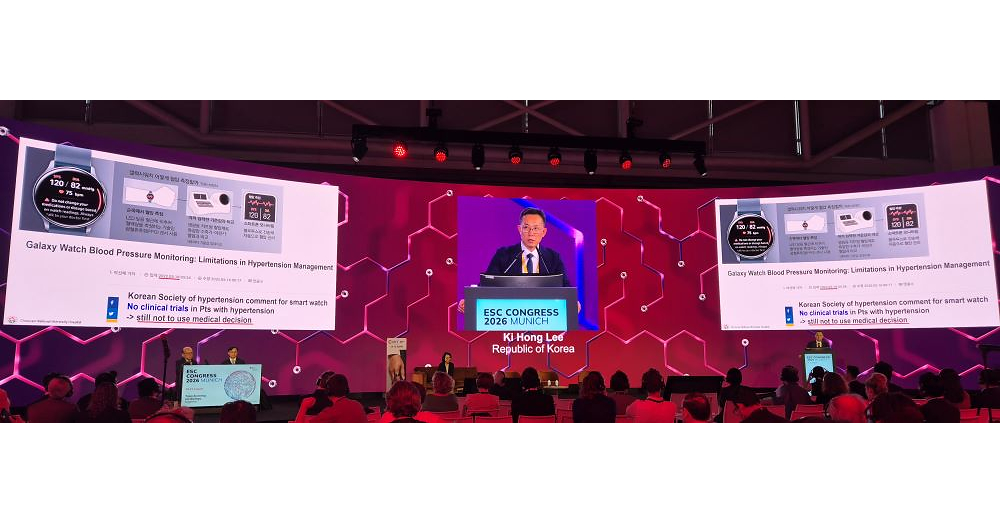
Sky Labs presented clinical data at ESC Congress 2026 indicating its CART ring-type blood-pressure monitor achieved approximately 80% analyzable data capture in atrial-fibrillation patients and met European Society of Hypertension error-margin criteria in severe heart-failure patients with mean ejection fraction of 29%. CART uses PPG sensors and AI for 24-hour cuffless monitoring and has surpassed 300,000 cumulative prescriptions across more than 2,000 Korean medical institutions. The device's inclusion in Korea's 2026 hypertension guidelines and the new clinical data support Sky Labs' planned expansion into European and global markets.
Analysis
The investable implication is more defensive than the promotional tone suggests: credible cuffless BP validation in high-variability cohorts raises the clinical evidence bar for consumer-wearable incumbents, but does not yet establish reimbursement durability, regulatory portability, or unit economics outside Korea. The near-term risk falls most on companies pursuing BP features primarily as ecosystem engagement tools—Apple (AAPL) and Samsung Electronics (005930.KS)—because a prescription workflow and longitudinal physician data can be more valuable than a feature-level BP estimate. Conversely, their installed bases, distribution and regulatory resources remain substantial competitive moats if medical-grade BP becomes a mass-market category.
Over 1-3 months, the key catalyst is not conference attention but evidence of European regulatory progress, named distribution/reimbursement partners, and published adherence versus conventional ambulatory BP monitoring. A clinically usable ring could expand monitoring intensity in AF/HF populations, creating second-order value for remote patient-monitoring platforms and cardiovascular-data vendors; however, payer adoption will depend on whether continuous readings reduce admissions or medication-management costs, not measurement agreement alone. The important falsifier is any independent study showing poor accuracy during motion, low perfusion, arrhythmia burden, or real-world wear-time attrition.
The contrarian view is that cuffless BP remains prone to commoditization before it becomes a reimbursed clinical profit pool. If the technology requires recurring calibration, clinician review, or expensive hardware replacement, the economic beneficiary may be large device ecosystems rather than the first specialist vendor. For public markets, this remains an evidence-development signal rather than a standalone tradable catalyst absent a listed Sky Labs security or disclosed revenue/reimbursement economics.
AllMind Terminal
AI-powered research, real-time alerts, and portfolio analytics for institutional investors.
Request TrialMarket Sentiment
Overall Sentiment
strongly positive
Sentiment Score
0.58
Key Decisions for Investors
- No directional trade on the announcement alone; place a 1-3 month alert for EU regulatory clearance, reimbursement-code recognition, or a disclosed European health-system contract. Upgrade the signal only if management discloses recurring revenue, gross margin, retention and hospital utilization data.
- Monitor AAPL and 005930.KS around wearable-health product events: a validated prescription-grade cuffless BP category would be strategically positive for their ecosystem multiples, but only if they demonstrate clinical workflow integration rather than consumer wellness positioning.
- Watch Omron (6645.T) for potential competitive pressure in ambulatory and home BP monitoring over the next 6-18 months. A short thesis requires evidence of reimbursement substitution or slowing professional-monitoring sales; absent that data, conventional cuff-based accuracy and provider familiarity remain protective.
- For healthcare-services exposure, screen remote-monitoring beneficiaries rather than hardware vendors—e.g., DOCS only if cardiovascular RPM enrollment, reimbursement capture, and gross-margin contribution accelerate. The necessary confirming data are AF/HF monitoring volumes and payer reimbursement rates, neither of which is established here.
More News
- OpenAI Trims Target Value & Volvo Cars Cuts 2,500 Jobs
- PG&E’s CEO says AI is ‘the best thing that could’ve ever happened to the grid’
- The mobile ambitions of SpaceX see telecom stocks get hit again. What the latest developments mean.
- Defense giant Saab sees orders triple after Gripen fighter jet deal with Ukraine
- Volvo Cars shares plunge 25% amid China sales slump and fresh job cuts
- Wake up! The long bond’s up two points!
From AllMind Research
- Anthropic IPO Preview: Valuation, Timing, and What to Watch
- Shein After the IPO: Venue, Valuation, and What Must Be Proved
- What AI Research Tools Should a Small Hedge Fund Buy First?
- AllMind Discusses Ontario's AI Economy with Minister Stephen Crawford and Supply Ontario CEO James Wallace
- AI Research Tools for SEDAR+, UK and ASX Filings