
DJI presenta Dock 4 con cambio automático de baterías en 25 segundos para ofrecer apoyo aéreo siempre disponible.
Source: PR Newswire
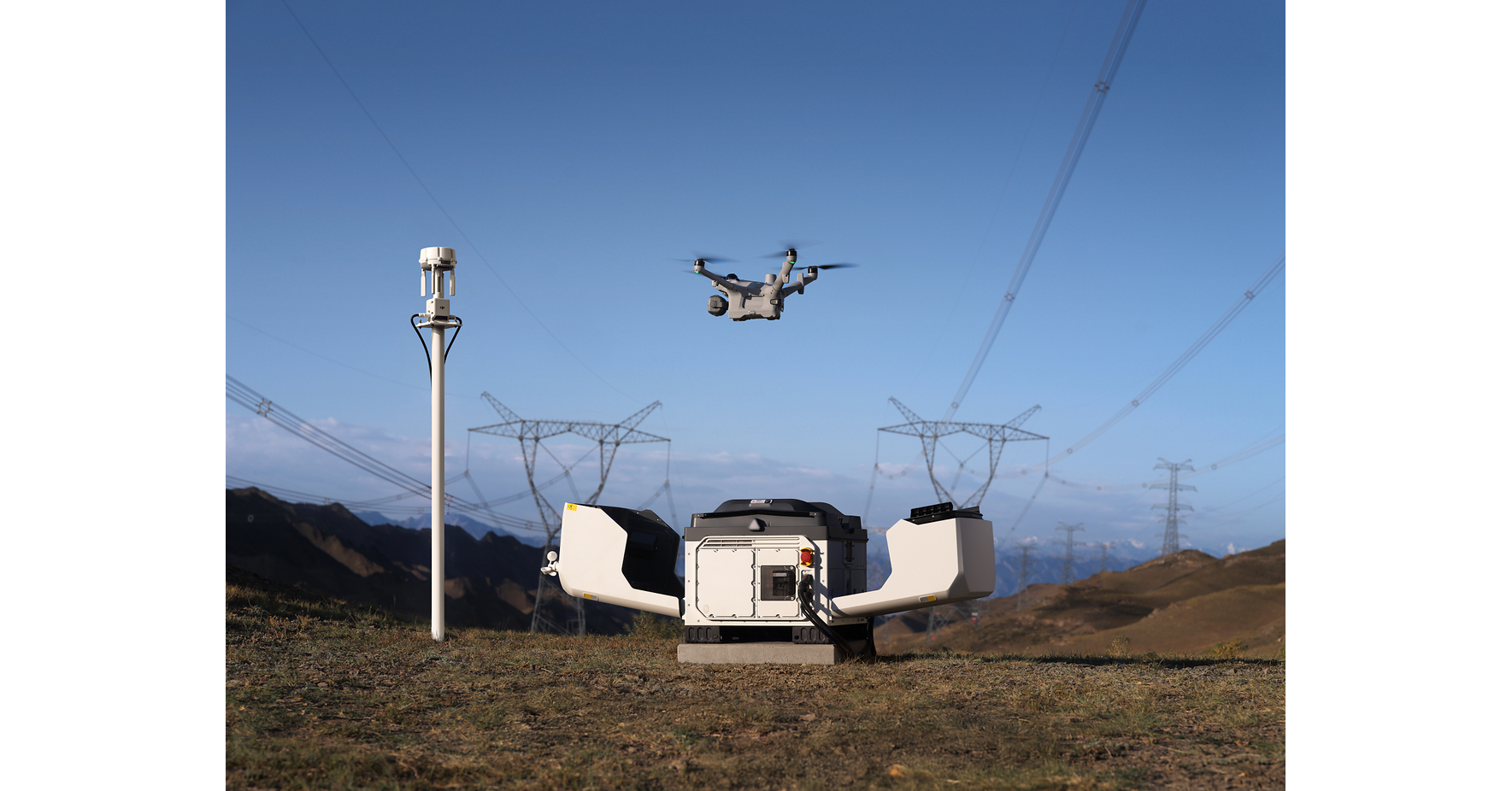
DJI launched Dock 4, its first drone-in-a-box system with automated battery swapping in 25 seconds, paired with the Matrice 5TD enterprise drone. DJI says the drone can fly for up to 59 minutes, reach speeds of up to 21 m/s, and detect 17 object types in real time using onboard AI; the company also cites drone-to-cloud latency of up to 160 ms, about 32% lower than the prior generation. The system targets public safety, emergency response and infrastructure inspections; the announcement provides no pricing or sales figures.
Analysis
The investable signal is competitive, not a near-term earnings read-through: DJI’s automated battery workflow could reset buyer expectations from “drone plus operator” toward persistent coverage with less field labor. If reliability holds in real deployments, that shifts value toward fleet-management software, integrations and service contracts—and pressures inspection providers whose economics depend on sending crews for routine visual checks. It may also force rival drone vendors to compete on uptime and workflow integration rather than sensor specifications alone.
Adoption is likely measured in quarters, not days. Public-safety and utility procurement requires validation of uptime, cybersecurity, data handling, insurance and airspace compliance; DJI’s stated audits and technical features are company claims, not proof of acceptance by every agency or jurisdiction. Country-specific restrictions can limit addressable demand, while automated battery handling adds a maintenance and failure point that could erode the promised availability. Competitors and integrators may benefit if customers seek non-DJI alternatives or vendor-neutral fleet systems.
The contrarian point: faster aircraft turnaround does not itself establish lower total cost or budget expansion. Agencies may redeploy existing staff and equipment rather than buy more systems, and a private-company launch without disclosed pricing, orders or deployments is weak evidence of monetizable demand. No direct public-equity catalyst is established; any reaction in adjacent names risks overpricing a product announcement.
AllMind Terminal
AI-powered research, real-time alerts, and portfolio analytics for institutional investors.
Request TrialMarket Sentiment
Overall Sentiment
mildly positive
Sentiment Score
0.35
Key Decisions for Investors
- No event-driven position on the announcement: DJI is not publicly traded, and the release provides no pricing, order volume or independently verified deployment economics.
- Watch Axon and public-safety drone/integration vendors for confirmed partnerships, procurement wins or guidance changes. Treat this launch as competitive pressure, not evidence of revenue impact absent disclosure.
- Over the next 1–3 months, seek evidence from customer deployments: actual dock uptime, service/maintenance burden, procurement approvals and repeat orders. Do not extrapolate advertised specifications into fleet-wide productivity.
- For a 6–18 month thesis, monitor whether persistent drone coverage reduces routine inspection visits or instead expands inspection frequency and software demand. The displacement thesis weakens if total cost per inspection fails to fall or regulatory exclusions restrict deployments.
More News
- Anthropic's third-quarter revenue is said to hit $16.8 billion ahead of IPO
- Why is Samsung Electronics stock plunging today?
- SK Hynix plunges 8% amid Asia tech rout as Fed rate hike fears, AI funding worries mount
- Elon Musk says Trump is 'ultimately' responsible for any curbs on Ukraine's Starshield systems
- SK Hynix seeks U.S. chip equipment exports to China tied to new factory
- Dell stock plunges 11%, leading data center sell-off on concerns about 'enterprise AI timing'
From AllMind Research
- Anthropic IPO Preview: Valuation, Timing, and What to Watch
- Shein After the IPO: Venue, Valuation, and What Must Be Proved
- What AI Research Tools Should a Small Hedge Fund Buy First?
- Research Workflows, Report Format Selection, and Interactive Synthesis
- Can ChatGPT Analyze a 10-K? A Verification Workflow