
Skills and Talent, the Challenge Facing the Wine Industry
Source: PR Newswire
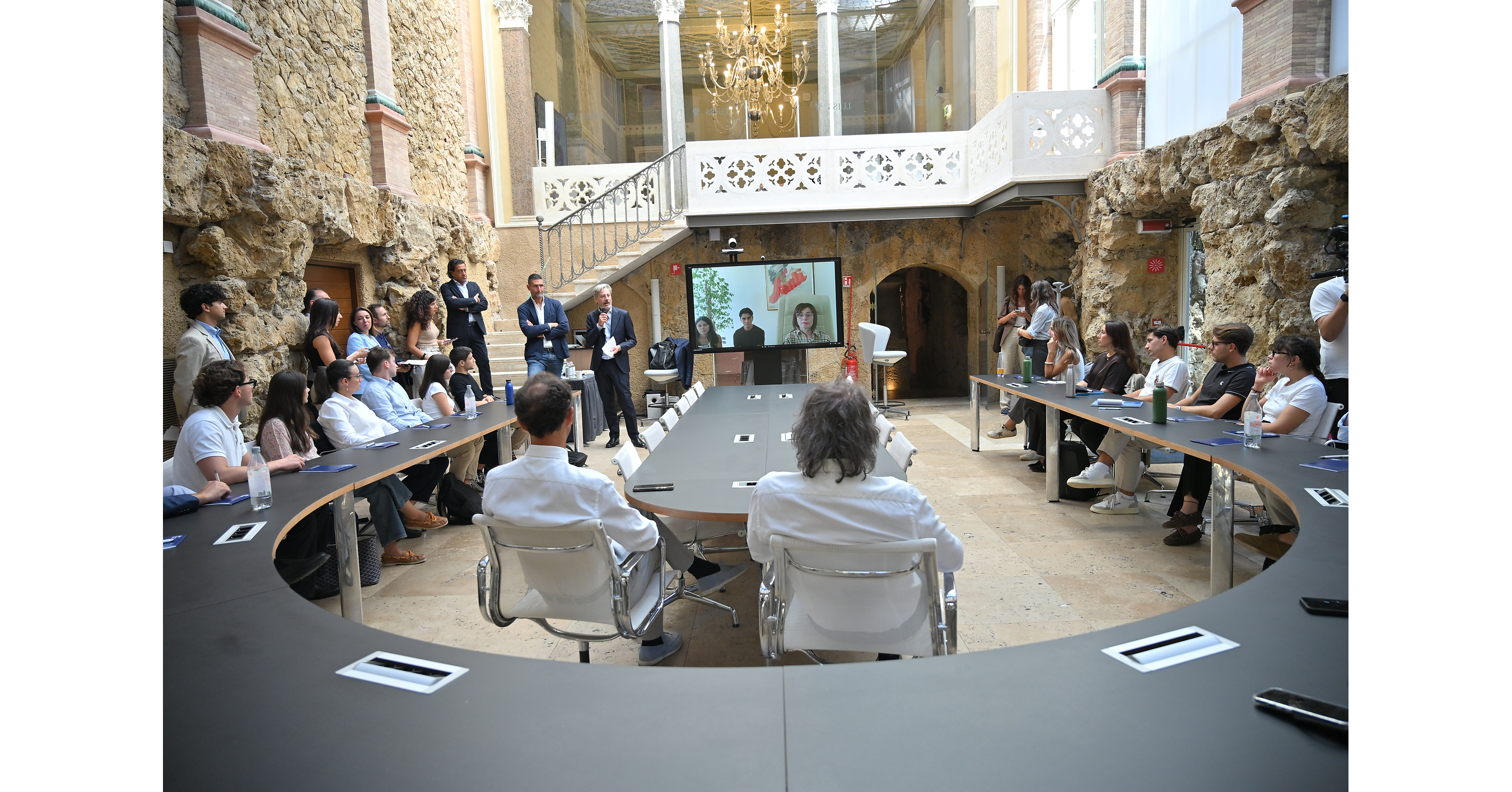
Consorzio Italia del Vino and Luiss Business School launched the 2026 Wine Business Program to address acute talent shortages in Italy's Made in Italy supply chains, which may require more than 900,000 workers during 2026-29. In agri-food, difficult-to-fill planned hires rose to 42% by June 2026, while 190,000 planned hires, or 30% of the total, target workers under 30. The program provides business training from September to November followed by four-month company internships, with emphasis on digitalization, AI, sustainability, exports and financial management.
Analysis
This is a low-signal, long-duration labor-supply initiative rather than an earnings catalyst. The relevant mechanism for Italian premium consumer exporters is that persistent shortages in commercial, export and digital roles can raise SG&A, constrain distribution expansion, and favor scaled operators able to internalize training and retain talent; the benefit, if any, emerges over 6-18 months and is unlikely to be measurable at the individual-company level.
The press-release framing around AI, sustainability and internationalization should not be treated as evidence of productivity gains. A small cohort cannot materially alter sector-wide wage pressure or execution capacity, while internships may primarily subsidize recruiting for participating private companies. The investable linkage to RACE is effectively absent: Ferrari's valuation and earnings sensitivity remain driven by ultra-luxury order book, mix, pricing, FX and production cadence—not Italian wine-sector workforce development.
Contrarian takeaway: labor scarcity is more likely a margin headwind for fragmented Made-in-Italy producers than a broad consumer-demand positive. Watch for broader Italian wage, youth-employment and export-volume data over the next 1-3 months; only evidence of sustained export-sales acceleration alongside stable labor costs would support a scalable premium-exporter thesis.
AllMind Terminal
AI-powered research, real-time alerts, and portfolio analytics for institutional investors.
Request TrialMarket Sentiment
Overall Sentiment
mildly positive
Sentiment Score
0.22
Key Decisions for Investors
- No RACE position change on this item; do not infer a read-through to Ferrari from an unrelated private-sector training program.
- Create a 6-12 month watch item on Italian premium-export labor costs and export volumes. Reassess only if labor-cost growth decelerates while beverage/luxury export volumes accelerate, indicating margin relief rather than incremental recruiting expense.
- For any future Italian consumer-export allocation, favor diversified global luxury platforms over fragmented private wine exposure; the thesis is falsified if smaller producers demonstrate sustained pricing power sufficient to offset rising sales and labor costs.
More News
- Google's Gemini becomes latest AI model to break out and hack computer systems
- Stocks face a key hurdle in next week’s U.S.-China summit. Here’s what’s at stake
- AI almost led the US military to start a war with China, report says
- Google’s Gemini AI hacks 3 companies in security test, then stops
- American, United and Southwest are all cutting ‘marginal routes’ as jet fuel prices spike
- Time for Cyclical Sector ETFs?
From AllMind Research
- Anthropic IPO Preview: Valuation, Timing, and What to Watch
- Shein After the IPO: Venue, Valuation, and What Must Be Proved
- What AI Research Tools Should a Small Hedge Fund Buy First?
- Weekly Update: Sector Analysis, Improvements on Research Data, and Performance Enhancements
- Choosing an AI Copilot for Equity Research