
Midterms 2026: El-Sayed, Rogers Reject AIPAC Money as Group Ties Turn Toxic
Source: Bloomberg
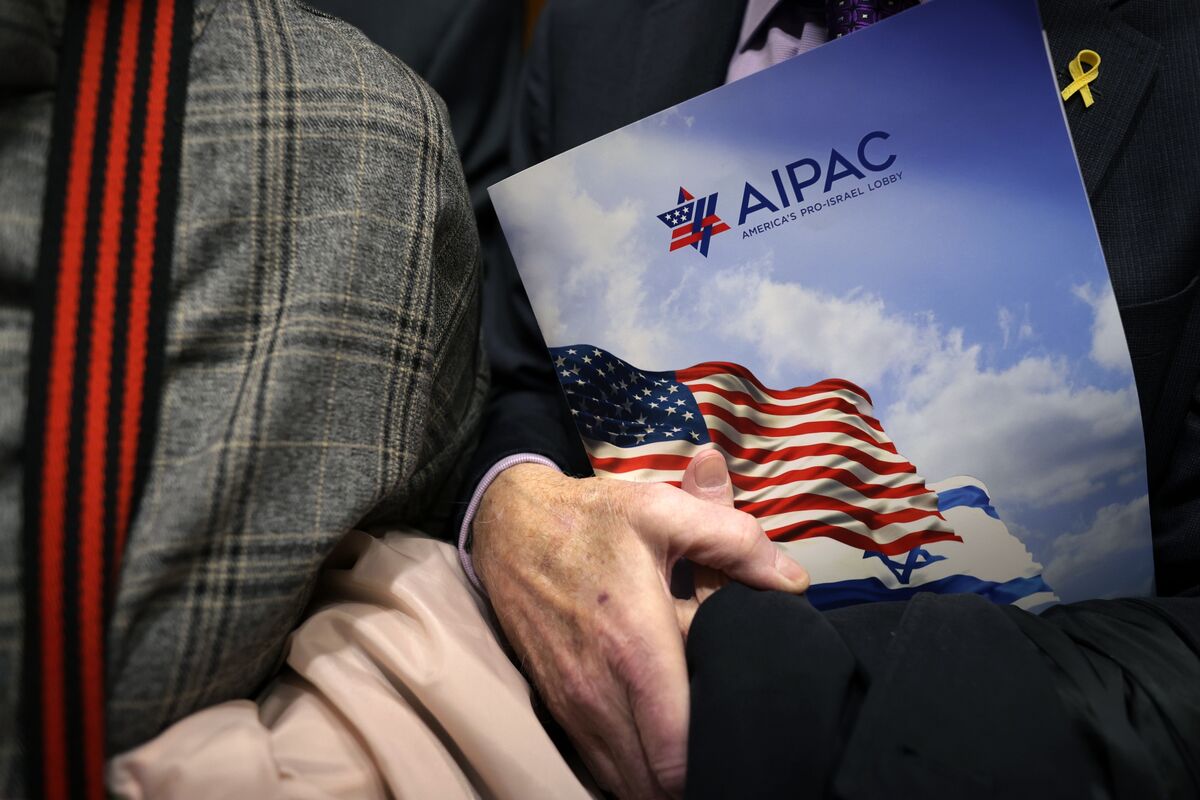
AIPAC’s political influence is weakening as the Gaza war turns affiliation with the pro-Israel lobbying group into a liability for candidates in both parties. Accusations that its political activity has become increasingly partisan, combined with declining voter support for Israel, have particularly strained its relationships with Democrats and could diminish its electoral influence.
Analysis
The investable channel is not election spending itself but the durability of bipartisan support for security assistance, weapons-transfer approvals, and Middle East posture. Large US primes have limited near-term earnings sensitivity because funded backlogs and multi-year procurement dominate; any headline-driven selloff in LMT, RTX, NOC, or GD would likely be more sentiment than fundamentals. Israeli defense exposure is more concentrated in ESLT, but its diversified export book reduces the value of treating US political friction as a standalone short catalyst.
Over the next 1-3 months, the relevant risk is that candidate positioning turns foreign-policy support into a primary-election vulnerability, increasing uncertainty around supplemental appropriations and specific export licenses. That raises the probability of delayed deliveries rather than outright demand destruction, creating working-capital and timing risk for suppliers rather than a broad defense-revenue impairment. Over 6-18 months, a more conditional aid regime could favor lower-cost, replenishable munitions and air-defense programs over politically visible platforms, benefiting manufacturers with production capacity and international demand.
Consensus may overstate the immediate equity consequence: Congressional and executive authorities, appropriations already enacted, and allied demand matter more to prime earnings than electoral rhetoric. The thesis turns materially more negative only if policy changes become concrete—conditions attached to security assistance, delayed export notifications, or reductions in replenishment procurement—not merely candidate distancing.
AllMind Terminal
AI-powered research, real-time alerts, and portfolio analytics for institutional investors.
Request TrialMarket Sentiment
Overall Sentiment
moderately negative
Sentiment Score
-0.40
Key Decisions for Investors
- No directional trade on this development alone; the stated market impact is too low and the near-term earnings transmission to US defense primes is weak.
- Maintain diversified US defense exposure through ITA or a basket of LMT/RTX/NOC rather than adding concentrated ESLT exposure until there is evidence of export-license or aid-package delays.
- Set a policy alert for supplemental-appropriations votes, export-notification holds, and guidance commentary on Middle East deliveries. A verified delay that affects backlog conversion would support a 3-6 month relative short ESLT versus long LMT, where LMT's broader program base should provide lower delivery-timing risk.
- If political headlines produce a sharp, unsupported 5-10% pullback in US primes without a corresponding backlog, appropriations, or cash-flow guidance revision, consider selectively buying RTX or LMT on a 6-12 month horizon; exit if management cuts free-cash-flow guidance or identifies material contract-delivery disruption.
More News
- UK Prime Minister Burnham says Iran 'played a part' in British air base incident
- In photos: China's Xi hardens Taiwan warning as country celebrates week-long National Day holiday
- Asian stocks dip, bonds in focus after torrid September
- September Ends on a Grim Market Note: Evening Briefing Americas
- Greer urges G20 to back Trump tariff agenda, takes aim at China
- California Gov. Gavin Newsom bans AI 'robo bosses' in landmark state law, reversing his earlier veto