
Global energy industry demonstrates confidence through uncertainty, with 85% seeing stronger investment appeal
Source: PR Newswire
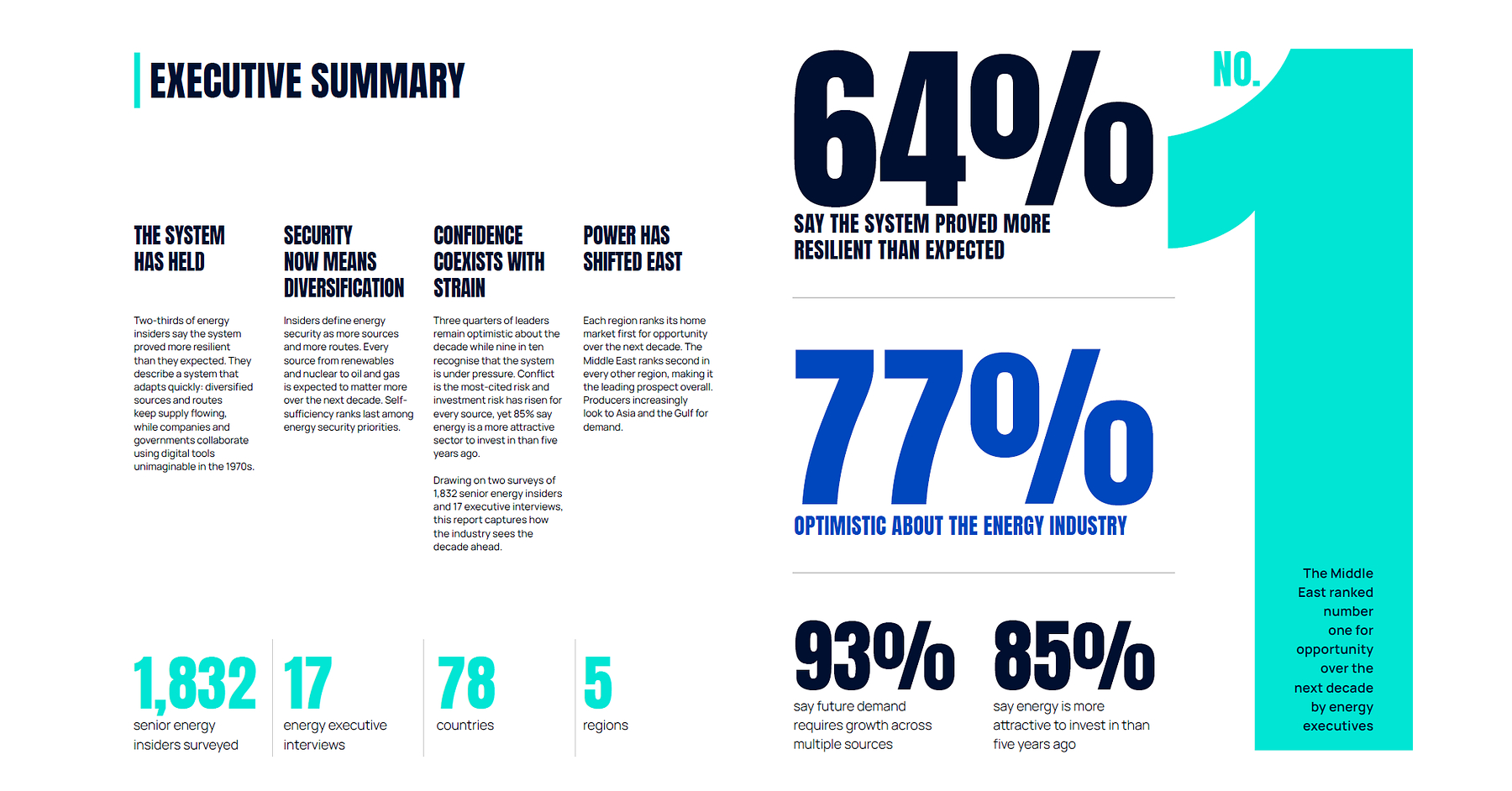
An ADIPEC survey of more than 1,800 business and energy leaders found 85% consider energy more attractive to invest in than five years ago, and 77% are optimistic about the decade ahead. 93% say future energy demand requires growth across multiple energy sources; 72% expect the Middle East to become more important in global energy, while respondents also cite grid delays as a major constraint. More than four in five expect AI-driven electricity demand to exceed current forecasts, with 71% viewing AI more as an opportunity than a risk.
Analysis
The useful signal is not the survey’s optimism; it is the implied bottleneck. If AI power demand runs ahead of forecasts, value should accrue first to deliverable capacity and grid equipment—not uniformly across “energy.” Interconnection, transmission, transformers and firm generation can capture spend, while renewable projects without grid access may face longer queues and weaker returns. That favors selective exposure to electrical-equipment suppliers and regulated utilities with funded transmission plans over a broad clean-energy basket.
Treat the report as a sentiment indicator, not evidence of incremental orders: it was commissioned by ADIPEC’s organizer, and stated investment appetite does not establish financing, permits, or final investment decisions. Near term, the report itself is unlikely to move earnings; ADIPEC announcements matter only if they produce funded projects, binding power offtakes, or procurement commitments. Over 1–3 months, watch utility capex guidance, grid-connection timelines, equipment order backlogs, and data-center power contracts. Over 6–18 months, the structural upside depends on whether grid buildout catches up with load growth.
The Middle East/Asia shift is not automatically bullish for public-market energy exposure: greater Gulf-to-Asia trade can raise the strategic value of infrastructure and supply security, but much investment may accrue to state-backed entities or remain announcement-stage. The contrarian risk is that the market may price AI demand before power projects can be permitted and connected. Falsify the bottleneck thesis if equipment backlogs ease without sustained utility capex growth, or if data-center load forecasts and contracted power demand are revised down.
AllMind Terminal
AI-powered research, real-time alerts, and portfolio analytics for institutional investors.
Request TrialMarket Sentiment
Overall Sentiment
mildly positive
Sentiment Score
0.35
Key Decisions for Investors
- No trade on the survey alone. Treat the report as a low-conviction sentiment input; avoid chasing a broad energy or renewables basket on its findings.
- For a 1–3 month watchlist, favor grid equipment suppliers and regulated utilities with demonstrably funded transmission investment over uncontracted renewable developers. Add only after checking order growth, backlog conversion, capex plans, and valuation.
- At ADIPEC, distinguish announcements from executable demand: look for final investment decisions, binding offtakes, financing, permits, and equipment orders. Without those, treat partnership headlines as non-catalysts.
- Reduce or exit the grid-bottleneck exposure if utility capex guidance weakens, equipment backlogs normalize without new orders, or contracted data-center power demand is cut.
More News
- US tech stocks tumble as investors fret over AI spending
- Asian shares wobble as tech rout boosts bonds, dents rate hike bets
- Asia stocks fall as AI rout batters S.Korea; Japan spooked by strong CPI
- AI debt and French bonds face a stress test — why it may not be over
- Nasdaq 100 Drops as Oil Rise Fuels Risk-Off Mood
- SK Hynix shares slide after chipmaker scraps Solidigm IPO plans
From AllMind Research
- Anthropic IPO Preview: Valuation, Timing, and What to Watch
- Shein After the IPO: Venue, Valuation, and What Must Be Proved
- What AI Research Tools Should a Small Hedge Fund Buy First?
- AI Tools for Family Offices: A Stack by Decision Type
- Reading Conviction in the Tape: What Level 3 Order Book Data Really Tells Discretionary PMs