
Cramer says 'frozen' conditions are holding many stocks back. Here's what could change that
Source: CNBC
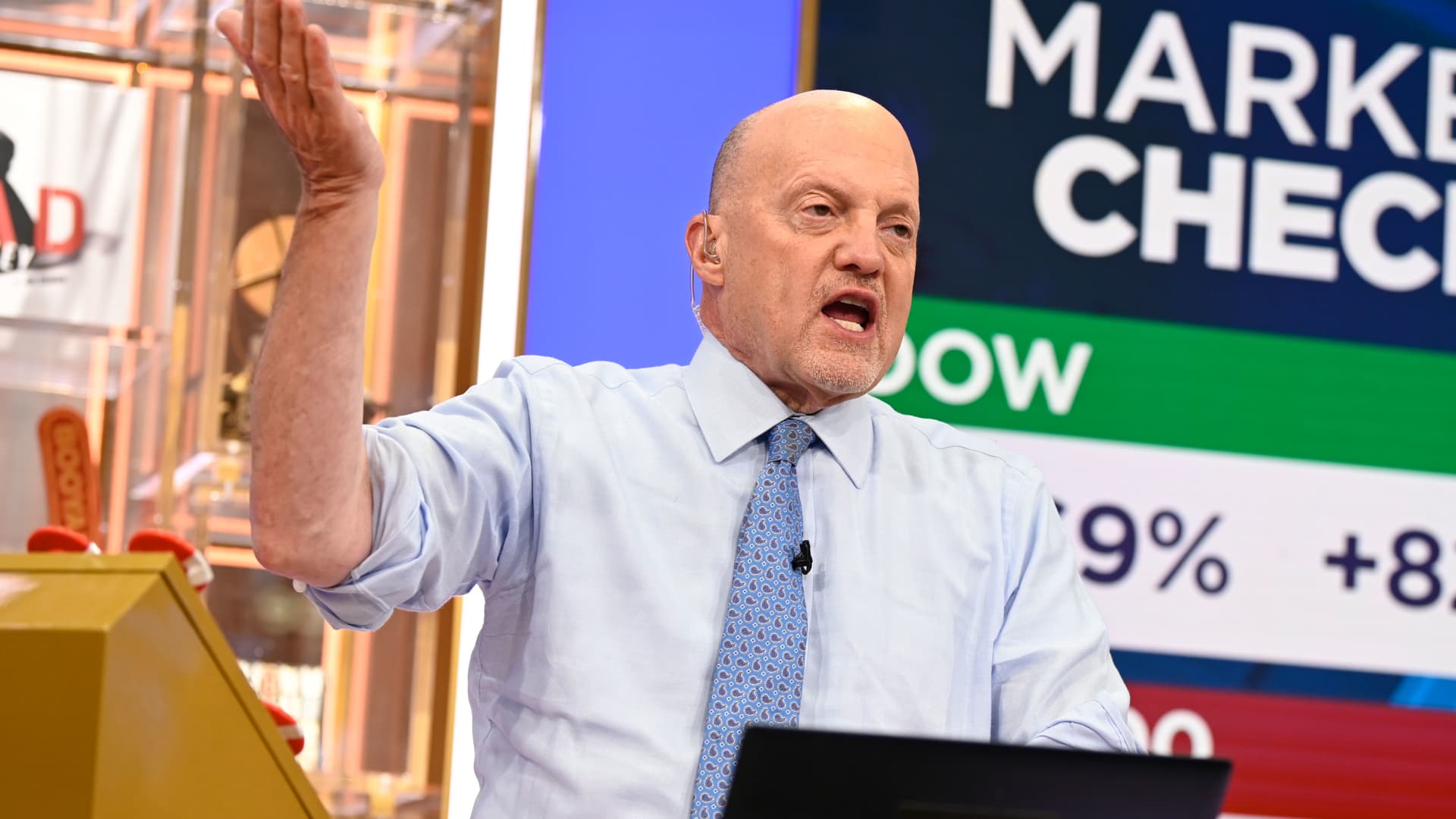
Cramer warned that multiple markets are freezing: 30-year mortgage rates near 7.5%, versus about 3% five years ago, have left U.S. housing at its least affordable level in 40 years, while Home Depot, Lowe's and Whirlpool reached 52-week lows. Capital-markets activity is also weakening, with Oura postponing its $2.2B IPO and Inspire Brands shelving an offering; Morgan Stanley and Goldman Sachs shares each fell roughly 12% in September. He nevertheless advised investors not to exit stocks, arguing that an end to the war could lower oil prices and inflation, remove a potential Fed hike, and trigger a rapid market rally.
Analysis
The housing complex should not be treated as one duration trade. LEN and KBH retain a relative demand advantage while the resale market is impaired because they can monetize financing incentives and control inventory; HD, LOW and WHR depend more directly on transaction-driven discretionary spend. The catch is that persistent rate buydowns are an economic price concession: unit volumes can hold while builder gross margins and land-return assumptions deteriorate, making a simple long-homebuilder trade less attractive after any relief rally.
For GS and MS, the relevant issue is operating leverage rather than headline deal volume. A prolonged underwriting drought impairs high-margin advisory and equity-capital-markets revenue, while volatile markets can partly offset this through trading; the downside becomes material only if weak corporate activity coincides with lower volatility and softer wealth-management flows. Over the next 1-3 months, bank multiples are more likely to respond to forward fee-pool revisions than to isolated postponed transactions.
The consensus bullish interpretation of lower rates misses an important second-order effect: declining mortgage rates would unlock existing-home supply, reducing builders' scarcity premium even as total housing activity improves. That setup favors housing-turnover beneficiaries such as HD and LOW relative to LEN/KBH on a 6-18 month horizon, but only after resale listings demonstrably recover. A geopolitical disinflation impulse could produce a sharp cross-sector duration rally within days, yet that is not a durable earnings catalyst unless it changes mortgage-rate expectations and credit availability rather than merely lowering Treasury yields.
AllMind Terminal
AI-powered research, real-time alerts, and portfolio analytics for institutional investors.
Request TrialMarket Sentiment
Overall Sentiment
mildly negative
Sentiment Score
-0.18
Ticker Sentiment
Key Decisions for Investors
- Maintain a 1-3 month relative-value tilt: long LEN or KBH / short HD or LOW, sized market-neutral. Builders should capture constrained supply demand sooner; exit if builder gross-margin guidance falls more than 150 bps or if weekly existing-home listings accelerate meaningfully for 6-8 consecutive weeks.
- Do not add outright GS or MS exposure solely on prospective IPO reopening. Reassess after third-quarter earnings and backlog commentary; a long GS / short KBE expression is attractive only if advisory and ECM pipelines improve while net-interest-income pressure persists across regional banks.
- Use XHB versus ITB as the liquid implementation for the housing relative trade: long XHB / short ITB initially favors remodeling and diversified housing suppliers only after a sustained mortgage-rate decline. Trigger entry when the 30-year mortgage rate falls at least 75 bps from current levels and pending-home-sales data turns positive; otherwise remain biased to ITB.
- For a broad risk-on catalyst, prefer defined-risk SPY call spreads with 2-3 months to expiry rather than chasing cyclical cash equities. The thesis is falsified if oil and inflation expectations remain elevated despite any geopolitical de-escalation, limiting the probability of easier policy.
More News
- Goldman Sachs pushes Fed rate hike forecast to December
- In photos: China's Xi hardens Taiwan warning as country celebrates week-long National Day holiday
- Goldman pushes Fed rate hike to December after cooler inflation
- Goldman Sachs pushes rate hike expectation to December
- Mexico’s Peso Becomes Worst in the World as Carry Traders Flee
- China's inside man at the Fed, OpenAI debuts Dots, an IPO trend and more in Morning Squawk
From AllMind Research
- Anthropic IPO Preview: Valuation, Timing, and What to Watch
- Shein After the IPO: Venue, Valuation, and What Must Be Proved
- What AI Research Tools Should a Small Hedge Fund Buy First?
- Automating Financial Model Updates: A Source-Controlled Workflow
- Weekly Update: Live Event Center, In-App Documents, and Faster Transcripts