
Ayla Networks Launches Dealer Hub to Power Connected Device Management for Dealers, Facility Managers, and Property Portfolios
Source: PR Newswire
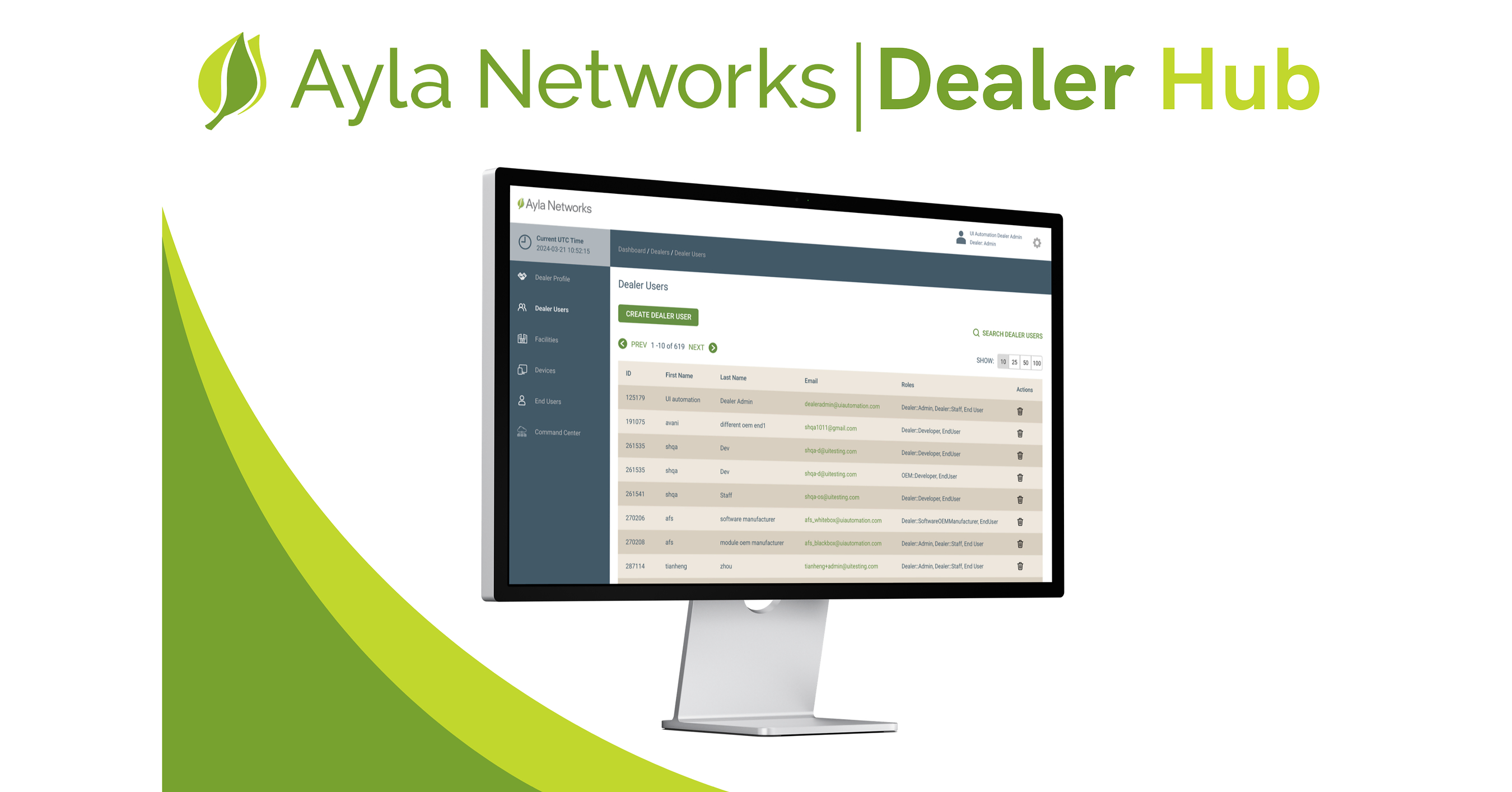
Ayla Networks launched Dealer Hub, a role-based IoT device-management capability for brands using dealer, installer, franchise, and facility-manager networks. The platform provides hierarchical device visibility, real-time health monitoring, alerts, remote diagnostics, and cloud-to-cloud API integrations with CRM, building-management, property-management, and guest-management systems. The product expands Ayla's managed IoT offering across professionally serviced smart-device categories, including HVAC, security, pool equipment, solar storage, retail, hotels, and multi-dwelling units.
Analysis
This is strategically relevant to private IoT software vendors but not presently a public-equity catalyst. The monetization opportunity is not device connectivity itself; it is higher-ARPU fleet-management, remote-service, and integration revenue once OEMs shift from consumer apps toward professionally managed installed bases. That model can reduce warranty truck rolls and churn for HVAC, security, pool, and distributed-energy equipment manufacturers, while increasing switching costs as operational data becomes embedded in dealer CRM/BMS workflows.
The second-order pressure falls on point-solution field-service and dealer-management vendors: a cloud platform controlling device telemetry can disintermediate portions of ServiceTitan (private), Salesforce field-service deployments, and legacy BMS workflows. Public proxies with exposure to connected building and energy-service ecosystems—Carrier (CARR), Trane Technologies (TT), Resideo (REZI), Alarm.com (ALRM), and Generac (GNRC)—could benefit only if they convert telemetry into service-contract attach rates and lower warranty expense; Ayla's announcement alone does not establish adoption, pricing, or customer concentration.
Over the next 1-3 months, the relevant verification points are named OEM wins, evidence that dealer access shortens repair cycles, and whether integrations become repeatable rather than bespoke professional-services work. Over 6-18 months, the larger risk is data ownership: OEMs with scale may internalize this capability or favor hyperscaler stacks, limiting Ayla's pricing power. The thesis is falsified if connected-device service metrics do not translate into lower support cost or recurring software revenue at exposed OEMs' earnings calls.
AllMind Terminal
AI-powered research, real-time alerts, and portfolio analytics for institutional investors.
Request TrialMarket Sentiment
Overall Sentiment
mildly positive
Sentiment Score
0.30
Key Decisions for Investors
- No standalone trade: Ayla is private and the release contains no contract value, customer name, pricing, or independently verified deployment metric; treat as an industry watch item rather than a catalyst.
- Monitor CARR, TT, REZI, ALRM, and GNRC during the next two earnings cycles for disclosed connected-service attach rates, warranty-cost savings, or dealer-network software revenue. A guidance raise tied to service-margin expansion would support a 6-12 month long; generic IoT-device growth would not.
- For a building-services digitization basket, prefer long TT versus short CARR only after TT demonstrates superior service-margin conversion or recurring-revenue growth. Reassess if the valuation spread widens without a corresponding divergence in commercial HVAC orders and service backlog.
- Set an alert for named Ayla OEM deployments in distributed energy, HVAC, or security. A multi-brand rollout with disclosed device counts and dealer-seat economics would create a more actionable read-through for REZI, ALRM, and GNRC; absent that evidence, expected equity impact remains de minimis.
More News
- What next for France as riots rattle markets? Three questions facing investors ahead of more protests
- AI Doubts Spread Cracks in Equities, Credit Markets: Evening Briefing Americas
- Stocks Fall as Oil Rally Keeps a Lid on Treasuries
- Looters hit 3,000 French businesses. Within hours, the haul was trending on Vinted under the riot’s date
- CrowdStrike CEO's alarming prediction — plus, the sell-off spreads beyond tech
- Elon Musk’s dangerous grip on outer space