
GAC Commercial Vehicle Accelerates Global Expansion with IAA TRANSPORTATION 2026 Debut
Source: PR Newswire
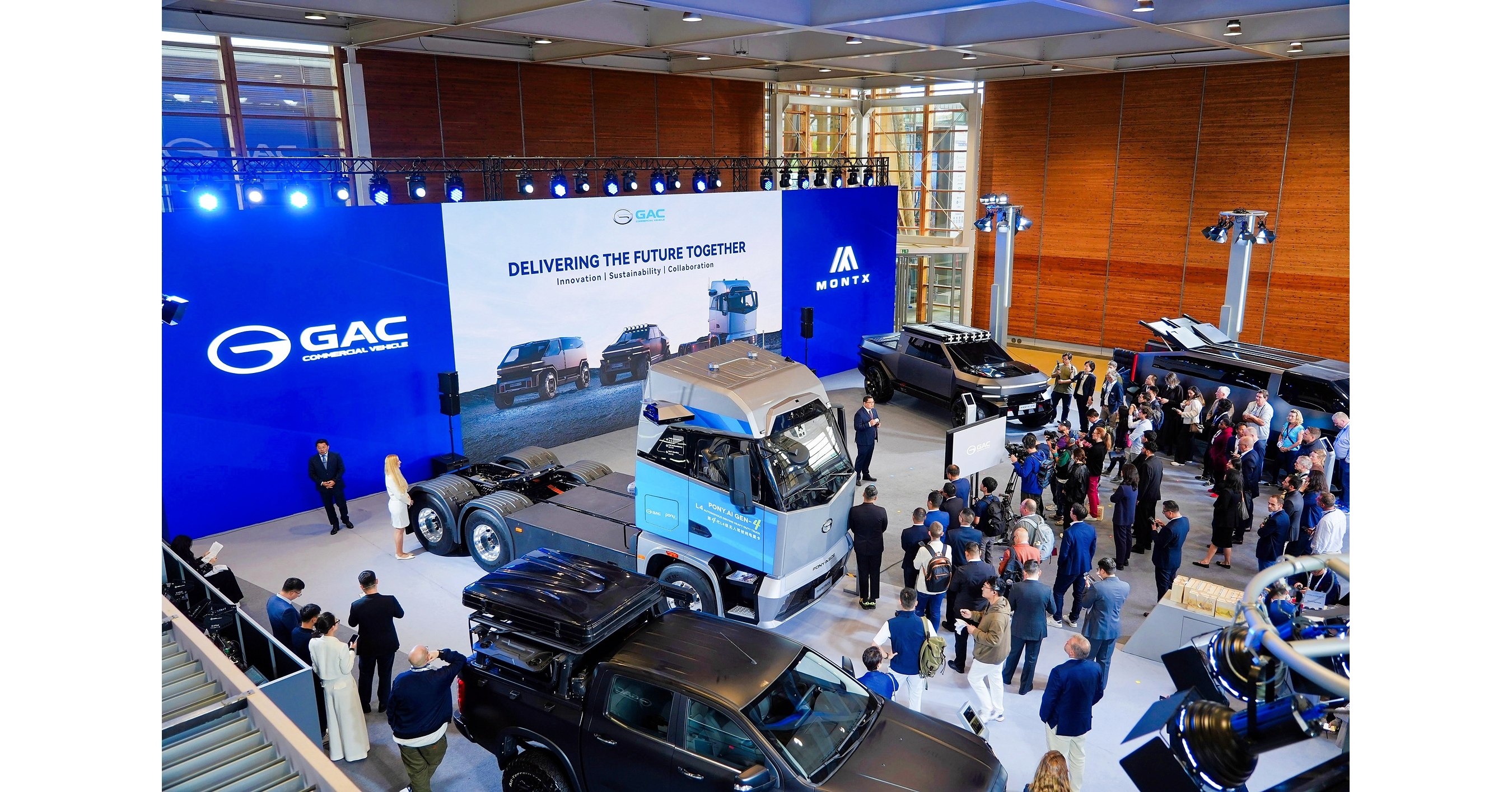
GAC Commercial Vehicle reported first-half 2026 sales growth of 205% year-on-year as it debuted its new-energy commercial-vehicle portfolio and MONTX light-vehicle brand at IAA Transportation 2026. Its T9 Robotruck, developed with Pony.ai, claims 70% lower hardware costs and roughly 30% lower autonomous-transport cost per ton-kilometer versus the prior generation, while its battery-swap tractor offers a 603 kWh battery, up to 475 km range and 3-5 minute swaps. GAC plans to expand the SMILODON Pro pickup into about 30 countries by year-end 2026, leveraging GAC Group's sales and service presence across 110 countries and regions.
Analysis
PONY is the only listed name with a direct read-through, but the economic value is likely back-end loaded. A vehicle-platform integration can reduce commercialization friction in Chinese ports, logistics parks and fixed-route freight corridors, where geofenced operations produce measurable utilization gains; it does not yet establish recurring software revenue, fleet volume, or a take rate. The near-term effect is narrative support for PONY’s trucking optionality and potential validation of its hardware-cost roadmap, while the 6-18 month valuation catalyst is paid fleet deployments that demonstrate autonomous-trucking gross margins rather than another OEM showcase.
The more consequential competitive effect is pressure on incumbent Chinese heavy-truck OEMs and autonomous-trucking peers to subsidize vehicle, battery, and software bundles. That could speed adoption but transfer economics to fleet customers and battery-swap operators, limiting PONY’s share of savings unless contracts preserve per-kilometer economics. CVGI has no disclosed linkage to this platform; treating the announcement as a demand signal for its commercial-vehicle components would be unsupported. European market entry also faces a long homologation, service-network and data-regulatory path, making it unlikely to affect reported earnings inside the next 1-3 months.
Consensus may over-credit the claimed operating-cost advantage before accounting for depot capex, battery inventory, insurance, remote-operations staffing, and utilization required to amortize autonomy hardware. The thesis is falsified if PONY fails to disclose commercial truck fleet counts, paid-kilometer growth, or improving autonomous-services gross margin over the next two earnings cycles; it is strengthened by named fleet contracts, repeatable deployments, and evidence that OEM integrations convert into recurring revenue.
AllMind Terminal
AI-powered research, real-time alerts, and portfolio analytics for institutional investors.
Request TrialMarket Sentiment
Overall Sentiment
strongly positive
Sentiment Score
0.56
Ticker Sentiment
Key Decisions for Investors
- Maintain PONY as a watch-list long rather than chase the announcement; initiate only after management discloses paid autonomous-trucking fleet size, contracted utilization, and unit economics. Target a 6-12 month position sized for high execution/regulatory risk; exit on weak commercial-fleet KPIs or a material decline in autonomous-services margin.
- Use any event-driven strength in PONY to sell upside volatility or structure a defined-risk call spread rather than buy outright calls, pending confirmation of revenue-sharing terms with the vehicle partner. The catalyst window is the next two earnings reports and any named logistics-fleet contract.
- Do not add CVGI on this news. Reassess only if CVGI identifies GAC or its battery-swap/autonomous truck ecosystem as a customer, or if commercial-vehicle order data show broad incremental China/export demand; absent that, the read-through is speculative.
- Monitor Chinese autonomous-freight permitting, port-corridor approvals, and battery-swap utilization over the next 3-6 months. Regulatory expansion and high-utilization fixed-route deployments would justify increasing PONY exposure; delayed approvals or fleet subsidies would favor a neutral stance.
More News
- What investors need to know about Alphabet's stock-busting earnings report
- Our next steps for Alphabet stock after earnings disappoint at nearly every turn
- Budget 2026 speech
- The UK cuts energy bills, taxes banks and boosts defense in high-stakes budget
- RBC Capital cuts Sprouts Farmers Market stock rating on margin concerns
- Microsoft's Big Bets on AI Start to Pay Off