
North Carolina's Crossroads Automotive Group Acquires Top 100 Dealership
Source: PRWeb
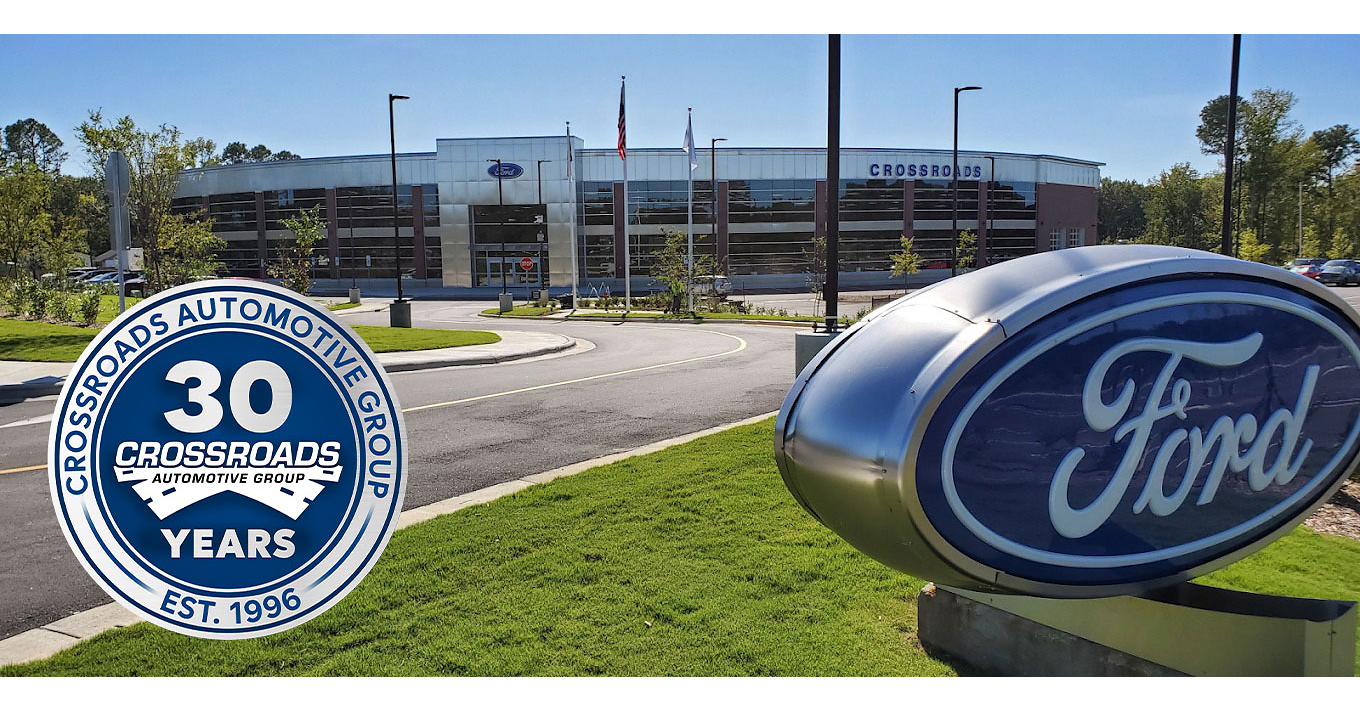
Crossroads Automotive Group acquired Bartow Ford in Bartow, Florida, expanding to 15 Ford dealerships in its portfolio. The deal adds a reported 2,300 new Fords in stock and Crossroads aims to retain the existing team to preserve service levels and community ties. Overall, this is a modestly positive expansion with limited expected impact beyond Crossroads’ franchise footprint.
Analysis
This is more relevant to the dealer economics layer than to Ford’s earnings line. A larger, better-capitalized store can improve inventory turns, used-car sourcing, and fixed-ops attachment, but the OEM only captures a sliver of that value through mix and wholesale throughput; the real margin migration sits with the retailer. So any bullish read-through for F is likely to be modest and mostly indirect unless this signals a broader consolidation wave that tightens local market share and raises advertising efficiency for large groups.
The second-order loser is not Ford so much as smaller independent dealers in the same geography, which can get squeezed on used inventory, service retention, and fleet relationships once a top-100 operator adds scale. Over 1-3 months, the market could start treating this as evidence that auto retail remains a roll-up business with attractive fixed-ops economics, which is constructive for listed dealer consolidators like ABG, SAH, GPI, and PAG. Over 6-18 months, the main risk is valuation: if dealer multiples expand on M&A enthusiasm while new-vehicle margins normalize, the value accrual can be less durable than it looks.
Contrarian view: the consensus may overstate the OEM read-through and understate the fact that dealership acquisitions mostly reallocate profit among channel participants. For F, the only meaningful bullish impact would come if the larger Florida footprint materially improves commercial/fleet penetration or regional share, but that is hard to prove without subsequent unit and incentive data. Falsifier: if dealer groups report weaker same-store service gross profit or higher floorplan stress in the next 1-2 quarters, the consolidation thesis is probably not translating into better returns.
AllMind Terminal
AI-powered research, real-time alerts, and portfolio analytics for institutional investors.
Request TrialMarket Sentiment
Overall Sentiment
mildly positive
Sentiment Score
0.12
Key Decisions for Investors
- No immediate trade in F or FOVSY; treat this as a channel-level transaction with minimal direct OEM earnings impact unless Ford’s next quarterly regional wholesale/share data show a measurable uplift.
- Watch listed dealer consolidators ABG, SAH, GPI, and PAG over the next 1-3 months for any read-through to acquisition cadence; a relative-long basket vs XLY only makes sense if M&A commentary broadens beyond a single transaction.
- If dealer stocks rally on consolidation headlines but same-store gross profit or inventory days fail to improve in the next earnings cycle, fade the move with a short on the strongest multiple expansion name (likely GPI/ABG) versus a market ETF.
- Set a monitoring alert for Ford incentive spending and Southeast retail share in the next two quarterly prints; a sustained share gain would be the first hard evidence that this type of dealer scaling helps F at the margin.
More News
- General Motors Pre-Q3 Analysis: Is the Stock a Buy Now?
- 'Cannot play hide and seek': Singapore minister's warning over haze sends agricultural stocks lower
- BlackRock, GIC among investors chasing Indian telecom major Jio's IPO as anchor bids top $26 billion
- Volkswagen bet on Xpeng to save its China business. It’s not going to plan
- Gartner analyst behind tech rout: AI returns are not yet large enough to justify neocloud build-out
- Elice shares plunge 28% on debut as investor doubts over AI trade deepen
From AllMind Research
- Anthropic IPO Preview: Valuation, Timing, and What to Watch
- Shein After the IPO: Venue, Valuation, and What Must Be Proved
- What AI Research Tools Should a Small Hedge Fund Buy First?
- How to Analyze SEC Filings With AI: A Verification-First Guide
- AI for IR Street Intelligence: Notes, Estimates, and Peers