
Global Feminine Hygiene Products Market Set to Reach USD 75.41 Billion by 2034 as Menstrual Health Awareness, Product Innovation and Sustainable Hygiene Solutions Strengthen, says Maximize Market Research
Source: PR Newswire
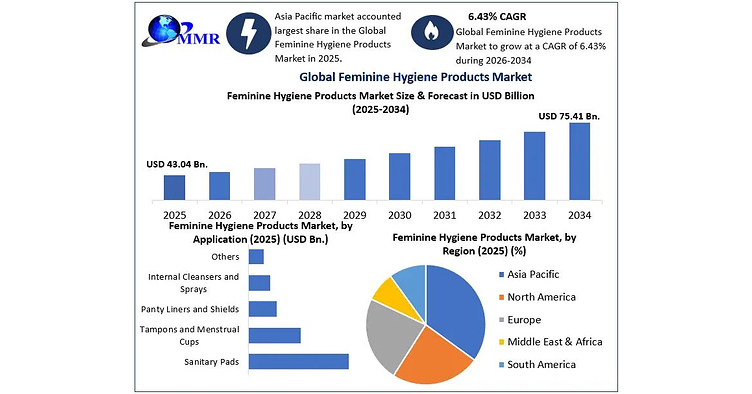
The global feminine hygiene products market was valued at USD 43.04 billion in 2025 and is forecast to reach USD 75.41 billion by 2034, implying a 6.43% CAGR for 2026–2034. Asia Pacific leads the market, with sanitary pads the leading product category; growth drivers include rising awareness, broader access, and demand for sustainable and reusable products. Reported developments include Kimberly-Clark's redesigned Kotex portfolio and a Kimberly-Clark India–UNICEF initiative targeting around 2.88 million people across nine Indian states.
Analysis
This is a category-level forecast from a report vendor, not evidence of incremental revenue or earnings for the named issuers. The headline market likely spans products and geographies with very different economics; without segment definitions, realized growth, and company-level exposure, it should not be translated into issuer growth or valuation assumptions. The reported Kotex redesign is a competitive signal, not proof of higher sales, pricing, or market share.
Near term, this is unlikely to change fundamentals: the initiative’s reach and product performance need independent validation, and public-health access programs may expand use without generating near-term premium mix. Over 1–3 months, watch reported organic growth, volume/price mix, and distribution or shelf-share evidence from Kimberly-Clark and peers. Over 6–18 months, the more investable question is whether premium and sustainable formats add category value or mostly substitute for disposable products. Reusable adoption could pressure unit volumes, while affordability and retailer private label may cap pricing; premiumization can also invite promotional spending. Input costs for absorbent materials and packaging are a margin sensitivity, but the article provides no exposure data.
Contrarian read: the forecast’s precision can overstate confidence. A broad market CAGR does not establish listed-company earnings leverage, and competitive launches may redistribute share rather than grow profits. No trade is justified on this item alone; falsification of the cautious view would require issuer-reported category acceleration with improved price/mix or share, rather than awareness or launch claims alone.
AllMind Terminal
AI-powered research, real-time alerts, and portfolio analytics for institutional investors.
Request TrialMarket Sentiment
Overall Sentiment
mildly positive
Sentiment Score
0.30
Ticker Sentiment
Key Decisions for Investors
- Do not chase KMB on the Kotex redesign or this vendor forecast; treat it as a watch item until company reporting or independent channel checks show incremental sales, share gains, or better price/mix.
- Over the next 1–3 months, monitor organic volume and price/mix commentary from KMB, PG, EPC, and ESSITY.B, plus evidence that sustainable/reusable products are adding value rather than cannibalizing higher-volume disposables. No position is warranted absent that confirmation.
- Reassess the cautious stance if multiple issuers report sustained category growth alongside margin resilience; the thesis weakens if growth is predominantly promotional, share transfers without category expansion, or input-cost pressure offsets pricing.
More News
- This household goods stock has lagged the broader market. Evercore ISI sees a comeback
- Evercore ISI upgrades Procter & Gamble stock rating on sales outlook
- Stocks making the biggest moves midday: Marvell, Moderna, Lamb Weston, Constellation Energy & more
- Stocks making the biggest moves premarket: Constellation Energy, Option Care Health, Lennar, P&G and more
- Jim Cramer's top 10 things to watch in the stock market Tuesday
- What's behind an 'explosion of buying' Tuesday, including the rally in GE Vernova