
BOOT Q2 Earnings Beat Estimates on Margin Gains, Sales Miss
Source: zacks.com
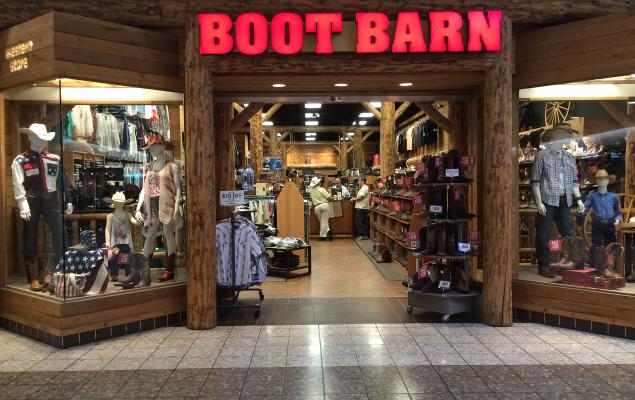
Boot Barn’s fiscal Q2 adjusted EPS rose 22.6% to $1.68, beating the $1.63 estimate, while sales increased 15.1% to $581.8 million but missed the $585 million consensus. Gross margin expanded 80 bps to 37.2%, but the company lowered fiscal 2027 sales guidance to $2.565-$2.593 billion and EPS guidance to $8.72-$9.00; it raised its store-opening target to 75-80 from 70. Boot Barn repurchased $35 million of shares and authorized an additional $400 million in buybacks; shares had fallen 17.2% over the prior three months.
Analysis
The earnings beat looks less durable than the headline: freight savings and tariff refunds do more work than underlying product-margin expansion, while the lower outlook and near-flat near-term comparable-sales range point to softer demand. The fiscal-year tariff-refund contribution is roughly 5% of midpoint EPS; that is a temporary earnings bridge, not a run-rate multiple driver. The key test is whether product margin can keep improving after freight and refund benefits fade.
The less-obvious tension is between attractive new-store productivity and growing fixed-cost exposure. More openings can sustain reported sales growth even if existing-store demand stays weak, but immature stores add occupancy and distribution costs before they mature. The 110-basis-point quarterly deleverage in buying, occupancy and distribution costs shows that scale is not costless. Elevated inventory also makes the holiday outcome consequential: a miss in western boots or warm-weather apparel could force markdowns and reverse merchandise-margin gains.
Near term (days), guidance reduction and decelerating comps argue against treating the EPS beat as a clean positive; the prior share-price underperformance may already discount some slowdown, but valuation and implied expectations are unavailable. Over 1–3 months, holiday comps, women's boot assortment response, and inventory/markdown commentary are the catalysts. Over 6–18 months, store returns and Boot Barn Workforce could support growth, but the cited B2B sales figure does not establish incremental profitability. Contrarian angle: store expansion may cushion sales better than comps suggest, yet top-line growth from openings can mask weak demand quality.
AllMind Terminal
AI-powered research, real-time alerts, and portfolio analytics for institutional investors.
Request TrialMarket Sentiment
Overall Sentiment
mixed
Sentiment Score
0.05
Ticker Sentiment
Key Decisions for Investors
- No immediate directional position on BOOT: do not chase the EPS beat until holiday demand verifies the margin story. Reassess after holiday trading updates and the next earnings release.
- Watch for consolidated comps sustaining above the guided range and product-margin gains persisting without freight/refund support; that would support a long thesis. Falsify it with comps at or below the guided 0% neighborhood, markdown pressure, or a guidance cut.
- Treat BOOT's authorized repurchases as potential support, not a catalyst by themselves: compare actual buyback pace with store capex and cash generation before assigning value to the authorization.
- Monitor inventory against sales and category commentary. If inventory growth outpaces demand and women's western boots remain weak, consider a short or put-spread hedge only after checking valuation, options pricing, and liquidity; those data are not provided.
More News
- Stocks making the biggest moves midday: ADT, Alphabet, Caterpillar, Eli Lilly, Chipotle & more
- DoorDash offers $17 billion for Instacart: ‘the largest companies are only eating more and more of the pie’
- Alphabet Erases $500 Billion as ChatGPT, Google AI Cut into Search
- Norwegian shares surge 13% on earnings beat, guidance raise
- Alphabet’s stock has worst day in over 20 years, dragging the S&P 500 to first loss in four days
- Taiwan Stocks Heads for Correction as Global AI Selloff Deepens