
Zhou Jianjun (Huawei): Vytváření řešení AIDC s interakcí s rozvodnou sítí pro maximalizaci počtu tokenů na watt
Source: PR Newswire
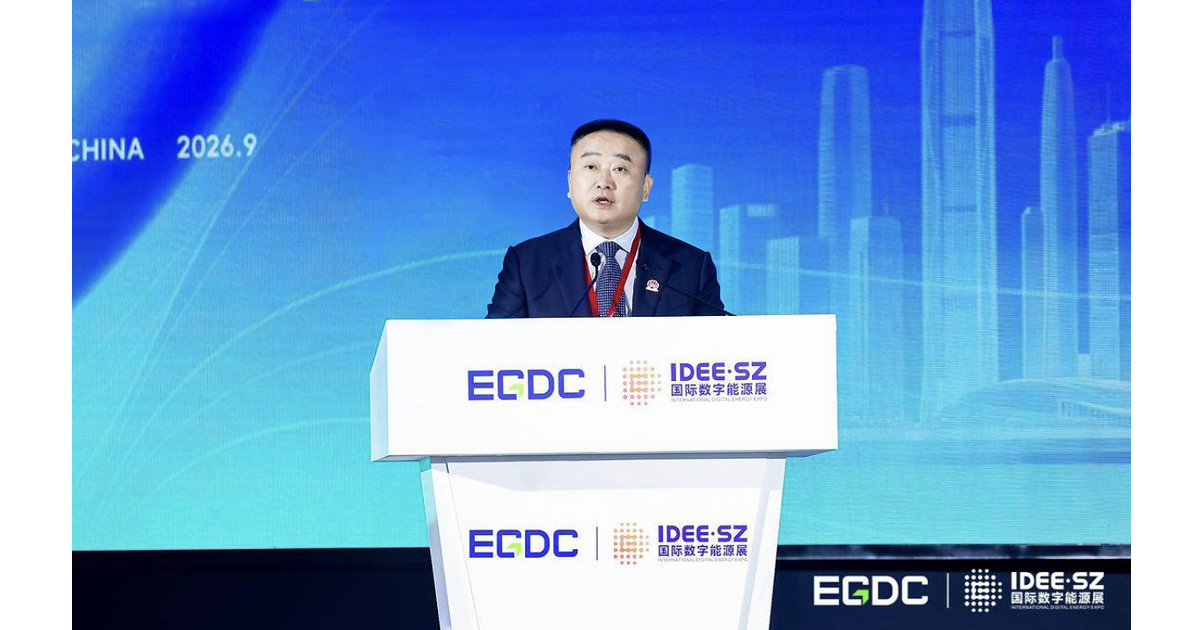
Huawei unveiled a grid-interactive AI data center (AIDC) architecture designed to maximize tokens per watt as AI campuses scale from megawatts toward hundreds of megawatts and gigawatt capacity. Its "3+1" system integrates power, digital operations, thermal management and modular construction, including a 1,000V grid-forming FusionSolar inverter, a 1,000V LUTERRA energy-storage platform, semiconductor-transformer-based power routing and MW-scale AI-supported liquid cooling. The announcement positions Huawei to address power-grid stability, high-density cooling and faster deployment requirements for AI infrastructure, though it provides no financial projections or customer orders.
Analysis
The investable implication is not Huawei-specific but a widening of the AI infrastructure bottleneck from chips to power quality, grid interconnection and heat rejection. VRT, ETN, Schneider Electric (SU.PA), ABB and NVT should gain incremental content per MW as customers prioritize integrated power/cooling systems over lowest-cost components; this supports mix and service-margin expansion even if server shipment growth moderates. The more consequential competitive pressure falls on standalone UPS, switchgear and commodity cooling vendors whose offerings cannot demonstrate uptime or grid-support performance at high-density loads.
Near term, this is insufficient to revise estimates: the claims are vendor-led and lack disclosed deployments, price points, reliability data or customer orders. Over 1-3 months, the relevant catalyst is evidence that hyperscalers and Chinese telecom/cloud operators procure battery storage, power-conversion and liquid-cooling packages as a single project scope; that would raise non-GPU infrastructure spend per deployed MW. Over 6-18 months, grid constraints can delay AI capacity more than semiconductor availability, benefiting suppliers with installed service networks and turnkey delivery while pressuring data-center operators with contracted capacity but uncertain energization dates.
The contrarian point is that "tokens per watt" may be economically inferior to maximizing tokens per dollar if grid-forming storage and redundant power architectures materially increase upfront capex. Huawei is likely strongest where Chinese-local procurement and weaker grids matter, but export restrictions limit direct global share capture; Western incumbents may benefit from the category validation without conceding their core hyperscale accounts. Falsification: no acceleration in VRT/ETN backlog conversion, cooling attach rates, or customer commentary on power availability by the next two earnings cycles.
AllMind Terminal
AI-powered research, real-time alerts, and portfolio analytics for institutional investors.
Request TrialMarket Sentiment
Overall Sentiment
moderately positive
Sentiment Score
0.48
Key Decisions for Investors
- Maintain a 6-12 month overweight in VRT and ETN, preferably as a basket rather than a Huawei read-through. Add only on post-earnings or broad AI-infrastructure pullbacks; target 15-20% upside from backlog/service mix re-rating versus 10-12% downside if order conversion slows.
- Pair long VRT / short NVT over 3-6 months if data-center cooling orders increasingly specify integrated liquid cooling plus power-management scope. The thesis is relative content-per-MW and service attachment; exit if NVT demonstrates comparable hyperscale liquid-cooling backlog growth for two consecutive quarters.
- Set an earnings-monitor alert for SU.PA, ABB and ETN: evidence of data-center power-quality, medium-voltage, UPS or grid-interconnection order acceleration is actionable confirmation. Absent disclosed order growth or margin expansion, treat this announcement as category marketing rather than a new trade signal.
- Avoid a directional position in Chinese solar-storage names such as Sungrow (300274.SZ) solely on this development. A recommendation would require independently verified AIDC storage deployments, project economics and confirmation that grid-forming specifications translate into profitable—not merely volume—sales.
More News
- Bank of Japan raises interest rates to 31-year high, flags concerns over inflation
- Italy to deploy warships to protect shipping through Bab al-Mandeb
- Oil prices fall as Saudi supply hopes outweigh fresh Houthi strikes
- Oil prices fall for 3rd day as supply concerns ease, diplomacy in focus
- Oil Traders Stymied by Iran War Stalemate: Evening Briefing Americas
- Saudi Pivots Oil Routes After Pipeline Attack